Hardwood Floor Colors: How to Pick the Right One for Your Home
Hardwood floor colors range from light blondes and natural oaks to warm honey browns, rich espressos, and cool grays. The right color depends on your room size, lighting, wall colors, and lifestyle. Light floors open up small spaces, dark floors add drama to large rooms, and mid-tone warm browns suit almost any style. In 2026, natural white oak and greige tones lead the trends.
What Hardwood Floor Color Does to a Room
Before you look at samples, understand what color actually does to your space. Floor color shapes how large, warm, or bright a room feels. Get it wrong, and even a beautifully furnished room looks off.
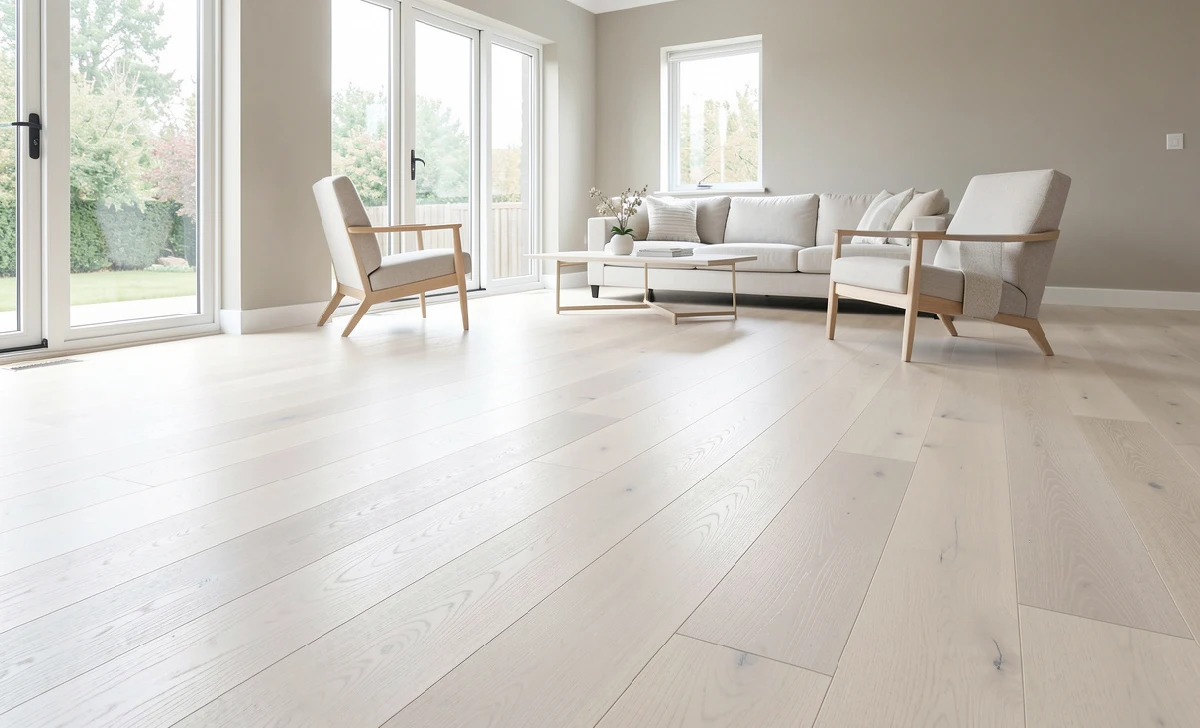
Light floors reflect natural light and make compact rooms feel more open. A 10×12 bedroom with blonde oak flooring reads as larger than the same room with dark walnut. Dark floors do the opposite: they ground a space and create visual weight, which works well in large open-plan living rooms but can shrink a small hallway.
Color also carries temperature. Warm tones, think honey, amber, and caramel, make a room feel cozy. Cool tones, like gray and ash, feel crisp and modern. Neutral mid-tones sit between both worlds, which is why natural white oak has become the go-to for designers who want floors that work with almost anything.
The Main Hardwood Floor Color Families
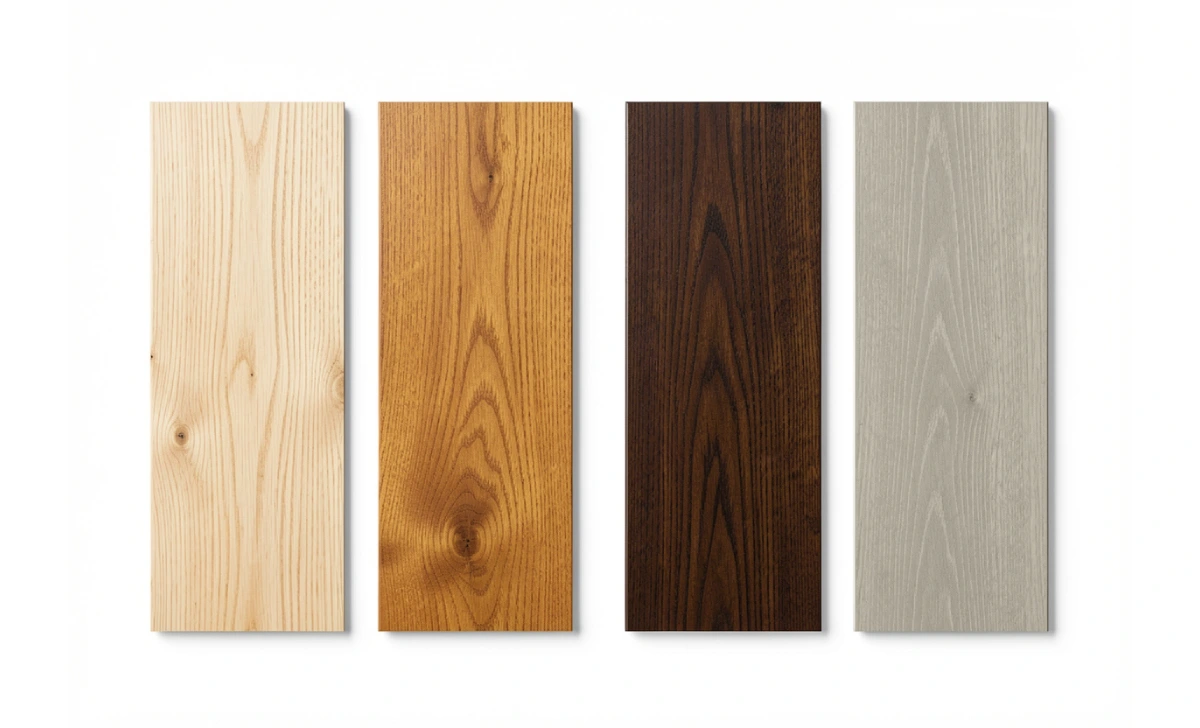
Every hardwood floor color falls into one of four general families. Knowing which family appeals to you narrows your choices fast.
Light and Blonde. These include white oak, maple, ash, and whitewashed finishes. They work well in Scandinavian, coastal, and minimalist interiors. Light floors hide dust and dents better than dark ones, making them a strong choice for homes with kids or pets.
Warm Mid-Tones Honey, caramel, and golden brown tones fall here. Species like red oak and hickory grow naturally in this range. These colors pair well with earth-tone walls, warm white cabinetry, and natural textiles. They have held strong as the most sold hardwood category in North America for decades.
Dark and Deep Espresso, walnut, charcoal, and ebony finishes create high contrast in any space. According to the National Wood Flooring Association (NWFA), dark stain finishes remain popular with buyers in higher-end new construction. The tradeoff: dark floors show dust, pet hair, and fine scratches far more visibly than lighter options.
Gray and Greige The “greige” category, a mix of gray and beige undertones, grew dramatically through the early 2020s and has not slowed. It pairs with cool-white walls and chrome fixtures for a modern look, but also works with warmer tones for a transitional style. This flexibility drives its continued demand.
Trending Hardwood Floor Colors in 2026
Trends in flooring move more slowly than trends in paint or furniture, which is a good thing. You want a floor that looks current today and still works in ten years. Here is what designers and homeowners are gravitating toward right now.
Natural White Oak White oak is having a long moment. Its subtle grain pattern, tight knots, and ability to take a wide range of stains make it a designer staple. Left near its natural color with a matte finish, it suits virtually every interior style. The NWFA reported that white oak overtook red oak as the most specified domestic hardwood species in recent years.
Greige and Warm Gray Cool-tone gray peaked a few years ago. What replaced it is warmer: floors with gray undertones but enough brown to feel organic. Interior designers describe this as a reaction to spaces that felt too cold and clinical. A warm, greige floor reads as modern without feeling sterile.
Honey Brown Medium warm browns are returning after years of being overshadowed by gray. Red oak in a natural or lightly stained finish, golden hickory, and amber-toned engineered planks all belong here. They pair well with the green and terracotta accent colors trending in home decor right now.
Smoked and Charcoal Oak For homeowners who want dark without going full espresso, smoked and wire-brushed charcoal finishes offer depth with visible grain. The wire-brushed texture also hides minor scratches better than a smooth dark stain, making it more practical than a standard dark floor.
How to Choose Your Hardwood Floor Color
Your floor color should work with everything else in the room, not against it. Here is how to work through the decision.
Start with your room’s light source. A north-facing room gets cool, indirect light all day. A warm-toned floor can counterbalance this. A south-facing room with strong natural light can handle cool grays without feeling cold. Before you buy a single sample, take note of which direction each room faces and how the light changes through the day.
Test samples in your actual space. Colors shift dramatically between showroom lighting and home lighting. Order physical samples and live with them for at least two days, placed against your walls and baseboards, before you decide. What looks like a clean, natural oak in the store can look yellow or pink in your kitchen.
Balance, don’t match. Avoid choosing a floor color that exactly matches your cabinetry or furniture. When similar wood tones stack on top of each other throughout a room, the result looks flat and muddy. A contrast, even a subtle one, gives the eye somewhere to land. If you have warm brown cabinetry, a cool-neutral floor creates definition. If your furniture runs dark, a lighter floor prevents the room from closing in.
Factor in your lifestyle. A house with dogs, young children, or heavy foot traffic needs a color that forgives. Light-to-mid-tone floors hide dust and dents. Matte and satin finishes show fewer scuffs than high-gloss. Dark, smooth finishes demand more maintenance. According to a 2024 flooring maintenance study by the Floor Covering Industry Foundation, homeowners with dark gloss floors reported needing to sweep or dry-mop twice as often to keep floors looking clean.
Think about resale. Hardwood floors consistently rank among the top features buyers want. The National Association of Realtors found in its 2024 Remodeling Impact Report that hardwood floor refinishing returns roughly 147% of its cost at resale. Neutral, mid-tone colors tend to attract the widest buyer pool. Very dark or very light floors, while popular in certain design circles, can limit appeal.
How Finish Affects Perceived Color
Two floors from the same board can look completely different depending on the finish applied. This is one of the most overlooked factors in choosing a hardwood color.
A matte finish brings out the natural, raw look of the wood. It minimizes surface reflection and makes the floor feel more organic. It also hides everyday wear far better than a glossy finish. Most designers working in contemporary or Scandinavian interiors default to matte.
A satin finish sits in the middle, with a soft sheen that adds a little warmth and depth to the color without looking polished or formal. It suits transitional and traditional interiors and is the most common finish sold in North America.
A high-gloss finish deepens the color significantly and makes the grain pop. It looks dramatic, but shows every footprint and scratch. Gloss has fallen out of favor in residential applications over the past decade, though it remains popular in formal dining rooms and historic renovations where a traditional look is the goal.
FAQs
What hardwood floor color makes a small room look bigger?
Light floors, particularly blondes, natural whites, and pale grays, reflect light and reduce visual weight on the floor plane. This makes a small room feel more open. Wider planks in a light color amplify the effect further.
Do dark hardwood floors go out of style?
Dark floors have maintained demand for decades, particularly in higher-end homes. However, very dark, nearly black espresso stains had a peak around 2015 and have since softened toward deep brown and charcoal tones. A rich walnut or smoked oak reads as current without the risk of looking dated.
What is the most popular hardwood floor color right now?
Natural and light white oak tones are the top-selling category in 2025 and into 2026, driven by demand for a clean, modern look that works across multiple design styles. Warm greige tones are the second most requested.
How do I match my floor color to my wall color?
Contrast is your safest approach. Light walls pair well with mid-to-dark floors, and dark walls look grounded against light or mid-tone floors. Warm wall colors, like cream or sage, suit warm floor tones. Cool wall colors, like true white or slate, work better with gray or natural floors.
Can I change my hardwood floor color without replacing it?
Yes. If you have solid hardwood, refinishing and restaining can dramatically change the color. Engineered hardwood can also be sanded and refinished, though fewer times than solid. This is worth knowing before you replace floors that are structurally sound but the wrong color for your current style.