
20 Basement Paint Colors Designers Use But Never Tell Clients About
You stand in your basement, paint chip in hand, staring at walls that seem to swallow every bit of light. The salesperson recommended “safe neutrals,” but something feels off. What if the professionals know something you don’t?
They do. Interior designers guard their basement color secrets like family recipes, not out of malice, but because these choices contradict everything you’ve heard about painting dark spaces. While most homeowners reach for bright whites and pale beiges, designers reach for colors that actually work with basement lighting conditions instead of fighting against them.
This article reveals 20 specific basement paint colors that professionals use to transform underground spaces. These aren’t theoretical suggestions. These are actual color choices with proven track records in homes with limited natural light, low ceilings, and moisture challenges.
Why Designer Basement Colors Differ From Standard Recommendations
Most paint advice treats all rooms the same. Designers know better.
Basements operate under different rules than above-ground spaces. The light quality differs drastically. Even with egress windows, you’re working with indirect, cooler light that changes how colors appear on walls. Add artificial lighting into the mix, and colors shift again.
Light Reflectance Value matters more in basements than anywhere else in your home. LRV measures how much light a color reflects on a scale from 0 (absolute black) to 100 (pure white). Most people assume a higher LRV always equals better results in dark spaces. Wrong. Colors with an LRV between 45 and 65 often outperform stark whites in basements because they create depth without absorbing light.
Benjamin Moore’s Revere Pewter (LRV 55) ranks as a top designer choice for exactly this reason. The color reads as warm gray in basement conditions, reflecting enough light to brighten the space while maintaining visual interest. Pair it with white trim, and you create contrast that makes walls feel intentionally designed rather than desperately bright.
Sherwin-Williams Repose Gray (LRV 60) works similarly. Designers use this in basements with concrete walls because the color’s subtle warmth counteracts the cold feeling concrete naturally creates. The shade appears different throughout the day as artificial lighting changes, which means your basement never looks flat or one-dimensional.
The Unexpected Dark Colors That Actually Work
This contradicts everything you’ve heard, but designers regularly use dark colors in basements.
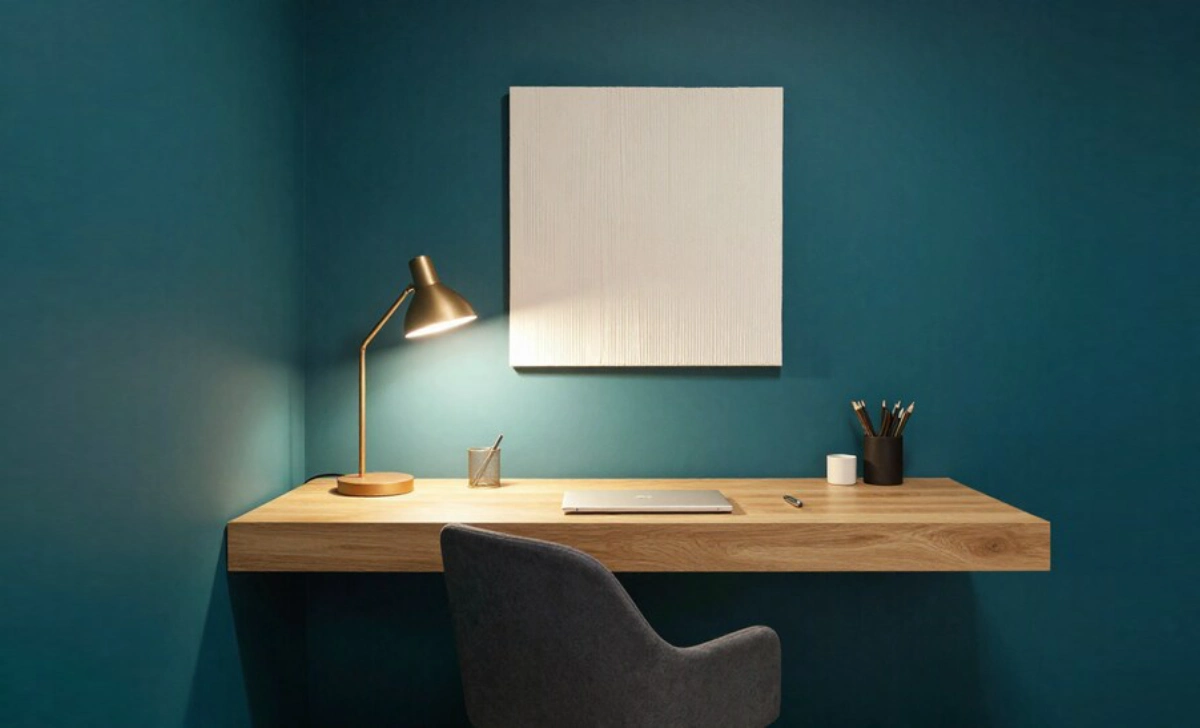
Dark walls work when you commit fully. Half-measures create cave-like feelings. Complete commitment creates cocoon-like comfort. Farrow & Ball’s Railings, a deep charcoal with blue undertones, transforms basement family rooms into sophisticated entertainment spaces. The color hides imperfections in foundation walls while making furniture and artwork pop visually.
Sherwin-Williams Iron Ore achieves similar results with slightly warmer undertones. Designers choose this for basement home theaters and wine cellars, where you want intimate, enclosed feelings. The color requires proper lighting design, but when executed correctly, guests assume your basement costs three times what you actually spent.
Benjamin Moore Hale Navy changes the basement game entirely. This saturated blue-gray works in spaces with even minimal natural light because the color contains enough gray to prevent it from reading as aggressively dark. Designers use this for basement bedrooms and home offices where concentration matters more than brightness.
The key with dark basement colors involves ceiling treatment. Paint ceilings white or use a color three shades lighter than the walls. This creates visual height even in spaces with seven-foot ceilings. Add recessed lighting or track lighting to wash walls with light, and dark colors become assets rather than liabilities.
Colors That Fix Specific Basement Problems
Your basement has unique challenges. Generic solutions fail.
Basement bedroom problems require different solutions than family room issues. PPG’s Silver Strand (a soft gray-blue) works specifically for basement bedrooms because the color promotes calm without feeling cold. The blue undertones counteract the orange glow from table lamps and overhead fixtures that plague basement sleeping spaces.
For basements with moisture concerns, Behr’s Ultra Scuff Defense in Kitchen and Bath formulas provides mold-resistant properties alongside color. Designers favor Swiss Coffee from this line because the warm off-white tolerates humidity while maintaining a clean appearance. The slight yellow undertone prevents the dingy gray cast that pure whites develop in damp conditions.
Low-ceiling basements benefit from Sherwin-Williams Sea Salt, a color that reads as soft blue-green depending on light sources. The color tricks eyes into perceiving more vertical space because cool colors naturally recede. Designers pair this with vertical design elements like floor-to-ceiling shelving to amplify the height illusion.
Basement home gyms present specific color challenges. You need energy without aggression. Benjamin Moore’s Palladian Blue delivers this balance. The muted teal provides visual stimulation without the harshness of bright colors. The shade works with mirrors and equipment without creating visual competition.
The White Paint Trap Most Homeowners Fall Into
Pure white in basements creates more problems than it solves.
Brilliant whites like Benjamin Moore’s Chantilly Lace or Sherwin-Williams Extra White reflect light beautifully in naturally lit spaces. In basements, they create glare from artificial lights while highlighting every wall imperfection. Concrete walls telegraphing through white paint create a patchy, unfinished appearance that screams amateur work.
Designers choose warmer whites instead. Benjamin Moore’s White Dove (LRV 83) contains enough cream to soften the starkness while maintaining brightness. The color works with both warm and cool lighting without turning yellow or blue. Professional painters report White Dove requires fewer coats on basement walls than pure whites, saving time and money.
Sherwin-Williams Alabaster offers similar benefits with slightly different undertones. This warm white reads as pure white against darker accent walls but shows its warmth against white trim and ceilings. Designers use this when clients demand white walls but need protection from the pure white trap.
For basement ceilings specifically, Benjamin Moore’s Super White works better than wall whites because ceiling paint formulas reflect light differently. The flat finish absorbs rather than reflects light sources, preventing the glare problem that plagues basement spaces with multiple recessed lights.
Accent Wall Colors That Transform Entire Basements
Strategic color placement multiplies impact without overwhelming budgets.
Basement accent walls serve different purposes than accent walls upstairs. Designers use Sherwin-Williams Naval on feature walls to create focal points that draw attention away from problem areas like visible ductwork or support posts. The deep blue commands attention while making the surrounding neutral walls appear brighter by contrast.
Benjamin Moore’s Salamander is an unexpected accent wall choice that designers use in basements with exposed brick or stone. The rich terracotta color complements masonry while adding warmth that counteracts the basement’s coolness. The color works particularly well in basement bars and entertainment spaces where you want an inviting atmosphere.
For basement craft rooms and hobby spaces, designers choose PPG’s Everglade Glen, a sophisticated olive green. The color provides visual interest without distraction. Green undertones reduce eye strain during detailed work while creating a connection to nature that basements naturally lack.
Accent wall placement matters as much as color choice. Designers place accent walls opposite the basement stairs so descending guests see the color feature immediately. This creates positive first impressions that override negative baseline associations.
Colors for Unfinished Basements That Still Feel Intentional
Not every basement needs full finishing. Some need functional color.
Benjamin Moore’s Concrete Gray works perfectly on foundation walls in partially finished basements. The color acknowledges the industrial nature of the space without highlighting it. Designers use this in basements serving as workshops or storage areas where you need clean, defined space without investment in full finishing.
Sherwin-Williams Agreeable Gray transforms unfinished basement ceilings. Paint exposed joists and ductwork this warm gray, and suddenly the unfinished look reads as industrial chic rather than incomplete. The color hides dust and cobwebs better than white while maintaining enough brightness to function as a ceiling color.
For basement laundry rooms, designers choose PPG’s Misty Aqua. The soft blue-green makes necessary basement spaces feel less utilitarian. The color pairs well with white appliances while hiding the yellow tint that develops around washing machines and dryers.
The Sherwin-Williams and Benjamin Moore Colors Designers Order Repeatedly
Some colors earn permanent spots on designer specification sheets.
Sherwin-Williams Accessible Beige appears in more designer basement plans than any other single color. The warm greige (gray-beige hybrid) works in basements with any lighting condition. The color contains enough warmth to feel inviting but enough gray to read as contemporary. Designers pair this with white trim and darker accent walls for foolproof results.
Benjamin Moore’s Edgecomb Gray runs a close second. This color shifts between gray and beige depending on lighting, which means your basement looks different throughout the day. The subtle color changes create visual interest that static colors can’t match.
For basements with walkout access, designers consistently choose Sherwin-Williams Worldly Gray. The color works with the transition between natural outdoor light and artificial indoor light without looking washed out or muddy.
How to Test These Colors in Your Specific Basement
Color selection requires testing in actual conditions.
Buy sample sizes of your top five choices. Paint large poster boards rather than painting directly on walls. This allows you to move samples around the basement throughout the day. Check colors in the morning, afternoon, and evening. Colors that look perfect at 2 PM might look terrible at 8 PM under artificial light.
Test colors on walls opposite your primary light source and walls adjacent to it. Light angle changes how colors appear dramatically. The same color can look three shades lighter on the wall facing your egress window compared to the wall perpendicular to it.
Leave sample boards up for at least three days. You need to live with colors through different weather conditions. Colors look different on sunny days versus overcast days, even in basements with limited natural light.
The Bottom Line on Designer Basement Colors
Designers succeed with basement colors because they understand light quality, undertones, and the psychology of underground spaces. They choose colors that work with basement conditions rather than against them. They commit to dark colors when appropriate rather than defaulting to safe whites that often fail.
Your basement deserves the same thoughtful color selection as the rest of your home. These 20 colors represent proven solutions to common basement challenges. Pick three that address your specific needs. Test them properly. Trust the process that professionals use daily.
The right basement paint color changes how you use the space. Choose well, and that forgotten basement becomes your favorite room.