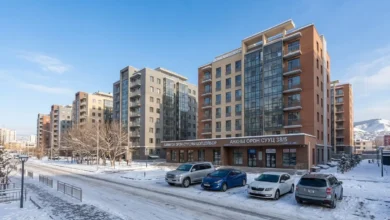
Multifamily Real Estate Investing: Your Complete Guide for 2026

Multifamily real estate investing involves acquiring residential properties with two or more units under one ownership. These investments generate multiple income streams from a single property while spreading risk across several tenants. Investors benefit from steady cash flow, property appreciation, tax advantages, and economies of scale that single-family properties cannot match.
Multifamily properties represent one of the strongest paths to building wealth through real estate. You can earn income from multiple tenants while managing just one property. This means less work and more profit compared to owning several single-family homes.
The market shows strong fundamentals heading into 2026. Vacancy rates are expected to end 2025 at 4.9% with average annual rent growth at 2.6%, according to CBRE Research. These numbers signal healthy demand and profitable opportunities for investors who understand the market.
What Makes Multifamily Properties Different
A multifamily property contains two or more separate housing units in one building or complex. Duplexes, triplexes, fourplexes, townhomes, and apartment buildings all fall into this category.
The key difference from single-family homes is simple: one property generates multiple rent checks each month. When one unit sits empty, the others keep producing income. This built-in protection makes multifamily investing less risky than relying on a single tenant.
You own the entire property and the land beneath it on one deed. This simplifies management compared to owning scattered single-family rentals across different neighborhoods.
Why Multifamily Real Estate Investing Works
Investors choose multifamily properties for several concrete reasons. Each advantage directly impacts your bottom line.
Multiple Income Streams From One Investment
A single-family rental gives you one monthly check. A fourplex gives you four. The math is straightforward, and the impact is significant. Your total monthly income jumps while your management workload stays manageable.
In 2025, apartment demand totaled roughly 355,000 units, marking the third-highest annual absorption in the past 25 years. This shows renters actively seek multifamily housing, which keeps your units occupied.
Lower Vacancy Risk
Empty single-family homes produce zero income. Empty units in multifamily properties hurt less because other tenants continue paying rent. This spreads your risk across multiple income sources.
Current market data support this advantage. The national occupancy rate sits around 95%, meaning investors maintain steady income even during slower rental periods.
Property Value You Control
Single-family homes gain value based on neighborhood sales. Multifamily properties work differently. Their value depends on the income they generate.
Increase rents by $100 per unit across a 10-unit building, and you add $12,000 in annual income. This directly raises the property’s market value. You control appreciation through smart management decisions.
Tax Benefits That Reduce Your Bill
Multifamily properties qualify for depreciation deductions that offset rental income. You can also deduct mortgage interest, property taxes, insurance, repairs, and operating expenses.
These deductions reduce your taxable income while your property continues generating cash flow. The tax code rewards real estate investors who provide housing.
Easier Path to Hiring Property Managers
Single-family rentals rarely produce enough income to justify professional management. Multifamily properties generate sufficient revenue to hire managers while maintaining positive cash flow.
Professional management means less work for you. Managers handle tenant calls, maintenance requests, rent collection, and property issues. Your investment becomes truly passive.
Finding the Right Multifamily Investment Property
Location determines everything in real estate. The best property in a weak market underperforms compared to an average property in a strong market.
Research Growth Markets First
Look for cities and neighborhoods with expanding job markets, population growth, and new development. Markets with the largest supply pipelines (e.g., Austin, Dallas, Nashville, and Atlanta) have the highest job growth projections.
Strong employment drives rental demand. People need places to live near their jobs. Target areas where companies are hiring and populations are growing.
Study Local Rental Rates
Compare asking rents across different neighborhoods and property types. Use websites like Rentometer or review local listings to understand current market rates.
You need this information before making offers. Overpaying for a property based on inflated rent assumptions destroys your returns before you start.
Evaluate the Property Type
Start with smaller properties if you are new to multifamily investing. Duplexes, triplexes, and fourplexes cost less and carry lower risk than large apartment complexes.
These smaller properties often qualify for residential financing with better terms than commercial loans. You can also live in one unit while renting the others, reducing your living expenses while building equity.
Check Recent Sales Data
Pull comparable sales in the area. What are similar properties selling for per unit? This gives you a baseline for making competitive offers.
Properties selling below market averages may indicate problems. Properties selling above market rates might be overpriced. Know the numbers before you negotiate.
Running the Numbers on Multifamily Deals
Every investment decision starts with financial analysis. Three key calculations tell you whether a property makes sense.
Calculate Net Operating Income
Net Operating Income (NOI) shows how much money a property generates after paying all operating expenses except the mortgage.
Start with gross rental income. Add other income sources like parking fees, laundry revenue, or storage rentals. Subtract all operating expenses, including property taxes, insurance, utilities, maintenance, repairs, property management fees, and marketing costs.
The formula looks like this: Total Income – Operating Expenses = NOI
A property with $100,000 in annual rental income and $50,000 in operating expenses has an NOI of $50,000. This number drives your next calculations.
Determine Your Cash Flow
Cash flow measures actual money in your pocket each month after paying the mortgage.
Take your monthly NOI and subtract your mortgage payment. What remains is your monthly cash flow.
Positive cash flow means the property pays for itself and puts money in your account. Negative cash flow requires you to cover the shortfall from other income sources.
Most investors target properties with strong positive cash flow from day one. This protects you during vacancies and unexpected repairs.
Figure Out the Cap Rate
The capitalization rate (cap rate) helps you compare different properties and assess returns.
Divide annual NOI by the property’s purchase price. Multiply by 100 to get a percentage.
A property with $50,000 NOI selling for $1 million has a 5% cap rate. Higher cap rates typically indicate higher returns but also higher risk. Lower cap rates suggest safer investments with lower returns.
Based on data from CBRE and Green Street, cap rates averaged 4.1% in 2021 before increasing to 5.2% by 2024. This shift reflects changing market conditions and interest rate environments.
Target cap rates between 5% and 10% for most multifamily investments. Anything below 5% may not generate sufficient returns. Anything above 10% deserves extra scrutiny to understand the risks.
Financing Your Multifamily Purchase
Multiple financing options exist for multifamily properties. Your choice depends on property size, your financial situation, and investment goals.
Conventional Mortgages for Small Properties
Properties with four units or fewer often qualify for conventional residential mortgages. These loans offer competitive interest rates and terms up to 30 years.
Living in one unit as your primary residence opens additional options. You can qualify for FHA loans with as little as 3.5% down. The rental income from other units helps you qualify for the loan.
Commercial Loans for Larger Buildings
Properties with five or more units require commercial financing. These loans typically demand larger down payments (25-30%) and have shorter terms (5-10 years with amortization periods of 20-25 years).
Commercial lenders focus on the property’s income potential rather than your personal income. Strong NOI and solid cash flow make approval easier.
Private and Hard Money Lenders
Private investors and hard money lenders offer faster approval and more flexibility than traditional banks. These loans work well for quick purchases or properties needing significant repairs.
Expect higher interest rates (8-15%) and shorter terms (1-3 years). Use these loans for value-add opportunities where you can refinance into traditional financing after making improvements.
Portfolio Loans From Local Banks
Smaller regional banks sometimes offer portfolio loans that they keep on their own books rather than selling to larger institutions. These lenders can be more flexible with terms and approval criteria.
Build relationships with local banks in your target markets. They understand the area and may offer better terms for strong borrowers.
Managing Multifamily Properties Effectively
Good management separates profitable investments from money pits. You have two choices: manage yourself or hire professionals.
Self-Management Considerations
Managing your own property saves money but costs time. You handle tenant screening, lease signing, rent collection, maintenance coordination, and tenant complaints.
This approach works for smaller properties (under 10 units) located near where you live. The time commitment grows significantly as you add units or properties.
Hiring Property Management Companies
Professional managers typically charge 8-10% of the monthly rent. For a property generating $10,000 monthly, that’s $800-$1,000 per month.
They handle everything: marketing vacant units, screening tenants, collecting rent, coordinating repairs, handling emergencies, and managing evictions. Your involvement drops to reviewing monthly reports and making major decisions.
The cost often pays for itself through higher occupancy rates, better tenant screening, and more efficient operations. Poor tenants and deferred maintenance cost far more than management fees.
Key Management Tasks
Regardless of who manages the property, these tasks require attention:
Regular maintenance prevents small problems from becoming expensive disasters. Schedule routine inspections, respond quickly to repair requests, and maintain common areas.
Tenant screening protects your investment. Check credit reports, verify employment, contact previous landlords, and run background checks. Good tenants pay on time and take care of your property.
Rent collection systems keep cash flowing. Set clear payment policies, offer online payment options, and enforce late fees consistently.
Financial tracking shows how your investment performs. Monitor income and expenses monthly. Compare actual numbers to your projections and adjust as needed.
Common Multifamily Investing Mistakes to Avoid
New investors make predictable errors. Learning from others’ mistakes saves money and headaches.
Overestimating Rental Income
Using optimistic rent projections destroys returns when reality hits. Research actual rents for comparable units in the same neighborhood.
Factor in vacancy rates when calculating income. No property stays 100% occupied year-round. Budget for 5-10% vacancy depending on your market.
Underestimating Operating Expenses
Operating costs always exceed initial estimates. Properties need repairs, tenants cause damage, and emergencies happen.
The 50% rule provides a conservative starting point: assume operating expenses (excluding mortgage) consume 50% of gross rental income. Actual expenses may run lower, but starting conservatively protects you.
Skipping Professional Inspections
Property inspections cost $500-$1,500, depending on size. This small investment reveals expensive problems before you buy.
Focus on major systems: roof, foundation, plumbing, electrical, and HVAC. Replacing these systems costs tens of thousands. Know what you are buying.
Ignoring Market Conditions
Developers will add more multifamily units to the U.S. housing market than in any period since the 1970s. High supply markets face more competition and slower rent growth.
Research new construction in your target area. Too much new supply pushes vacancy rates higher and limits your ability to raise rents.
Buying in Declining Neighborhoods
Cheap properties in weak markets rarely appreciate. Look for neighborhoods showing signs of improvement: new businesses opening, rising home prices, and decreasing crime rates.
Declining areas may never recover. Your property sits empty while you make mortgage payments.
Scaling Your Multifamily Portfolio
Success with your first property builds the foundation for expansion. Strategic growth multiplies your wealth over time.
Refinance to Pull Out Equity
Properties that appreciate or generate strong cash flow can be refinanced to access equity. Use this capital as down payments on additional properties.
This allows you to buy more real estate without new cash. Your existing properties fund portfolio growth.
Diversify Across Markets
Owning properties in multiple cities protects against local economic downturns. If one market weakens, others may stay strong.
Dallas-Fort Worth and Atlanta acted as the top markets for multifamily investment activity in 2025. Research multiple markets before concentrating all investments in one area.
Mix Property Types and Sizes
Combine smaller properties (duplexes and fourplexes) with larger buildings (20+ units). Different property types respond differently to market changes.
Smaller properties offer easier management and quicker sales if needed. Larger properties generate more income and benefit from greater economies of scale.
Build a Strong Team
Successful investors surround themselves with skilled professionals: property managers, real estate agents, contractors, accountants, and attorneys.
These relationships become more valuable as your portfolio grows. Good team members save money, find better deals, and solve problems before they become crises.
Market Outlook for 2026
Understanding current market trends helps you make smarter investment decisions.
Supply and Demand Dynamics
Rent growth is expected to gradually recover, reaching around 4% by 2026, as supply slows and demand stabilizes. This indicates improving conditions for property owners.
After 585,191 units were delivered in 2024, deliveries are expected to slow in 2025 to 431,212 units. Less new construction means less competition for your units.
Interest Rate Environment
Higher interest rates have cooled transaction volume but also created opportunities. Based on the assumption of an economic soft landing, we expect the multifamily market to continue to see subdued but positive growth in 2025.
Properties are selling for less than replacement cost in many markets. Buyers who can access financing find favorable pricing.
Regional Performance
Markets vary significantly in performance. San Francisco again led the nation in rent growth, with rents rising 7.5% YOY, while San Jose recorded growth above 4%.
Sun Belt and Mountain West markets face more supply pressure but show strong long-term demographics. The Midwest and Northeast markets offer a more balanced supply and demand with steady performance.
Final Thoughts
Multifamily real estate investing offers a proven path to building wealth through real estate. The ability to generate multiple income streams from one property, combined with tax benefits and forced appreciation, creates advantages that single-family homes cannot match.
Success requires thorough research, careful financial analysis, and strong property management. Start with smaller properties to learn the business. Run conservative projections and maintain cash reserves for unexpected expenses.
Market conditions in 2026 present opportunities for prepared investors. Slowing new construction and steady demand support rent growth and occupancy. Properties trading below replacement cost offer entry points for long-term value creation.
Focus on markets with strong job growth, favorable demographics, and manageable supply levels. Build relationships with local professionals who understand your target areas. Scale gradually as you gain experience and confidence.
The best time to start was yesterday. The second-best time is today.
FAQs
How much money do I need to start investing in multifamily properties?
Down payment requirements range from 3.5% to 30%, depending on loan type and property size. A duplex costing $400,000 might require $14,000 down with FHA financing or $80,000 with conventional financing. Add closing costs (2-5% of purchase price) and reserves for repairs and vacancies. Most investors start with $25,000-$50,000 in capital for smaller properties.
What is the difference between multifamily and commercial real estate?
Properties with 1-4 units are classified as residential real estate and qualify for residential financing. Properties with 5+ units are commercial real estate requiring commercial loans. The distinction affects financing terms, down payment requirements, and property valuation methods. Commercial properties are valued based on income rather than comparable sales.
Should I live in one unit of my multifamily property?
Living in one unit offers significant benefits for new investors. You qualify for owner-occupied financing with lower down payments and better interest rates. You can manage the property more easily and respond quickly to issues. Your housing costs drop as tenant rents cover the mortgage. This strategy works best with duplexes, triplexes, and fourplexes.
How do I find good multifamily investment properties?
Work with commercial real estate agents who specialize in multifamily properties. Search online platforms like LoopNet, CREXi, and local MLS listings. Network with other investors, attend real estate investment groups, and build relationships with property managers who know about upcoming listings. Drive target neighborhoods looking for “For Sale” signs or distressed properties.
What vacancy rate should I expect?
National vacancy rates average 5-6% but vary significantly by market. Research your specific market using data from local property management companies and market reports. Conservative investors budget for 8-10% vacancy in their projections to protect against unexpected turnover or market downturns. Well-managed properties in strong markets often maintain 3-5% vacancy rates.