Germany Real Estate News Today: Market Trends and 2026 Outlook
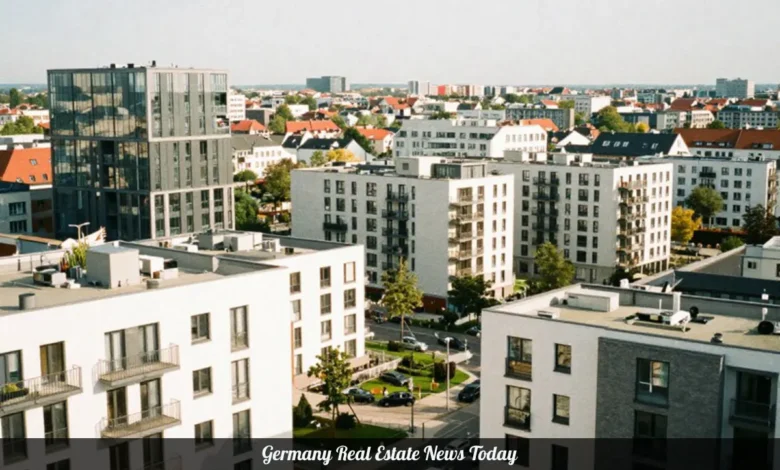
Germany Real Estate News Today market shows a moderate recovery in 2026, with property prices rising 3-4% annually. Residential demand remains strong amid a housing shortage of approximately 550,000 units, while construction completions continue declining to around 215,000 units in 2026. Office vacancy rates climb to 9.5% nationally as hybrid work models persist, creating a bifurcated market favoring prime locations.
Residential Prices Return to Growth After Three-Year Correction
Germany’s housing market has turned a corner after experiencing a 13% decline between early 2022 and mid-2024. The correction stemmed from rapidly rising interest rates and soaring construction costs that reshaped buyer expectations. Experts at the German Economic Institute forecast property prices will rise by 3-4% in 2026, marking a return to growth but falling short of the rapid appreciation seen during the 2010s.
The median home price in Germany currently sits at approximately €260,000, while the average price reaches €320,000. This pricing reflects a market still digesting previous corrections while responding to renewed buyer interest.
Munich maintains its position as the country’s most expensive city. Average asking prices in central Munich neighborhoods like Maxvorstadt reach €11,400 per square meter. Hamburg, Berlin, Frankfurt, and Cologne round out the top five most expensive cities. In these major cities, the affordability index remains below 100 points, meaning even high earners struggle to buy property.
What’s driving this recovery? New mortgage loans in the first half of 2025 were approximately one-third higher compared to the previous year. The third quarter showed robust loan demand as well, suggesting buyers recognize that interest rates are unlikely to decline significantly further.
Housing Shortage Deepens Despite Construction Targets
Germany faces a severe housing crisis that will intensify through 2026. According to a recent study by the Social Housing Alliance, Germany is already missing around 550,000 apartments in 2025, particularly social housing and affordable rental properties.
The construction pipeline offers little relief. The German Economic Institute forecasts completions will fall to around 235,000 units in 2025 and drop further to roughly 215,000 in 2026, down from 252,000 last year. This stands in stark contrast to the government’s original target of 400,000 new apartments annually.
Why are completions declining when permits show improvement? The answer lies in construction lag. From permit approval to completion now takes an average of 26 months, and in multi-family housing—where demand is greatest—up to 34 months. The 2022-2023 collapse in permits, triggered by rising interest rates, is now feeding through as falling completions regardless of current approval improvements.
In January-August 2025, building permits rose 6.5% to 151,200 units. But this uptick conceals a problematic composition. Single-family homes rose more than 15% to 29,300 units, while multi-family dwellings—critical for urban affordability—grew by less than 5% to 79,100 units, still 36% below 2021 levels.
The federal government has responded with its “Bau-Turbo” (Construction Turbo) program to accelerate approvals. From mid-December 2025, the government released €800 million to help clear the construction backlog, increasing KfW’s funding pot twelvefold compared to the previous volume. Whether this intervention will materialize into actual completions remains uncertain.
Investment Market Shows Signs of Life
The commercial real estate investment market stabilized in 2025 after three years of decline. Despite a marginal decline of 2% compared to the previous year, residential investment showed signs of market stability, with many transactions requiring more time to reach final agreement and carrying over into early 2026.
Jan-Bastian Knod, Head of Residential Investment Germany at Cushman & Wakefield, offers an optimistic view: “We see many positive signals in the market that indicate high interest and increasing market momentum. In addition to foreign capital, which is primarily looking at large-volume investment opportunities, domestic capital is increasingly returning to the market.”
PTXRE expects a transaction volume of around €40 billion by the end of 2026 for the overall German market. This represents a selective market environment with targeted investments in resilient segments like logistics, hotels, and food-anchored retail.
The financing picture remains tight. The refinancing gap in the German real estate market will rise to around €8.5 billion in 2026, according to PTXRE estimates. This financing pressure will favor investors with strong balance sheets and disciplined underwriting.
Office Market Faces Structural Challenges
Germany’s office sector continues navigating a difficult transition shaped by hybrid work models and rising quality expectations. The numbers paint a sobering picture.
At the end of 2025, around 2.24 million square meters of office space was vacant in Berlin, corresponding to a vacancy rate of 10.4%. This reflects high completion rates combined with extremely low pre-letting rates of only around 6% recently.
The problem isn’t limited to Berlin. Vacancy rates in Germany’s top five office markets now stand at an average of 9.1%, representing an increase of 1.4 percentage points year-on-year. Frankfurt leads with the highest vacancy rate at 11.5%, followed by Düsseldorf at 10.8%.
Research for Germany’s top office markets projects vacancy continuing to rise and reaching approximately 9.5% during 2026, even as completions fall.
This creates a bifurcated market. Prime, ESG-compliant buildings in central business districts continue attracting tenants and investors. In Q2 2025, 75% of leasing activity was focused on CBD locations such as Frankfurt and Amsterdam, with vacancy in core areas tightening to 7.1%.
Secondary and tertiary locations face a different reality. Transaction volumes for office properties remain approximately 80% below the level that prevailed when the ECB started hiking rates in 2022. Older buildings without modern amenities or energy efficiency certifications struggle to find tenants at any price.
In 2025 alone, Cushman & Wakefield observed that over 112,000 square meters of office space in Berlin was converted to alternative uses such as residential, hotel, or serviced apartments. This trend will likely accelerate as property owners seek to repurpose obsolete office buildings.
Rent Growth Accelerates in Major Cities
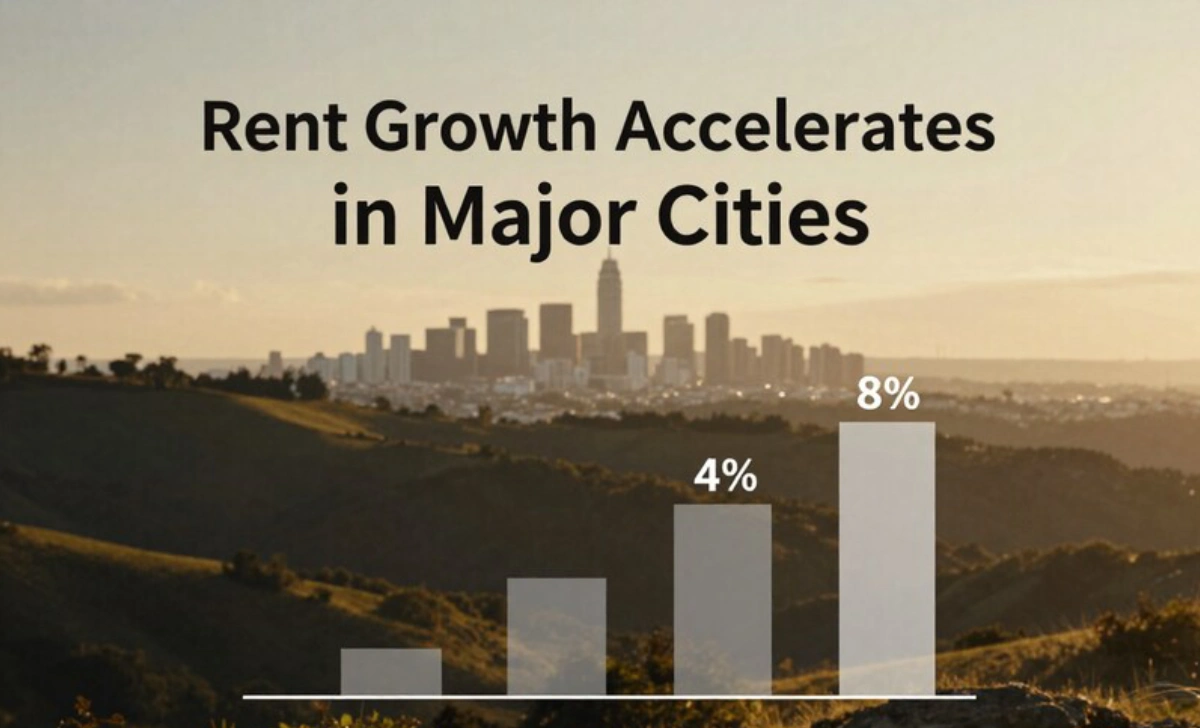
In 2025, rents rose by 4% nationwide, but by as much as 8% in large cities, according to the German Economic Institute. This divergence reflects the concentration of housing shortages in urban areas.
The rental market’s tightness becomes clear when examining vacancy rates. There are approximately 1.7 million vacant apartments nationwide—mainly in rural areas—according to analysis firm Empirica. This means urban renters cannot simply relocate to find affordability.
Prime rents in top locations continue rising. Prime rent in Düsseldorf rose significantly by 5.7% over the course of 2025 to €45.90 per square meter, underscoring dynamic rental price development in recent years.
Who can afford these prices? In Munich, buyers from the top 30% of German households by income must spend an average of 43% of their disposable net income on financing an apartment purchase, well above the industry’s affordability threshold of 35%.
Interest Rates Stabilize at New Normal
Mortgage rates currently hover around 3-3.5%, following two interest rate cuts by the European Central Bank in 2025. This represents a significant improvement from the peak tightening phase but remains far above the 1-1.5% rates available during 2020-2021.
Mortgage interest rates will tend to rise in 2026, as they are influenced by the yield levels of German government bonds, which are expected to inch upwards. Buyers hoping for a return to ultra-low rates will likely be disappointed.
The ECB deposit facility rate stands at 2.00% as of December 2025. This provides a floor for mortgage rates but also signals the central bank’s commitment to fighting inflation. Real estate investors and buyers need to underwrite deals assuming these higher rates persist.
What This Means for Buyers and Investors
The waiting game many buyers played in 2023-2024 is becoming increasingly expensive. Despite mortgage rates rising and currently hovering around 3-3.5%, the market has become significantly more balanced compared to the frenzy of 2020-2021.
Property prices in many markets have stabilized or begun rising again. By 2027, prices will likely remain just below their 2022 peak in nominal terms—and noticeably cheaper in real (inflation-adjusted) terms.
For investors, residential real estate remains attractive. In the first half of 2025, residential was the asset class with the highest transaction volume in the commercial real estate market. Investment volumes are picking up but remain significantly below the long-term average, suggesting room for compression in yields.
The office sector requires careful selection. Prime properties in central locations with strong ESG credentials will continue performing. Buildings in secondary locations or those requiring significant capital expenditure face an uphill battle.
Final Thoughts
Germany’s real estate market in 2026 reflects a market in transition. Residential prices are recovering but won’t return to boom-time appreciation rates. The housing shortage will deepen as construction completions lag far behind demand. Office properties face a bifurcated future where quality and location matter more than ever.
For buyers and investors, the key is recognizing that perfect timing doesn’t exist. The fundamentals—structural housing shortages, declining construction activity, stable interest rates—support moderate price growth in quality assets and locations.
The question isn’t whether to enter the market, but which segments and locations offer the best risk-adjusted returns. Urban residential properties in job-rich metros remain the safest bet. Office investors should focus exclusively on prime, ESG-compliant buildings in central business districts.
The German real estate spring may not arrive in 2026, but green shoots are visible for those who know where to look.
FAQs
Will German property prices continue rising in 2026?
Yes, experts forecast moderate growth of 3-4% nationally, driven by housing shortages and limited new construction. Major cities like Munich, Berlin, and Hamburg will likely see stronger appreciation than secondary markets.
Is now a good time to buy property in Germany?
Current conditions favor buyers who find the right property rather than those waiting for perfect timing. Interest rates have stabilized around 3-3.5%, and prices in many markets have corrected from 2022 peaks while construction completions continue declining.
How severe is Germany’s housing shortage?
Germany is missing approximately 550,000 apartments as of 2025, with the gap expected to widen. Construction completions will fall to around 215,000 units in 2026, well below the 320,000 annual units needed through 2030.
What’s happening with office real estate in Germany?
Office vacancy rates are rising to 9.5% nationally, with Frankfurt reaching 11.5%. Prime buildings in central business districts with ESG certifications continue performing well, while secondary locations struggle with obsolescence.
Will interest rates drop significantly in 2026?
Unlikely. Mortgage rates should remain around 3-3.5% or potentially rise slightly as German government bond yields inch upward. The ultra-low rates of 2020-2021 aren’t returning in the foreseeable future.