Phoenix Housing Market Correction: What Buyers and Sellers Need to Know in 2026
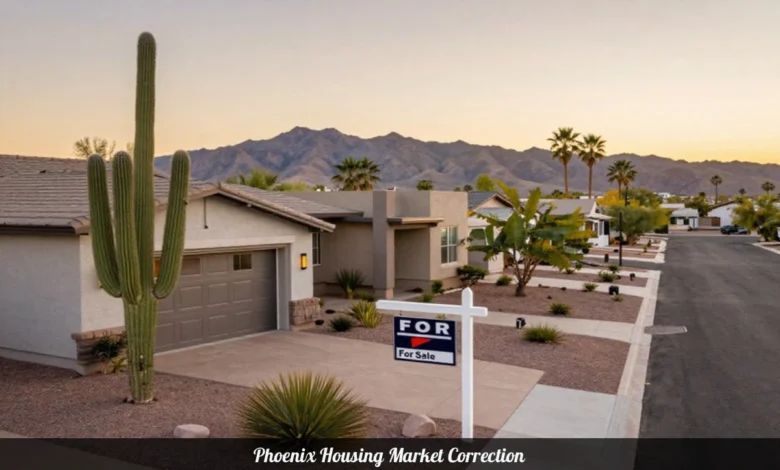
Phoenix’s housing market correction reflects a shift from seller dominance to balanced conditions. Median prices sit around $415,000-$466,000 with inventory up 19%, creating more negotiating power for buyers. This isn’t a crash—it’s a healthy recalibration after years of unsustainable growth, driven by higher mortgage rates and increased supply.
The Phoenix housing market looks different in 2026 than it did three years ago. Gone are the bidding wars where buyers waived inspections and offered $50,000 over the asking price. Instead, you’ll find homes sitting on the market for 60-70 days, sellers cutting prices, and buyers taking their time to negotiate.
What changed? The market correction everyone predicted finally arrived—but not with the dramatic collapse some feared.
Why Phoenix Entered a Market Correction
Phoenix closed sales rose from post-pandemic lows, mortgage rates stabilized enough for buyers to negotiate, and inventory began to shift after years of stagnation. The correction stems from three key factors:
Median sales prices dipped to $449,500 in June 2025, a 0.3% decline from May’s $451,000. Multiple data sources now show prices ranging from $415,000 to $466,000, depending on location and property type. This represents an 8.5% drop from peak values according to some measures.
Mortgage rates matter more than most people realize. Rates climbed from around 3.1% early in the pandemic to approximately 5.7%, and they’ve hovered between 6-7% throughout 2025. At those rates, monthly payments increased by hundreds of dollars, pricing many buyers out of the market.
The lock-in effect plays a massive role. Most homeowners secured rates below 4% during 2020-2021. Why would they sell and take on a 6.5% rate? They wouldn’t. This dynamic kept inventory artificially low for years.
Now that’s changing. The inventory of homes for sale climbed 19.2% year-over-year, creating a 4.4-month supply. Compare this to the 2-3 month supply during the peak frenzy, and you see why power shifted to buyers.
Current Market Numbers Tell the Real Story
The median sale price in Phoenix was $466,000 in November 2025, up 3.7% compared to last year, with homes selling after 61 days on the market. That same data shows 1,170 homes sold in November, down from 1,189 the previous year.
Different sources report varying numbers based on methodology:
- Zillow shows average home values at $415,258 (down 8.5% annually)
- Redfin reports median prices at $466,000 (up 3.7% annually)
- Phoenix REALTORS data indicates $480,000 median (flat to slightly up)
Why the discrepancy? Geography matters. Central Phoenix and Scottsdale command higher prices than outlying areas like Casa Grande or Arizona City.
Cities saw varying price shifts in June—Buckeye dropped 8%, Fountain Hills and Phoenix proper each declined 6%, while Cave Creek transitioned into buyer’s market territory.
The sale-to-list price ratio dropped from above 100% to approximately 97-98%. Translation: bidding wars ended. Only 14.7% of homes sold over asking price in December 2025, down from 22% the previous year.
Days on market increased across the board. Houses in Phoenix spend an average of 62 days on the market in October 2025, longer than last year, though down from the previous month.
This Isn’t 2008—Here’s Why
More than 90% of homeowners have positive equity today, with over $35 trillion in total equity, according to the National Association of Home Builders. During the 2008 crash, many homeowners were underwater, forced into foreclosures and short sales.
The lending environment changed. Banks tightened standards after 2008. You won’t find subprime mortgages or liar loans flooding the market. Buyers today actually qualify for the loans they receive.
Phoenix’s transformation into a semiconductor, healthcare, and advanced manufacturing hub continues to draw young, skilled workers from California, Washington, the Midwest, and New York. The region now surpasses 5.2 million residents, with concentrated growth in Pinal County and the West Valley.
Job growth matters. When people have stable employment, they don’t default on mortgages en masse. Foreclosure rates remain historically low.
What Buyers Gain from the Correction
Negotiating power returned to buyers for the first time since 2019. Valley Realtor Sindy Ready, former president of the Arizona Realtor Association, said current market conditions favor buyers, who now have more choices and negotiating power.
You can request repairs after inspections. You can ask for closing cost assistance. You can include contingencies in your offer. These weren’t options two years ago.
Homebuilders stepped in to maintain momentum, offering interest rate buydowns into the mid-3% range, along with closing cost credits, appliance packages, and landscaping perks. New construction became particularly appealing compared to resale homes.
Inventory selection improved dramatically. Nearly 25,000 homes currently sit on the MLS in the Phoenix metro. Buyers can visit multiple properties, compare neighborhoods, and make informed decisions without pressure.
The median price per square foot dropped in some areas, giving buyers more space for their money. Condos and townhomes particularly struggle as single-family homes offer better value.
What Sellers Must Accept
Pricing competitively became non-negotiable. Overpriced listings sit unsold for months while properly priced homes still move within 30-45 days.
Many sellers now pay closing costs, help buyers with expenses, or offer price reductions to close deals. This represents a complete reversal from the seller’s market, where buyers covered everything.
Professional photography, staging, and marketing matter again. When buyers have choices, presentation separates successful listings from stale ones.
The listing success rate for condos and townhomes dropped to 58% in May, the lowest since 2011, with manufactured homes faring worse at under 50%. Property type impacts sellability more than ever.
Sellers with realistic expectations still succeed. More than 90% of homeowners have positive equity, meaning the vast majority can list their homes without being forced into a short sale or foreclosure.
Mortgage Rates Shape the Timeline
Rates fell dramatically in January 2025, but people didn’t rush in—they wanted to see if rates would keep dropping. Buyers now wait for stability, not just lower numbers.
Current forecasts project rates averaging 6.1-6.4% through 2026. If rates drop to 5.5%, expect demand to surge and inventory to tighten. If rates climb to 7.5%, the market could soften further.
The “magic bullet” effect of lower rates improves affordability dramatically. A 1% rate decrease on a $450,000 home saves buyers roughly $300 monthly—$3,600 annually.
Regional Variations Within Phoenix
Central Phoenix and Scottsdale maintain stronger pricing. Median home prices here are around $550,000, with about four months of inventory available, attracting buyers seeking vibrant cultural amenities and access to strong employment centers.
East Valley markets (Chandler, Gilbert, Tempe) offer family-friendly neighborhoods with median prices between $480,000-$620,000. These areas remain competitive due to good schools and newer developments.
West Valley locations (Surprise, Peoria, Buckeye) saw steeper price declines but offer more affordability. Surprise closed sales were up 6.1%, pending sales rose 3.7%, and new listings shot up 14.1%, with median prices declining 1.4% to $430,000.
Outlying areas like Queen Creek and Maricopa feature new construction below regional averages. These rapidly growing communities are experiencing some of the fastest home price appreciation, with increases of 6-7% annually.
Economic Forces Behind the Shift
Consumer confidence remains down as people are scared to make big decisions—the fundamentals look better than the headlines, but people don’t feel that way.
Inflation erodes purchasing power. Inflation and tariffs continue to erode household purchasing power—it’s not just rates; everything costs more, including groceries, gas, and household goods.
Construction limitations persist. Labor shortages, higher financing costs, and zoning bottlenecks mean single-family permits remain far below the runaway building of the 2000s, resulting in a steady supply deficit.
The luxury segment operates differently. The luxury segment remains tied more to the stock market than mortgage rates, and continues to buoy median sales prices. Stock market volatility directly impacts high-end sales.
What Experts Predict for 2026
Zillow forecasts suggest a slight dip in home values towards the end of 2025, then expect modest recovery and slight growth by September 2026. Most projections show 1-3% annual appreciation.
Closed transactions rose from their 2023 trough, and pending sales through 2025 moved closer to seasonal norms, even as buyers remain wary.
Price segments perform differently. Segments under $1 million have softened roughly 2-3%, while certain mid-tier neighborhoods remain down 10-15% from their pandemic peaks.
Population growth provides a floor for demand. Migration patterns reinforce the trend with Phoenix continuing to draw young, skilled workers, and much of the region’s growth is concentrated in Pinal County and the West Valley, where land is more available.
No crash appears likely. When you have strong job growth, you’re not going to see a flood of foreclosures—people may not sell, but they don’t have to.
Action Steps for Buyers
Get pre-approved before searching. Sellers take serious buyers more seriously, even in a balanced market.
Research neighborhoods thoroughly. Visit at different times of day. Talk to residents. Check school ratings and crime statistics.
Don’t skip inspections. The correction means you can include inspection contingencies—use them.
Work with experienced local agents who understand micro-market dynamics. A Scottsdale specialist won’t know Buckeye pricing.
Consider new construction incentives. Builders offer interest rate buydowns into the mid-3% range along with generous closing cost credits, making new construction homes particularly appealing.
Action Steps for Sellers
Price based on recent comparable sales, not peak pandemic values. Overpricing guarantees your home sits unsold.
Invest in presentation. Professional photos, staging, and minor repairs pay dividends in buyer interest.
Offer incentives if your market segment struggles. Closing cost assistance or home warranties sweeten deals without major price cuts.
Time listings strategically. Spring and fall typically see higher buyer activity than summer or winter.
Contingency offers—meaning a house is being sold contingent on the sale of another home—are pretty common now and something sellers will consider. Flexibility helps deals close.
The Balanced Market Reality
A balanced market is one where no one feels like they won, but both sides walk away feeling good about the deal they made. That’s exactly where Phoenix stands in 2026.
The housing affordability index improved from 69 to 71, meaning that through October, 71% of households could afford the median-priced home, up 2.9% from a year earlier.
This correction benefits the market long-term. Unsustainable price growth hurts everyone. Steady, modest appreciation builds wealth without creating another bubble.
Phoenix isn’t collapsing—it’s correcting, and buyers are better positioned than they’ve been in years while sellers are being forced to recalibrate.
Final Thoughts
Phoenix’s housing market correction represents a return to normal, not a crisis. Median prices stabilized between $415,000-$480,000 depending on location. Inventory increased 19% year-over-year. Days on market extended to 60-70 days. Buyers gained negotiating power while sellers adjusted expectations.
The correction stems from higher mortgage rates (6-7%), the lock-in effect keeping inventory low for years, and increased supply finally hitting the market. This differs completely from 2008—homeowners hold massive equity, lending standards remain strict, and job growth supports continued demand.
For buyers, this has created the best purchasing conditions since 2019. For sellers with realistic pricing, homes still sell. For both groups, working with knowledgeable professionals who understand local market dynamics matters more than ever.
The Phoenix market won’t return to pandemic-era craziness, and that’s good news. Sustainable growth, balanced negotiations, and rational pricing benefit everyone long-term.
Frequently Asked Questions
Will Phoenix home prices crash in 2026?
No credible forecast predicts a crash. More than 90% of homeowners have positive equity, lending standards remain tight, and job growth supports demand. Expect modest price adjustments or slight appreciation, not a collapse.
Should I wait to buy a home in Phoenix?
Waiting for perfect conditions rarely works. By the time you’ve hit the bottom of prices, it’s already gone—the buyers who recognize that usually win. Current conditions favor buyers with increased inventory and negotiating power.
Is Phoenix still a good real estate investment?
Phoenix continues drawing population growth and job creation. The correction actually creates better entry points for long-term investors compared to overpaying during peak frenzy.
What mortgage rate should I expect in 2026?
Current forecasts project rates averaging 6.1-6.4% through 2026. Rate stability matters more than absolute numbers—buyers move when they feel confident rates won’t spike suddenly.
How long do homes take to sell in Phoenix now?
The average home sells in 60-70 days currently, compared to under 30 days during the peak market. Well-priced, well-presented homes still sell within 30-45 days.