Hayfield Investors Buy Stewartville Commercial Building: Small Town Deal With Big Potential
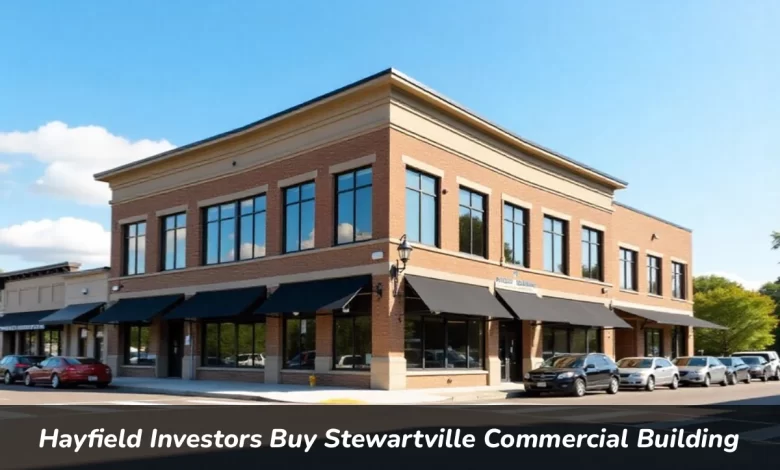
Two Hayfield Investors Buy Stewartville Commercial Building for $775,000 in May 2025. The 7,600-square-foot Professional Building at 100 Second St. SE has eight tenant units and benefits from Stewartville’s proximity to Rochester’s growing medical economy.
When Nick Matti and Trevor Anderson looked at commercial real estate opportunities, they saw something others missed. The two Hayfield natives invested $775,000 in a downtown Stewartville property, betting on a small town positioned to benefit from Rochester’s economic boom.
This deal signals a broader trend. Small-town commercial properties are attracting investors who want lower acquisition costs and proximity to growing metro areas. Stewartville, located just 10 miles south of Rochester, offers exactly that combination.
Why Hayfield Investors Chose Stewartville
Matti, a former Mayo Clinic nurse who now runs an online health coaching firm, teamed up with Anderson to purchase the Professional Building on May 1, 2025. Their investment group targeted Stewartville for specific reasons.
Location matters most in real estate. Stewartville sits at the intersection of Interstate 90, US Highway 63, and Minnesota Highway 30. This access makes it a viable alternative for businesses seeking lower costs than Rochester while staying close to the action.
The town’s population of roughly 6,000 provides a stable customer base. More importantly, Rochester’s Destination Medical Center initiative continues driving economic activity that spills into surrounding areas. Mayo Clinic’s DMC-related investment jumped 32% in 2024, reaching $176 million, according to recent reports.
“We like Rochester a lot with the whole DMC initiative and all the projects going on,” Matti explained. “We like Stewartville as sort of a secondary location for people that might want something a little bit more inexpensive than having their business inside of Rochester.”
The Professional Building Details
The purchased property spans 7,600 square feet and contains eight tenant units. Six units currently house tenants, including Charlie Brown PC Applications Consultants, 507 Family Chiropractic, and Overby Orthodontics.
Olmsted County estimated the 46-year-old building’s market value at $661,800 for 2025-2026. The investors paid $775,000, showing confidence that the property’s income potential exceeds current assessments.
Rochester-based Loam Commercial Real Estate represented both buyers and sellers in the transaction. The previous owner, Olstad Rentals LLC, led by Cole W. Olstad, had purchased the property for $675,000 just one year earlier in April 2024. This quick flip demonstrates active market interest in Stewartville commercial properties.
Small Town Investment Strategy
Matti and Anderson spent roughly a year researching opportunities before committing. Their approach focuses on helping people invest money into assets that could earn better returns than traditional stock market investments.
“Our eventual goal is to do bigger deals and help people to invest their money into something that could earn them a better return than in the stock market,” Matti noted.
This strategy makes sense in 2025. Commercial real estate in smaller markets offers several advantages:
- Lower competition compared to major cities
- More affordable entry points for new investors
- Potential for strong rental yields
- Opportunity to support community development
The investors’ Hayfield roots give them insider knowledge of the regional market. They understand local business needs and can identify which properties have genuine growth potential versus those overpriced due to speculation.
Stewartville’s Economic Growth Trajectory
Recent development projects put Stewartville on investors’ radar. The town’s Schumann Business Park attracted major players in 2024 and early 2025.
Amazon purchased land to build a last-mile delivery facility. United Therapeutics, a biotech firm, bought property for a pig-to-human organ transplant facility set to be completed in 2026. Minnesota Medical Technologies, a local medical device manufacturer, more than doubled its facility size.
These projects create jobs and increase demand for supporting services. Businesses need office space, retail locations, and professional services. The Professional Building’s mix of tenants positions it to benefit from this growth.
City commercial licensing and permitting hit record highs in 2023 and 2024 across the Rochester area. This activity reflects real business expansion, not just speculation.
Rochester’s Ripple Effect on Surrounding Towns

The Destination Medical Center initiative represents Minnesota’s largest economic development project. The 20-year, $5.6 billion plan aims to position Minnesota as a global health and wellness center.
Small towns within commuting distance of Rochester benefit from this investment. Workers seeking affordable housing look beyond city limits. Businesses wanting lower overhead costs consider satellite locations.
Stewartville’s strategic position captures this overflow. It offers cheaper real estate while maintaining easy access to Rochester’s opportunities. For investors, this creates a value proposition that doesn’t exist in the urban core.
The town’s infrastructure supports growth. Good highway access, available commercial space, and a business-friendly environment attract companies that need proximity to Mayo Clinic without downtown Rochester price tags.
Commercial Real Estate Market Context
Commercial property values in Stewartville typically range from $500,000 to $1 million, depending on size and location. The $775,000 price point for the Professional Building falls in the middle of this range.
The building’s downtown location adds value. Main Street properties enjoy higher visibility and foot traffic than suburban locations. For tenants like chiropractors and orthodontists, this visibility drives patient acquisition.
Vacancy rates remain low in Stewartville’s commercial market. The Professional Building’s six occupied units out of eight demonstrate healthy demand. Two vacant units allow the new owners to increase rental income by finding suitable tenants.
Property appreciation potential exists, but shouldn’t be counted on alone. Smart investors focus on rental income and operational improvements rather than speculating on market appreciation.
Risk Factors Investors Should Consider
Not every small town commercial property makes a good investment. Several factors require careful evaluation.
Limited tenant pools represent the primary challenge. Smaller towns have fewer businesses seeking space. If anchor tenants leave, finding replacements takes longer than in major cities.
Market appreciation tends to move more slowly in small towns. While Rochester’s growth helps, Stewartville won’t see property value increases matching urban centers. Investors need patience and realistic expectations.
Economic concentration creates vulnerability. Stewartville’s proximity to Rochester helps until it doesn’t. If Mayo Clinic scaled back operations or DMC funding dried up, the entire region would feel the effects.
Matti and Anderson’s local knowledge mitigates some risks. They understand market dynamics and can respond to changes faster than out-of-state investors who lack regional connections.
What This Deal Means for Future Investments
This transaction sets a precedent for similar investments. When experienced investors buy commercial properties in small towns, it validates those markets for others watching.
More deals could follow. If the Professional Building performs well financially, other investors may target Stewartville properties. This increased attention could push prices higher, benefiting current property owners while making entry more expensive for new investors.
Community impact matters too. New property owners often bring fresh ideas for tenant recruitment and property improvements. The building’s success could attract complementary businesses to downtown Stewartville.
Local officials typically welcome investment that brings jobs and tax revenue. Investors who maintain properties well and support community goals often find cooperation from city leadership on future projects.
How Small Town Deals Compare to Urban Investments
Urban commercial real estate offers advantages small towns can’t match. Larger tenant pools, faster appreciation, and better exit liquidity attract most institutional investors.
But small-town properties have their own appeal. Lower acquisition costs mean smaller investors can participate. Less competition creates opportunities to find undervalued assets. Hands-on owners can make meaningful improvements that directly boost property value.
The key difference is investment philosophy. Urban properties often work for passive investors seeking appreciation. Small-town properties reward active investors willing to manage operations and cultivate tenant relationships.
Matti and Anderson’s background suggests they’ll take an active approach. Their stated goal of doing bigger deals implies they see this purchase as a learning experience and proof of concept for their investment strategy.
FAQs
What drove the $775,000 purchase price for this building?
The price reflects current rental income from six occupied units, downtown location advantages, and Stewartville’s economic growth potential. The buyers likely analyzed comparable sales and projected rental income to determine fair market value exceeded the county’s $661,800 assessment.
How does Stewartville’s location benefit commercial property investors?
Stewartville sits 10 miles south of Rochester at a major highway intersection. This positioning provides access to Rochester’s growing economy while offering lower property costs. Businesses can serve Rochester-area customers without paying downtown rental rates.
What types of tenants currently occupy the Professional Building?
Current tenants include technology consultants, healthcare providers like chiropractors and orthodontists, and professional services. This mix suggests the building suits businesses needing professional office space rather than retail or industrial users.
Will Rochester’s Destination Medical Center growth continue benefiting Stewartville?
Mayo Clinic increased its DMC investment by 32% in 2024, reaching $176 million. Major projects like Amazon facilities and biotech plants indicate sustained growth. However, investors should monitor economic indicators rather than assuming indefinite expansion.
What challenges might these investors face with this property?
Finding tenants for the two vacant units presents the immediate challenge. Longer-term concerns include potential economic slowdowns affecting Rochester, property maintenance costs for a 46-year-old building, and competition from newer commercial developments in Stewartville or the surrounding areas.