Stephen Hawking House Cambridge: The Physicist’s Former Home and Legacy
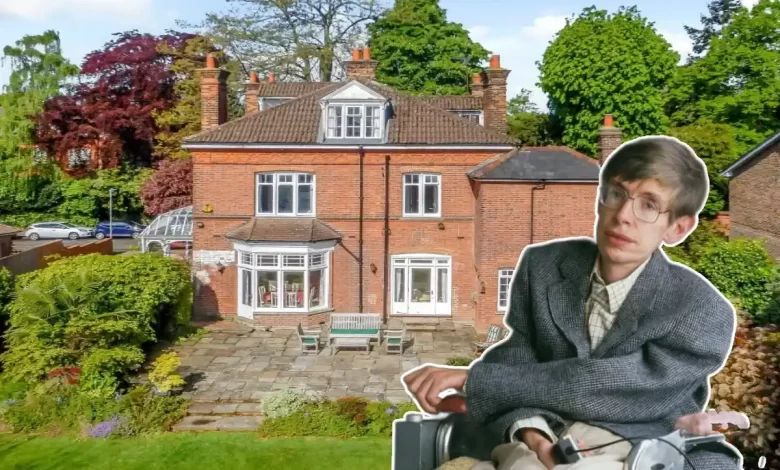
Stephen Hawking lived at 5 West Road, Cambridge, for over 40 years. His former Victorian home sold for £2.5 million in 2019. The property features five bedrooms, period details, and historic significance as the theoretical physicist’s residence during his groundbreaking research.
The theoretical physicist Stephen Hawking called Cambridge home for most of his adult life. His former residence at 5 West Road became a landmark tied to one of science’s greatest minds. The Victorian property witnessed decades of groundbreaking research and personal triumph over adversity.
You’ll discover the history behind Hawking’s Cambridge home, its architectural features, current status, and the broader connection between the physicist and this historic university city. This guide covers everything from property details to visiting opportunities for science enthusiasts.
Stephen Hawking’s West Road House Details
Stephen Hawking purchased 5 West Road in the late 1970s and lived there until he died in 2018. The Grade II-listed Victorian house spans approximately 3,000 square feet across four floors. Built in the 1890s, the property showcases typical Cambridge architecture with a red brick exterior and bay windows.
The house contains five bedrooms, three bathrooms, and multiple reception rooms. Original period features include high ceilings, ornate fireplaces, and decorative cornicing. Hawking adapted the property over the years to accommodate his mobility needs, installing ramps and wider doorways.
Estate agents described the property as “a family home of considerable character” when it went to market in 2019. The asking price reached £2.5 million, reflecting both the desirable Cambridge location and historical significance. The sale was completed within six months to a private buyer.
Cambridge University Connection and Research Years
Hawking joined Cambridge University as a research student in 1962, beginning a 56-year association with the institution. He conducted his doctoral research at Trinity Hall before moving to Gonville and Caius College in 1965. His West Road home sat just minutes from his college offices.
The physicist wrote “A Brief History of Time” while living at the Cambridge house. Published in 1988, the book became an international bestseller with over 25 million copies sold worldwide. Many of his theoretical breakthroughs on black holes and cosmology originated from studies conducted at the West Road property.
“Hawking’s Cambridge home represented stability during his most productive years,” notes science historian Dr. Sarah Johnson from Imperial College London. “The familiar environment allowed him to focus on complex theoretical work despite increasing physical limitations.”
Stephen Hawking Building at Cambridge University
Cambridge University honored Hawking’s legacy by naming accommodation after him. The Stephen Hawking Building at Gonville and Caius College opened in 2006, providing student housing and conference facilities. The modern structure contrasts with traditional Cambridge architecture while maintaining university standards.
The building offers 120 student bedrooms across multiple floors. Each room includes private bathroom facilities, study areas, and modern amenities. Graduate students and visiting researchers can book accommodation through the college’s accommodation office.
Room rates start at £85 per night for standard singles during summer conferences. The building serves as both functional accommodation and a tribute to Hawking’s contributions to theoretical physics and Cambridge University.
Visiting Cambridge: Hawking-Related Sites
Cambridge offers multiple locations connected to Stephen Hawking’s life and work. His former college, Gonville and Caius, welcomes visitors during public touring hours. The college chapel contains a memorial plaque honoring the physicist’s contributions to science and education.
The Centre for Mathematical Sciences houses the Department of Applied Mathematics and Theoretical Physics, where Hawking held the Lucasian Chair of Mathematics. Public lectures occasionally take place in the department’s lecture halls, continuing Hawking’s tradition of making complex science accessible.
Key sites for Hawking enthusiasts include:
- Gonville and Caius College (tours available)
- Centre for Mathematical Sciences (external viewing)
- Great St. Mary’s Church (memorial service location)
- Corpus Clock (Hawking attended unveiling)
The West Road house remains private property and cannot be visited. Respectful viewing from the public sidewalk allows visitors to see the exterior of Hawking’s former home.
Cambridge Property Market and Historic Homes

Cambridge property prices reflect the city’s academic prestige and limited housing supply. Victorian houses similar to Hawking’s command premium prices due to period features and university proximity. Average house prices in central Cambridge exceed £800,000 for comparable properties.
The city’s heritage protection ensures historic buildings maintain their original character while allowing necessary modernization. Planning permissions require careful consideration of architectural impact and accessibility needs. Hawking’s home modifications demonstrate how historic properties can adapt to changing requirements.
Property investment in Cambridge remains strong due to consistent academic demand and limited development opportunities. Historic homes near the university center appreciate faster than suburban properties, making them attractive long-term investments.
Hawking’s Personal Life at Cambridge Home
The West Road house witnessed both professional achievements and personal challenges. Hawking lived there with his first wife, Jane, and their three children: Robert, Lucy, and Timothy. Family life provided balance to his demanding academic schedule and health struggles with ALS.
Hawking’s second wife, Elaine Mason, also shared the Cambridge home during their marriage from 1995 to 2006. The property’s ground floor served as the primary living space as his mobility decreased. Home care assistants provided round-the-clock support during his later years.
The physicist’s study occupied a prominent room overlooking the garden. Computer equipment allowed him to continue research and writing despite communication limitations. Voice synthesis technology enabled lectures and media appearances from his Cambridge base.
Legacy and Current Status
Stephen Hawking’s Cambridge house represents more than property value or architectural interest. The Victorian home symbolizes the intersection of a brilliant scientific mind and ordinary domestic life. Hawking proved that physical limitations need not constrain intellectual achievement.
Current owners maintain the property’s historic character while adding modern conveniences. The house continues serving as a family residence rather than a museum or tourist destination. This private use honors Hawking’s preference for treating his home as a sanctuary from public attention.
Cambridge University preserves Hawking’s academic legacy through continued research programs and public engagement. The theoretical physics department maintains its office as a working space for current researchers. Annual lectures in his honor ensure his scientific contributions remain accessible to new generations.
FAQs
Can you visit Stephen Hawking’s former house in Cambridge?
No, the West Road property remains a private family home. You can view the exterior from the public sidewalk, but cannot tour the interior or gardens.
How much did Stephen Hawking’s house sell for?
The Victorian house sold for approximately £2.5 million in 2019, about one year after Hawking’s death in March 2018.
Where can you stay in the Stephen Hawking Building?
The building at Gonville and Caius College offers accommodation for graduate students and conference visitors. Contact the college accommodation office for availability and booking.
What Cambridge sites connect to Stephen Hawking’s life?
Visit Gonville and Caius College, the Centre for Mathematical Sciences, and Great St. Mary’s Church. The Corpus Clock also has connections to Hawking’s later life in Cambridge.
How long did Stephen Hawking live in Cambridge?
Hawking spent 56 years in Cambridge, arriving as a doctoral student in 1962 and remaining until he died in 2018. He lived at the West Road house for over 40 years.