What Is Novation in Real Estate: Complete Guide for 2026

Novation in real estate is a legal process that replaces an existing contract with a new one, involving all original parties. Unlike amendments that modify terms, novation creates an entirely new agreement that cancels the old contract. All parties must consent in writing for novation to be valid.
Real estate contracts can get complicated. You sign agreements, circumstances change, and sometimes you need more than minor tweaks to make a deal work. That’s where novation comes in.
You might need to replace a buyer who can’t secure financing. Maybe inspection results require major price adjustments. Perhaps a commercial lease needs to be transferred to a new tenant. Novation gives you a legal path to completely replace or restructure your original contract while keeping everyone protected.
This guide explains what novation means, when you should use it, and how it differs from other contract modifications you’ll encounter in real estate.
What Novation Means in Real Estate
Novation replaces your original contract with a brand new agreement. Think of it as a fresh start rather than editing what you already have.
The old contract disappears completely. The new contract takes its place with updated terms, different parties, or both. This happens only when every party involved agrees to the change and signs off on the new terms.
For a valid novation agreement, you need three things:
- An existing contract that’s already in place
- Written consent from all parties involved
- A new contract that replaces the old one entirely
Verbal agreements don’t count. Everything must be documented in writing to protect everyone’s interests.
How Real Estate Professionals Use Novation
Novation shows up in several common real estate scenarios. You’ll see it most often in commercial real estate deals, though residential transactions use it too.
Commercial Lease Transfers
A business owner wants to exit a long-term lease early. Rather than breaking the contract and facing penalties, they find a new tenant to take over. The landlord, original tenant, and new tenant create a novation agreement. The original tenant walks away completely free of obligations.
Mortgage Assumption Sales
A property owner wants to sell but has an existing mortgage with favorable terms. The buyer agrees to take over that mortgage directly. The seller, buyer, and lender all sign a novation agreement. The original borrower is released from the debt, and the buyer becomes fully responsible.
Price Adjustments After Inspection
An inspection reveals foundation issues that will cost $30,000 to fix. The buyer and seller initially agreed on $400,000. They create a novation agreement setting the new price at $370,000. The original purchase agreement is voided, and the new contract takes effect.
Entity Restructuring
A real estate investor initially signed a purchase agreement in their personal name. Before closing, they form an LLC for liability protection. Through novation, the contract is rewritten with the LLC as the buyer instead of the individual.
Three Types of Novation You Should Know
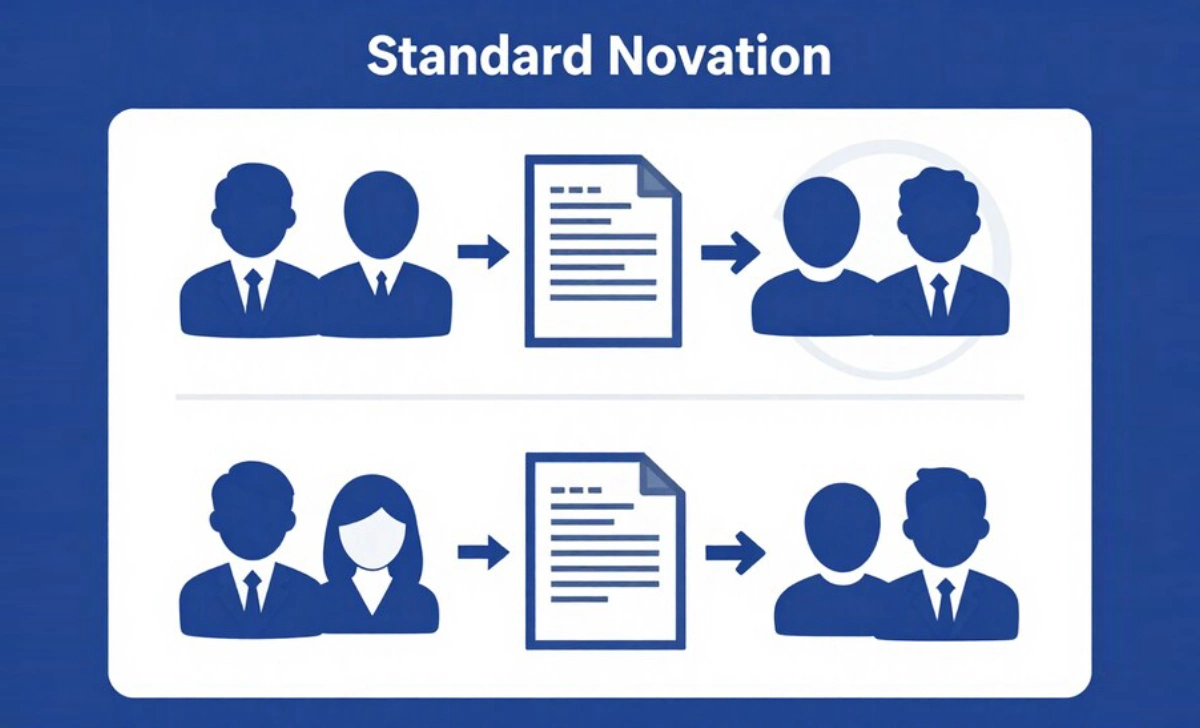
Real estate novation comes in three distinct forms. Each serves a different purpose.
Standard Novation
Two parties agree to change the terms of their existing contract. The seller and buyer might renegotiate the purchase price, closing date, or contingencies. They cancel the old contract and create a new one with the updated terms.
This is the simplest form. Only the original two parties are involved, making it easier to coordinate.
Expromissio (Three-Party Novation)
This involves the original two parties plus a new third party. Everyone must agree to the new terms.
A common example: A seller has a contract with Buyer A. Buyer A can’t close, but Buyer B wants the property. The seller, Buyer A, and Buyer B all agree to novate the contract. Buyer A exits completely, and Buyer B takes their place.
If even one party objects, the novation fails. You’ll need to draft a different solution that everyone accepts.
Delegation Novation
This transfers all contractual rights and responsibilities from one party to another. The original party is completely released from any future obligations.
Unlike an assignment (which we’ll cover later), the original party has no remaining liability if the new party defaults or fails to perform.
Contract Elements You Can Change Through Novation
Novation gives you the flexibility to restructure almost any aspect of your real estate agreement:
- Purchase price or sale terms
- Property rent amounts
- Deposit and earnest money requirements
- Closing costs and who pays them
- Names of buyers, sellers, or tenants
- Move-in or move-out dates
- Lease duration and renewal terms
- Effective dates and deadlines
- Contingency clauses
The key limitation: all parties must agree. You can’t force novation on someone who doesn’t consent.
Novation vs. Assignment: Know the Difference
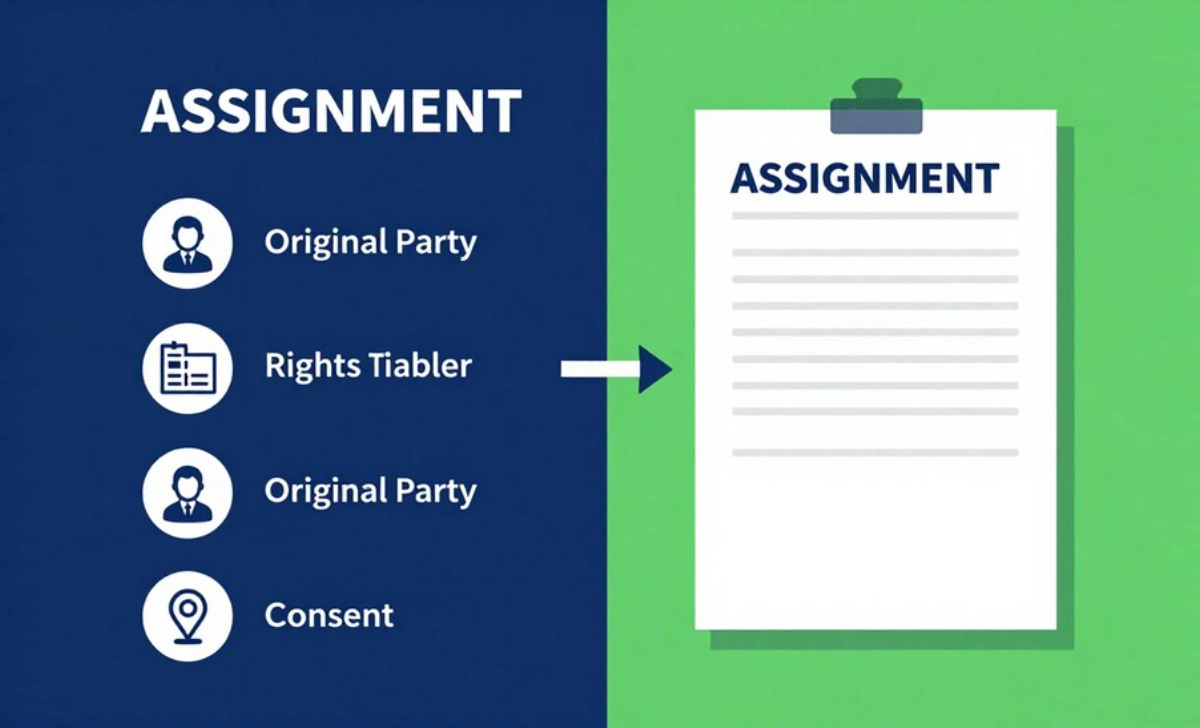
People often confuse novation with assignment. They’re similar but have critical differences that affect your legal position.
Complete Transfer of Obligations:
Novation transfers everything to the new party. The original party walks away with zero future liability.
Assignment transfers rights but keeps the original party on the hook. If the new party defaults, the original party is still responsible.
Status of Original Contract:
Novation cancels the original contract entirely. It no longer exists.
Assignment keeps the original contract active. The new party steps into some rights, but the contract itself remains unchanged.
Consent Requirements:
Novation requires everyone’s approval, including the counterparty (like a lender or landlord).
An assignment often doesn’t need the counterparty’s consent, An assignmentur original contract may require it.
When Each Makes Sense:
Use novation when you want a clean break. The original party wants complete release from obligations.
Use an assignment when you want to transfer some benefits but keep the original structure intact. Common in wholesaling deals.
Here’s a practical example. Bob agrees to sell his house to Mary for $300,000. Mary wants to assign her contract to Carl. Through the assignment, Carl gets the right to buy the house, but Marthe the y remains liable if Carl backs out. Through novation, Bob, Mary, and Carl create a new contract. Mary exits completely, and only Bob and Carl have obligations moving forward.
When You Should Use Novation
Novation works best in specific situations. Look for these indicators:
The Original Party Wants Complete Release:
Someone needs to exit a contract entirely. They don’t want any remaining liability or future responsibilities.
Major Terms Need Changing:
Minor adjustments work fine with an amendment. But when you need to restructure significant portions of the agreement, novation provides a cleaner solution.
A New Party Enters the Deal:
Adding or replacing someone in the contract requires everyone’s cooperation. Novation formalizes this change properly.
Financing Changes Require It:
Lenders often require novation when changing the party responsible for a mortgage or loan.
Entity Changes Happen:
Converting from personal ownership to an LLC, corporation, or partnership typically needs novation to update the contract legally.
When You Should NOT Use Novation
Novation isn’t always the right tool. Avoid it in these scenarios:
Minor Changes:
Simple amendments handle small adjustments better. Don’t overcomplicate things by creating an entirely new contract just to change a closing date by three days.
Time Constraints:
Novation requires everyone’s signature and agreement. If you’re days from closing and need a quick fix, an amendment works faster.
The Counterparty Won’t Agree:
Lenders and landlords sometimes refuse novation requests. They might not want to release the original party or take on the risk with a new party. If they won’t consent, you’ll need to explore other options, like assignment.
You Want Ongoing Involvement:
If the original party wants to maintain some connection to the deal, assignment or other contract modifications work better than novation’s complete severance.
The Novation Process: Step by Step
Here’s how novation typically works in practice:
- Identify the Need: Recognize that your current contract no longer works for all parties involved.
- Discuss with All Parties: Have conversations with everyone affected. Gauge whether everyone is open to restructuring.
- Draft the New Agreement: Work with a real estate attorney to create the new contract. Include all updated terms and clearly state that this novation cancels the original agreement.
- Review Thoroughly: All parties should review the new contract carefully, preferably with legal counsel.
- Obtain All Signatures: Everyone must sign the novation agreement. Missing even one signature invalidates the entire process.
- Cancel the Original Contract: Explicitly document that the old contract is void and no longer enforceable.
- File and Store Documentation: Keep copies of both the old contract (marked as cancelled) and the new contract for your records.
The timeline varies. Simple two-party novations might take a few days. Complex three-party agreements with lender involvement can take several weeks.
Legal Considerations and Risks
Novation carries some legal weight you need to understand.
State Law Variations:
Real estate contract law varies by state. Some states have specific requirements for novation agreements. Others treat them more generally. Always check your local requirements.
Lender Approval:
If a mortgage is involved, expect the lender to require extensive documentation. They’ll want credit checks, income verification, and appraisals before approving any novation that changes the borrower.
Title Issues:
Changing parties can affect title insurance and ownership records. Coordinate with your title company to ensure smooth processing.
Tax Implications:
Novation might trigger tax consequences depending on how it’s structured. Consult a tax professional before finalizing any novation agreement.
Statute of Frauds:
Real estate contracts fall under the statute of frauds in most states. This means they must be in writing to be enforceable. Ensure your novation agreement is properly documented and executed.
Novation in Real Estate Wholesaling
Wholesaling has brought renewed attention to novation in recent years. Some wholesalers use novation agreements as an alternative to traditional assignment contracts.
Here’s how it typically works: A wholesaler contracts to buy a property for $250,000. Instead of assigning the contract to an end buyer, they novate the agreement. The property is listed on the MLS for $270,000. If it sells for $290,000, is listedwholesaler keeps the $20,000 difference.
The Controversy:
This practice operates in a legal gray area in many states. Critics argue that wholesalers are essentially acting as unlicensed agents when using this method. Supporters claim the novation contract protects them legally.
State Regulations:
Some states have cracked down on this practice. Others allow it with proper contract language. The legality depends heavily on your specific state’s real estate licensing laws.
Reputation Risks:
Even where legal, novation wholesaling can damage your reputation. Sellers sometimes feel misled when they discover the wholesaler profited from reselling at a higher price. This has led to negative reviews and community backlash for some wholesalers.
If you’re considering this strategy, consult with a local real estate attorney who understands your state’s licensing requirements and regulations.
Costs and Timeline Expectations
Novation isn’t free or instant. Budget for these typical expenses:
Attorney Fees:
Expect to pay $500 to $2,000 for legal services to draft and review a novation agreement. Complex commercial deals cost more.
Lender Processing Fees:
If a mortgage is involved, lenders charge processing fees ranging from $300 to $1,000 or more.
Title Work:
Title companies may charge fees to update records and issue new title commitments. Budget $200 to $500.
Recording Fees:
County recording fees for updating property records typically run from $50 to $200.
Timeline Considerations:
- Simple residential novations: 1-2 weeks
- Residential with lender involvement: 3-4 weeks
- Commercial lease novations: 2-6 weeks
- Complex multi-party agreements: 6-8 weeks or longer
Rush fees may apply if you need expedited processing, though not all parties will accommodate rushed timelines.
Alternatives to Novation
Before committing to novation, consider whether these alternatives might work better:
Contract Amendment:
Changes specific terms while keeping the original contract intact. Faster and simpler than novation for minor adjustments.
Assignment:
Transfers contractual rights without releasing the original party. Common in wholesaling and investment deals.
Contract Termination:
Sometimes it’s cleaner to cancel the existing contract completely and start fresh with a brand new agreement between different parties.
Assumption Agreement:
Specifically for loans, this allows someone to take over debt obligations without fully novating the entire purchase agreement.
Each option has different legal implications, costs, and requirements. Match the tool to your specific situation.
Final Thoughts
Novation gives real estate professionals a powerful tool for restructuring deals when circumstances change. It works best when you need a complete reset rather than minor adjustments.
Remember the key requirements: written agreements, consent from all parties, and proper legal documentation. Skip any of these, and your novation might not hold up legally.
The process takes time and costs money, but it provides a clean solution when simpler modifications won’t work. Whether you’re transferring a lease, changing buyers, or restructuring terms, novation can help you close deals that might otherwise fall apart.
Just make sure you understand your state’s specific requirements, especially if you’re involved in wholesaling. Work with qualified legal professionals to protect yourself and all parties involved.
FAQs
Q: Can you novate a contract without all parties agreeing?
No. Novation requires consent from every party in the original contract. If even one party refuses, the novation fails. You’ll need to explore other options, like amendment or assignment.
Q: How long does a novatio,n agreement take to execute?
Simple novations take 1-2 weeks. Those involving lenders or multiple parties can take 3-8 weeks. The timeline depends on how quickly all parties review, negotiate, and sign the new agreement.
Q: Does novation affect my credit score?
If the novation involves releasing you from a mortgage or loan obligation, it can positively affect your debt-to-income ratio. The new party taking over the debt will undergo credit checks. Simply novating a purchase agreement without debt typically doesn’t impact credit.
Q: Is novation legal in all states for real estate wholesaling?
Novation itself is legal everywhere, but using it for wholesaling without a license exists in a gray area. Some states consider this practicing real estate without a license. Check your state’s specific regulations and consult with a local real estate attorney.
Q: What happens if someone defaults on a novated contract?
The original party is completely released from liability in a novation. If the new party defaults, only they face consequences. This is different froman assignment, where the original party might still be liable.