Power Your Property with Solar Roofing
Electric bills keep climbing, but your roof could be the solution. Solar panels generate “free” electricity, but installing a system still costs money. A typical American household needs a 10-kilowatt (kW) system to adequately power their home, which costs $28,241 in 2025. While traditional solar panels dominate the market, solar roofing offers an integrated approach that transforms your entire roof into an energy-producing asset.
Ready to power your property while cutting monthly bills?
What Is Solar Roofing?
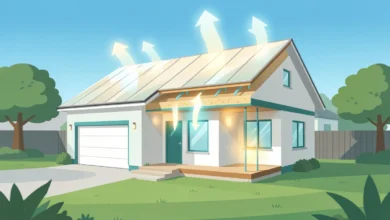
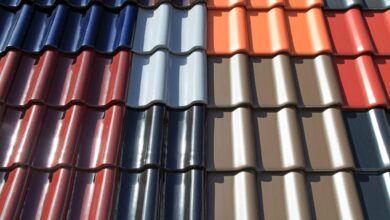
Solar roofing represents building-integrated photovoltaics (BIPV) technology that replaces traditional roofing materials with energy-generating alternatives. Solar shingles are photovoltaic (PV) cells, also known as solar cells, designed to resemble asphalt shingles. They have the same durability, flexibility, and beauty as standard tiles.
Unlike conventional solar panels mounted on top of existing roofs, solar roofing tiles integrate directly into your roof structure. These photovoltaic shingles perform dual functions: protecting your home from weather while converting sunlight into electricity.
Each shingle will produce between 13 and 63 watts of energy, depending on the brand. Solar shingles are energy-efficient, lightweight, and easy to install, and built to withstand rain, wind, and hail.
Key Benefits of Solar Roofing
1. Substantial Energy Savings
People with solar panels can save around $62,219 on utility bills over 25 years. Solar roofing generates clean electricity that directly powers your home, reducing dependence on grid electricity during peak rate hours.
2. Increased Home Value
According to the most recent Cost vs. Value report, replacing the roof on your home can have an ROI of 71.6%. Solar roofing provides this value boost while adding the long-term benefit of energy production.
3. Durability and Weather Resistance
Solar roofing materials typically last 25-30 years with minimal degradation. These systems handle extreme weather better than traditional roofing materials while maintaining energy production.
4. Superior Curb Appeal
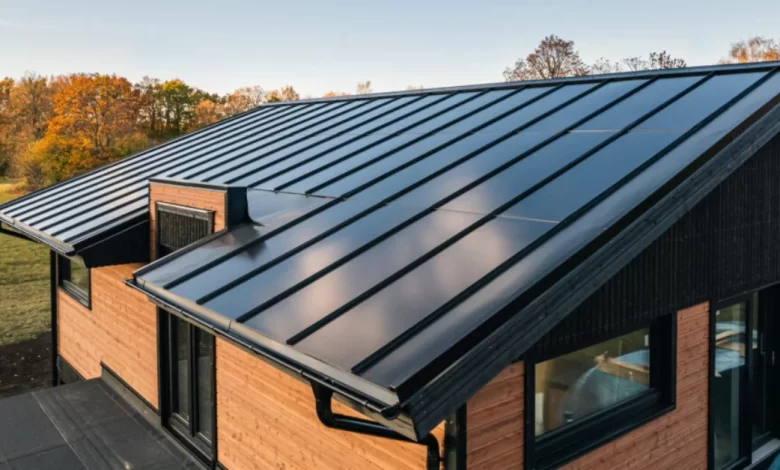
Compared to traditional solar panels, solar shingles are much more aesthetically pleasing. They look like mini solar panels shaped in the form of traditional roof shingles, allowing homeowners to bypass the bulky appearance of standard photovoltaic (PV) panels.
5. Backup Power During Outages
When paired with home battery storage, solar roofing provides energy independence during grid outages, keeping essential systems running when you need them most.
How Solar Roofing Works
Solar roofing operates through a straightforward process that converts sunlight into usable electricity for your home.
Photovoltaic conversion happens when sunlight hits the solar shingles. Each shingle contains semiconductor materials that generate direct current (DC) electricity when exposed to photons.
Power inversion occurs through solar inverters that convert DC electricity into alternating current (AC) electricity compatible with your home’s electrical systems and the power grid.
Energy distribution sends electricity through three pathways: immediate home use, storage in home batteries like Tesla Powerwall systems, or export to the grid through net metering programs.
Grid-tie connectivity allows excess electricity to flow back to the utility grid, earning credits that offset nighttime electricity consumption.
Cost Breakdown & Incentives
Upfront Investment
Solar roofs are more expensive than solar panels, especially if you want to replace your existing roof. A typical solar roof installation for a homeowner costs between $40,000 and $60,000 before taxes.
Solar shingles cost an average of $35,000, and prices typically fall between $21,000 and $50,000. This breaks down to between $21 and $25 per square foot, or $2,100 to $2,500 per roofing square for solar shingles.
For premium systems like Tesla Solar Roof, A typical Tesla Solar Roof costs upwards of $100,000, depending on the size and complexity of your roof and how much solar power you need.
Federal Tax Incentives
Urgent deadline alert: The federal tax credit for solar panels ends on Dec. 31, 2025, which will likely raise electricity bills. Homeowners installing solar roofing by December 31, 2025, can claim the full 30% federal Investment Tax Credit (ITC).
Starting January 1, 2026, the residential solar tax credit will disappear completely. For a $50,000 solar roofing system, this represents $15,000 in tax savings that won’t be available after 2025.
Net Metering Benefits
Net metering allows you to store every unit of energy you produce with solar to be used at a later date from the grid. It can help you save thousands of dollars over the lifetime of your solar panel system.
34 states plus Washington, D.C., and Puerto Rico have mandatory net metering rules in place. However, policies vary significantly by state and utility company.
Sample calculation for a $50,000 system:
- System cost: $50,000
- Federal tax credit (30%): -$15,000
- Net cost after incentives: $35,000
- Annual electricity savings: $2,500-$4,000
- Payback period: 9-14 years
Choosing the Right System Material
- Silicon solar shingles offer higher efficiency rates (15-22%) but cost more upfront. These perform better in limited roof space and extreme temperatures.
- CIGS solar shingles provide lower costs but reduced efficiency (12-14%). CIGS solar shingles are on the lower end of this price range, while silicon solar shingles are typically more expensive.
Roof Considerations
Size and complexity dramatically affect costs. Larger roofs require more shingles and labor, increasing costs. Roof complexity – Installation costs depend on the roof’s pitch, number of planes, and number of obstructions like chimneys, skylights, or vents.
Structural requirements may add $1,000-$10,000 for reinforcement, especially on older homes requiring upgrades to support integrated solar systems.
Provider Selection Checklist
- Verify proper licensing and insurance coverage
- Check warranty terms (typically 20-25 years for product, 10 years for workmanship)
- Review financing options and payment structures
- Confirm experience with your specific roofing type
- Request detailed energy production estimates
- Obtain multiple quotes for comparison
Installation Process & Timeline
Phase 1: Site Assessment (1-2 weeks)
Installers evaluate roof condition, structural integrity, electrical systems, and shading factors. Energy audits determine optimal system size based on household consumption.
Phase 2: Permits and Approvals (2-4 weeks)
Building permits, electrical permits, and utility interconnection agreements require processing time that varies by municipality.
Phase 3: Installation (3-7 days)
You can expect around 60% of your total project cost to go toward the labor to install your solar shingles or an average of about $21,000. Installation includes old roof removal (if needed), solar shingle placement, electrical connections, and inverter setup.
Phase 4: Inspection and Activation (1-2 weeks)
Local building inspectors verify installation compliance before utility companies grant Permission to Operate (PTO), enabling grid connection and net metering.
Minimal Maintenance Requirements
Solar roofing requires basic cleaning 2-3 times yearly to remove debris and maximize efficiency. Most systems include monitoring apps that track performance and alert owners to potential issues.
Warranty Protection
Standard warranties cover 20-25 years for energy production and 10-15 years for workmanship. Solar shingles tend to be more cost-efficient than solar panels. when roof replacement is needed anyway.
Long-term Performance
Solar roofing maintains 80-85% efficiency after 25 years, with annual degradation rates typically under 0.5%. This means decades of reliable energy production with minimal performance loss.
Regular inspections every 3-5 years ensure optimal performance and catch minor issues before they become costly problems.
Conclusion
Solar roofing transforms your property into an energy-producing asset while providing superior weather protection and enhanced curb appeal. With federal tax credits ending December 31, 2025, homeowners have a narrow window to capture 30% savings on installation costs.
The average payback period ranges from 3.7 to 19.1 years, depending on the homeowner’s state and local electricity rates. Despite higher upfront costs compared to traditional solar panels, integrated solar roofing offers unmatched aesthetics and dual functionality.
The combination of rising electricity costs, expiring tax incentives, and advancing solar technology makes 2025 a critical decision year for homeowners considering solar roofing.
Ready to power your property with solar roofing? Contact certified installers today for a free assessment and quote before federal incentives expire.