10 Silent Reasons Your AC Unit Quit (Reason #7 Will Surprise You)
It’s a familiar and frustrating scene: you go to adjust the thermostat on a sweltering day, only to be met with silence and stale air. Your air conditioner is not working. The outside unit sits motionless, and no cool air flows from the vents. Before you panic and dial the first emergency AC repair number you find, know this: many HVAC system failures are caused by silent, often overlooked issues that don’t involve a catastrophic breakdown.
As an HVAC professional, I’ve seen countless service calls that ended with a simple, five-minute fix. Homeowners are often surprised to learn that their AC unit quit not because of a costly compressor failure, but due to a minor component or maintenance oversight that triggered a safety shutdown. This guide will walk you through the ten most common silent culprits, arming you with the knowledge to perform some basic troubleshooting and understand when you truly need a professional HVAC technician. Pay special attention to reason #7—it’s a sneaky one that catches almost everyone off guard.
Key Principles for AC Longevity and Repair
- Start Simple, Then Go Complex: Always begin your troubleshooting with the no-cost checks: the thermostat, the breaker, and the filter. Over 30% of service calls are resolved here.
- Understand the Safety Chain: Modern HVAC systems are built with interconnected safety switches (float switches, high-pressure switches, door switches). A failure in one often points to a problem elsewhere (e.g., a clogged drain triggered the float switch).
- Maintenance is Not Optional: Annual preventative maintenance by a pro is the best investment you can make. It catches failing capacitors, dirty condenser coils, and low refrigerant before they cause a breakdown on the hottest day of the year.
- Know Your DIY Limits: Electrical components like capacitors and contactors, and sealed-system work involving refrigerant, are strictly for licensed professionals. The risks of electrical shock or causing further, more expensive damage are too high.
- Context is Everything: The age of your system dictates the best course of action. A $500 repair on a 15-year-old system might not be wise, while the same repair on a 5-year-old unit is a smart investment.
From Simple Switches to Failing Parts
Understanding these reasons requires looking at your AC as a complete system. A problem in one area, like a clogged drain line, can cause a shutdown in another, protecting your home from water damage. Let’s diagnose the silence.
1. The Tripped Circuit Breaker: An Electrical Ghost
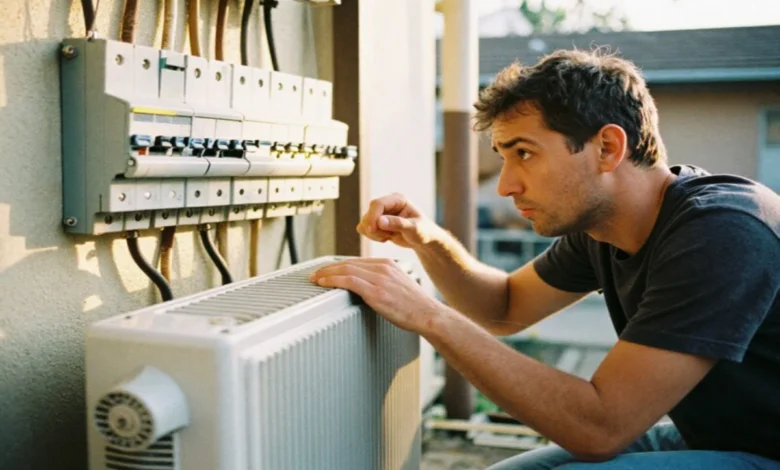
This is the very first thing to check. A power surge or an overload from startup can cause the circuit breaker dedicated to your AC to trip silently in your electrical panel.
- What to do: Locate your main electrical panel. Find the breaker labeled for the AC or furnace (they are often connected) and see if it’s in a middle “tripped” position. Flip it firmly to OFF, then back to ON.
2. A Tripped Float Switch: The Flood Preventer
Your AC doesn’t just cool air; it dehumidifies it, producing condensation. This water drains away via a condensate drain line. If this line clogs with algae or mold, a safety device called a float switch (like the one in your toilet tank) will rise with the water and cut power to the AC to prevent an indoor flood.
- What to do: Find the drain line (usually a PVC pipe near the indoor air handler). Look for the small plastic switch box. If it’s triggered, you’ll need to clear the clog. A wet/dry vacuum on the outdoor drain outlet or pouring a mix of vinegar and water down the access line can often solve this.
3. The Dirty Air Filter: A Slow Strangulation
This is the most common maintenance-related cause of failure. A severely dirty air filter doesn’t just hurt your air quality; it restricts airflow across the evaporator coil. This can cause the coil to freeze into a solid block of ice, which eventually stops airflow and cooling entirely.
- What to do: Replace your air filter every 1-3 months. If you suspect a freeze, turn the system off and just turn the FAN ON to help thaw the coil. Never run the AC with a frozen coil.
4. A Faulty Thermostat: The Misguided Commander
Your thermostat is the brain of the operation. If its batteries are dead, it’s miscalibrated, or has faulty thermostat wiring, it simply won’t send the “turn on” signal to the rest of the system.
- What to do: Replace the batteries. Ensure it’s set to “COOL” and a temperature well below the room temperature. If it’s a smart thermostat, check its app for error alerts or try rebooting it.
5. The Disconnected Safety Switch: An Access Door Ajar
On the indoor air handler or furnace cabinet, there is a simple safety switch that cuts power when the service panel door is removed. If this door wasn’t closed firmly after a filter change, the switch remains disengaged.
- What to do: Ensure all access panels on your indoor unit are securely latched and fastened.
6. A Blown Fuse: The Minor Surge Protector
Some AC systems, especially in air handlers, have small 3-5 amp fuses on the control board that protect the transformer from power spikes. These can blow silently.
- What to do: Visually inspect the control board (with power OFF at the breaker) for a clear-top fuse with a broken metal filament inside. Note: Only attempt this if you are comfortable with basic electrical safety.
7. The Worn-Out Contactor: The Silent Relay (The Surprise!)
Here’s the surprise reason. In your outdoor condenser unit is a component called the contactor. It’s an electromagnetically controlled switch that connects high-voltage power to the compressor and fan motor. Over thousands of cycles, the two metal points inside can pit, corrode, or weld themselves together. When pitted, they can’t make a connection—resulting in silence. When welded, the unit may run non-stop.
- Why it’s silent: It’s a hidden component inside the outdoor unit. There’s no audible “click” when it fails open, and visually, it may look fine to an untrained eye. This is a very common point of failure in units over 5-7 years old.
- What to do: A visual inspection might reveal blackened or pitted points. However, diagnosis and replacement require a professional HVAC technician due to the high-voltage danger.
8. A Failed Capacitor: The Weak Jump-Starter
Capacitors are cylindrical components that give the compressor and fan motors the extra jolt of energy they need to start up. A failed capacitor is a leading cause of “hard starting” or a unit that hums but doesn’t turn on. They weaken over time and can fail without warning.
- What to do: A visual sign is a bulging or leaking top. This is another professional repair item, as capacitors store a dangerous electrical charge even when power is off.
9. Refrigerant Leak: The Invisible Coolant
Your system doesn’t “use up” refrigerant. A low charge means there’s a leak. While a large leak might cause hissing, a slow micro-leak is silent. The system will eventually run low, causing poor cooling, ice buildup, and finally, a low-pressure safety switch will shut the system down.
- What to do: This is not a DIY fix. A technician must find the leak, repair it, and properly recharge the system to the manufacturer’s specification. Simply adding Freon (a brand name for refrigerant) is illegal and ineffective without fixing the leak.
10. A Locked Compressor: The Heart Seizure
The compressor is the heart of the AC. If it seizes due to age, lack of lubrication, or extreme strain, it will not start. Often, this will trip the circuit breaker or burn out the capacitor. It is the most serious and costly failure on this list.
- What to do: A technician can confirm this diagnosis. Repair involves a major component replacement, and depending on the age of your unit, a full system replacement may be the more economical choice.
When to Call a Professional: Your Clear Next Steps
If you’ve checked the simple items (1-5) and your AC unit is still not responding, it’s time to call a professional HVAC technician. Specifically, mention what you’ve already checked. This helps them diagnose faster. Be wary of any technician who immediately insists you need a new system without a thorough diagnosis. A good tech will use tools like a multimeter to check voltages at the contactor and capacitors, and gauges to check refrigerant pressure.
By understanding these ten silent reasons, you move from a position of frustration to one of informed awareness. You can save money on unnecessary service calls, communicate effectively with technicians, and, most importantly, ensure your home remains a cool sanctuary all summer long.