Sabrina Spellman House: Locations, Design & Visiting Guide
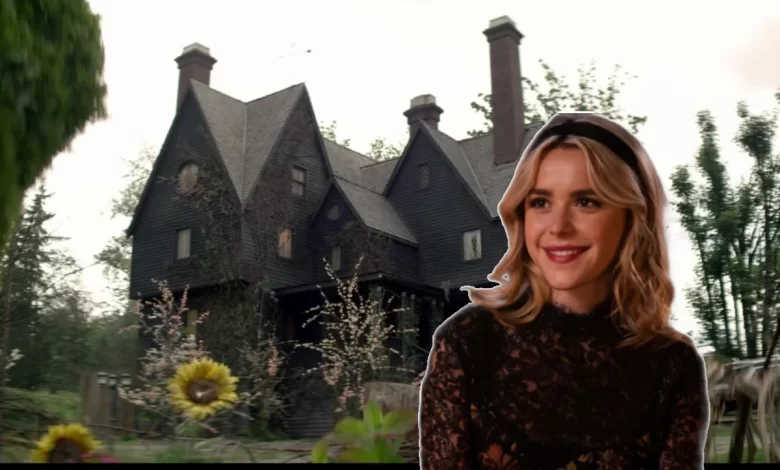
The Sabrina Spellman house has two real locations. The 1996 series was filmed at 64 East Main Street in Freehold, New Jersey (a private residence you cannot tour). The 2018 Chilling Adventures version was built as a custom set in Abbotsford, British Columbia, then demolished in 2020.
Every witch needs a home, and Sabrina Spellman got two drastically different ones. The cheerful Victorian from the 1990s sitcom couldn’t look more different from the Gothic mortuary in Netflix’s dark reboot. Fans searching for these iconic locations often wonder if they can visit, what makes each design special, and why producers chose such different approaches to the same fictional address.
Can You Visit the Sabrina Spellman House?
Your ability to visit depends on which version you’re chasing.
The original house from Sabrina the Teenage Witch (1996-2003) still stands in Freehold, New Jersey. The real-world location is 64 East Main Street in Freehold, New Jersey. This private residence occasionally appears in real estate listings, but you cannot tour the interior or trespass on private property. You can drive past and photograph the exterior from public streets, which many fans do during the Halloween season.
The Netflix version presents a different situation. The Spellman House from Chilling Adventures of Sabrina was demolished in 2020 after the series was cancelled. What fans saw on screen was a custom-built exterior set constructed on private property in north Langley, with all interior scenes filmed in Vancouver soundstages. No physical location remains for fans to visit.
The honest answer for most fans: neither house offers public tours. Your best option involves exploring other Vancouver filming locations from the Netflix series, which remain accessible.
The Original Sabrina House (1996-2003)
The Spellman Residence is a large Victorian Mansion located at 133 Collins Road in Westbridge, Massachusetts (the fictional address used in the show). This sitcom version presented witchcraft as whimsical rather than menacing, and the house reflected that lighter tone.
The actual Victorian mansion that portrayed this address sits in Freehold, New Jersey. Producers chose the location for its classic Victorian architecture: wraparound porch, multiple gables, and the kind of stately presence that suggested old money and older secrets. The exterior appeared in establishing shots throughout the series’ seven-season run.
Hilda and Zelda Spellman purchased the house in the late 19th Century under a mortgage sometime prior to 1899, and transferred the house to Sabrina in 2002. This backstory gave the residence historical weight while explaining why teenage Sabrina inherited such valuable real estate.
The house has changed hands multiple times since filming ended. When it hit the market in 2023, real estate coverage focused on the property’s connection to the beloved series. Fans expressed interest, though the price tag (reportedly $1.4 million) put it out of reach for most nostalgic viewers.
Inside the 1990s Spellman Residence
The interior set, built on soundstages rather than filmed inside the New Jersey house, featured rooms that became character touchstones.
Sabrina’s bedroom featured many times. It is where the Spellman Magic Book is kept. This room served as the series’ emotional center—where Sabrina cast spells, talked to Salem, and navigated teenage problems with magical solutions.
The aunts’ bedrooms reflected their personalities. Zelda’s bedroom had a classical, Victorian design that she considered more mature than Hilda’s room, while Hilda’s eclectic space mixed southwestern and Chinese influences—what Zelda mockingly called “casa de-feng shui.”
The house had a basement that the aunts used to store things, including a suit of armor and an Egyptian sarcophagus. This cluttered storage space provided endless plot devices and magical artifacts whenever the script needed them.
The kitchen featured the Magic Cupboard, a portal to the Other Realm. The laundry room contained Salem’s litter box and convenient heating vents for eavesdropping. The Spellmans often magically added or altered portions of the house, such as adding a billiards room or an apartment above the garage.
Design-wise, the 1990s version embraced bright colors, floral patterns, and comfortable furniture. Lilac walls and cheerful lighting made witchcraft feel accessible rather than threatening. The aesthetic matched the show’s mission: make magic fun for family viewing.
Chilling Adventures Spellman Mortuary (2018-2020)
Netflix’s reboot demanded a completely different visual approach. In the Netflix series, the space is a mortuary, giving it a very different vibe than the peppy, lilac-walled Victorian you might remember from the ’90s sitcom.
The exterior of the Spellman Mortuary was located at 333 Gladwin Road, Abbotsford, British Columbia, Canada. Rather than use an existing building, production designer Lisa Soper convinced producers to construct a custom exterior set. Lisa Soper said, ‘I think we need to build it. This has to be as iconic as the Psycho house.’
The decision paid off. The custom build allowed complete control over angles, lighting, and Gothic details that would be impossible to achieve in a real historical home. The set’s dark greens, burgundy trim, and asymmetrical architecture created an unsettling presence even in daylight shots.
The Spellman house doubles as a mortuary and even features its own embalming room. This dual function gave the family business a morbid practicality. Hilda’s expertise in embalming became plot-relevant, while the mortuary setting provided endless opportunities for horror elements and dark humor.
When Netflix cancelled the series after four parts (two seasons), series creator Roberto Aguirre-Sacasa shared the demolition of the Spellman House in a time-lapse video. The footage showed a bulldozer reducing the iconic structure to broken lumber. Soper attended the demolition and saved certain things, including the house’s weathervane.
The Dark Design Philosophy
Lisa Soper built the main house off of a pagan spiral, a very powerful symbol in Wiccan and pagan belief. This floor plan wasn’t accidental. Soper explained the spiral symbolizes the choices Sabrina has to make, and it provides the foundation that moves everything up in the story.
The design incorporated a subtle horror film homage. Clive Barker, the mastermind behind Hellraiser and the Candyman series, provided more than 150 pieces of art to decorate the halls of Greendale’s school for witches, the Academy Of The Unseen Arts. Soper even recreated wallpaper from Hellraiser using photo stills from the movie.
The main staircase forks in two directions, underscoring the entire premise of the show. Since Sabrina’s mother was a mortal and her father was a warlock, she lives between two worlds. Every time characters climbed those stairs, the production design reinforced Sabrina’s impossible choice.
Soper studied witch aesthetics extensively. She spent time in the woods—”since that’s where witches are born,” pulling elements from Mother Nature and all kinds of religions together to create Sabrina’s world. The result felt timeless rather than period-specific, avoiding obvious historical markers that would date the production.
The walls themselves played tricks on viewers. Soper deliberately built them slightly off from 90-degree angles, creating subliminal discomfort. Your subconscious recognizes that something feels wrong without immediately identifying the cause.
The kitchen is full of plants and jars, like a proper witch’s kitchen, where Hilda spends most of her time cooking. There’s a lot of porcelain and rabbit imagery in it, which is the Spellman’s totem. The rabbit motif appeared throughout the house, representing both innocence and occult mysteries.
The original house set was inspired by the Turner-Ingersoll Mansion, a gabled house in Salem, Massachusetts, also known as the ‘House of Seven Gables’ in Nathaniel Hawthorne’s book. The interior took inspiration from the Winchester Mystery House’s labyrinthine layout and H.P. Lovecraft’s aesthetic of cosmic horror.
Comparing Both Spellman Houses
| Feature | 1996 Sitcom Version | 2018 Netflix Version |
|---|---|---|
| Real Location | 64 E Main St, Freehold, NJ | Custom set, Abbotsford, BC |
| Current Status | Standing (private residence) | Demolished (2020) |
| Primary Function | Family home | Mortuary and residence |
| Color Palette | Bright, lilac, floral patterns | Dark green, burgundy, black |
| Design Philosophy | Approachable Victorian | Gothic Revival with occult symbolism |
| Architectural Style | Traditional Victorian mansion | Custom asymmetrical design |
| Basement Function | Storage and magical artifacts | Embalming room and morgue |
| Cultural Tone | Whimsical, family-friendly | Dark, horror-influenced |
| Symbolic Elements | Minimal | Pagan spiral, forked stairs, hidden references |
| Visitor Access | Exterior viewable from the street | No longer exists |
The contrast reveals how dramatically television evolved between 1996 and 2018. The sitcom needed a house that felt safe—a place where magic caused mischief rather than danger. Netflix’s version required a setting that could accommodate genuine horror while maintaining the Gothic romance aesthetic that defined the reboot.
Each house succeeded in its mission. The 1990s version made witchcraft seem like something you’d want in your suburban neighborhood. The 2018 version made you grateful that no mortuaries operate in your vicinity.
Filming Locations You Can Visit
While both Spellman houses remain inaccessible, Vancouver offers other Chilling Adventures filming locations.
Cerberus Books, Sabrina’s troupe’s favorite hangout, is located in Cloverdale, and before its makeover for the series, it used to be Dann’s Electronics and Bowerbird Stop Antiques. The bookstore remains a popular fan destination.
Baxter High School’s exterior was filmed at Lord Strathcona Elementary School at 592 E Pender Street in Vancouver. You can photograph the building’s exterior, though remember it serves as an active elementary school.
The atmospheric entrance to the Academy of Unseen Arts in the Gehenna Station is the old Coghlan Substation in Langley. The building was part of the infrastructure of the old Fraser Valley Line of Vancouver’s commuter streetcar system.
The Vogue Theatre on Granville Street in Vancouver served as the interior of Greendale’s movie theater, a stylish Art Deco building from 1941. The Vogue operates as a functioning venue, and you can sometimes attend events in the same space that appeared on screen.
The exteriors of the mines were filmed at Britannia Mine Museum in Britannia Beach. This location offers public tours and appears in multiple productions beyond Sabrina.
When visiting filming locations, respect private property and active businesses. Take photos from public areas, avoid disrupting operations, and remember that residents and workers have no obligation to discuss the productions. The Vancouver Film Commission’s website maintains updated information about filming locations across the region.
The Legacy of Both Houses
Both Spellman residences influenced how audiences visualize witch homes. The 1990s version made Victorian architecture synonymous with accessible magic. When people imagine a “friendly witch house,” they picture something close to that Freehold Victorian—charming, historical, slightly mysterious but ultimately safe.
The Netflix version pushed Gothic design into mainstream conversation. Its maximalist approach to occult symbolism, dark colors, and asymmetrical architecture inspired home decor trends. “Dark academia” and “witchy aesthetic” Pinterest boards overflow with images pulled from the Chilling Adventures sets.
Roberto Aguirre-Sacasa wrote after the demolition: “We haven’t seen the last of that weathervane… The story of the witches of Greendale isn’t over.” The weathervane survived, salvaged by the production designer who created the house. That preservation suggests the Spellman legacy extends beyond demolished sets and private residences.
For fans, both houses exist in a strange liminal space. The 1990s version stands but remains inaccessible. The Netflix version achieved iconic status before being destroyed. Neither offers the tours or experiences fans crave, yet both continue shaping how we imagine where witches live.
The answer to “where is Sabrina’s house?” depends on which Sabrina you mean. The addresses differ, the designs oppose each other, and the accessibility varies. What remains constant: both houses understood that where a witch lives matters as much as the magic she practices.