The Complete Guide to Rooftop Pools: Everything You Need to Know
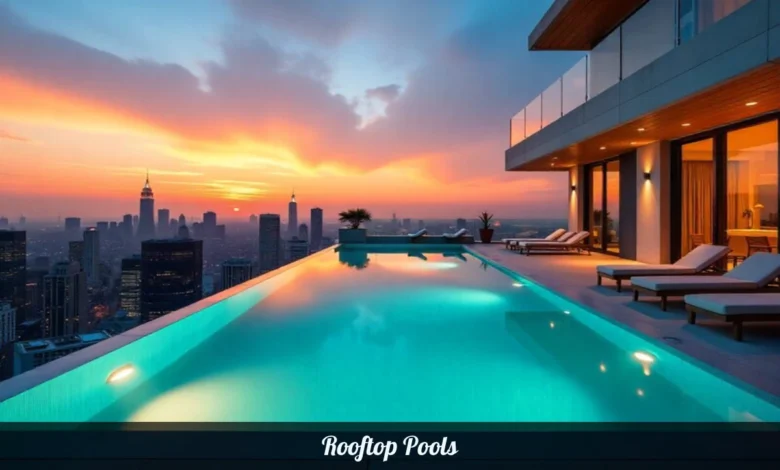
Rooftop pools are elevated swimming pools built on building rooftops, offering panoramic city or landscape views. Popular in urban hotels and luxury residences, they maximize limited space while providing private retreats. The 2025 market shows over 40% of urban pool installations are now rooftop designs, with features like infinity edges, smart technology, and wellness amenities driving demand.
Picture yourself floating in cool water hundreds of feet above a bustling city, cocktail in hand, watching the sunset paint the skyline in gold and orange. That’s the magic of rooftop pools.
These elevated escapes have moved from rare luxury to must-have amenity in just over a decade. What started as a niche hotel feature now transforms urban landscapes worldwide. This guide covers what makes rooftop pools special, where to find the best ones, and what you need to know before experiencing or building one.
What Makes Rooftop Pools Different
Rooftop pools sit on building tops rather than at ground level. The difference goes beyond location.
These pools create private, peaceful escapes far from street-level noise and congestion. You’re removed from the chaos below. The views become part of the experience, whether you’re overlooking Manhattan’s skyline or the mountains surrounding Positano.
Most rooftop pools use lighter construction materials than traditional pools. Stainless steel pools are popular because they provide watertight vessels and can be shipped in one piece or welded on-site. This makes installation possible where concrete pools would be too heavy.
The design often includes infinity edges. Water appears to merge with the horizon, creating stunning visual effects. When you pair this with city views or ocean panoramas, the result stops people in their tracks.
This design feature has become a synonym of exclusivity and well-being that boosts a hotel’s brand image and enhances a rooftop’s view.
Why Rooftop Pools Are Trending
The numbers tell the story. Rooftop pools now make up over 40% of urban installations. That’s a massive shift from a decade ago, when they were rare.
The swimming pool market expects to grow by $7.28 billion through 2029, with rooftop designs driving much of that expansion. Hotels and residential developers see them as a competitive advantage.
Several factors explain the boom:
Urban space constraints. In urban environments where ground space is premium, the roof offers a unique opportunity to maximize usable property area. Why let a rooftop sit empty when it could generate revenue or attract buyers?
Property value increases. In competitive urban markets, rooftop pools are high-end features that significantly boost property appeal and resale value. New York developers particularly favor them for luxury residential projects.
Wellness culture. Wellness-focused features, including hydrotherapy jets and heated pools, are included in 50% of newly constructed pools. Rooftop pools fit perfectly into this trend.
Social media appeal. Instagram has made rooftop pools marketing gold. One stunning photo can reach millions. Hotels know this and design accordingly.
The pandemic accelerated demand, too. People wanted private spaces for recreation without crowds. Rooftop pools delivered.
Where to Find the World’s Best Rooftop Pools
Some cities have perfected the rooftop pool experience.
Singapore leads the pack. Marina Bay Sands features the world’s longest elevated pool at 150 meters long, set almost 200 meters above sea level. Only hotel guests can access it, but the views over Singapore’s skyline are unmatched. Three buildings support the structure.
Bangkok offers multiple standout options. 137 Pillars Suites & Residences has two rooftop infinity pools, with the 30th-floor suite pool offering 360-degree views and infinity edges in three directions. The city’s tropical climate means year-round swimming.
Dubai breaks records. Address Beach Resort features the world’s tallest infinity pool at 293.906 meters above ground, measuring 95 meters long and 16.5 meters wide. Dubai doesn’t do subtle.
New York City brings urban sophistication. Multiple hotels feature rooftop pools, including 1 Hotel Brooklyn Bridge with East River views and Manhattan’s skyline as backdrop. The Meatpacking District’s Soho House offers year-round swimming with Hudson River panoramas.
Barcelona combines beach proximity with urban views. The Grand Central Hotel sits in the Gothic Quarter, letting swimmers float above centuries-old landmarks. The Majestic Hotel spa has another stunning option on Passeig de Gràcia.
Rio de Janeiro proves beaches aren’t enough. Hotel Fasano’s rooftop infinity pool offers views of Ipanema, Copacabana, and the Dois Irmãos mountains. Philippe Starck designed it, and celebrities frequent it.
Tempe, Arizona, deserves mention, too. Five hotels there offer rooftop pool experiences, each with a distinct personality. The Westin Tempe’s 18th-floor pool is the highest in the Phoenix area.
Key Features That Define Great Rooftop Pools
Not all rooftop pools impress equally. The best share certain characteristics.
Infinity edges top the list. These pools create the illusion of water spilling seamlessly into the horizon, especially mesmerizing when paired with panoramic views. They work best with drop-offs or minimal railings.
Glass elements maintain views. Many rooftop pools use glass features so patrons don’t have obstructed views. Glass railings provide safety without blocking scenery. Some pools even include glass bottoms visible from floors below.
Smart technology controls everything. More than 80% of consumers prefer pools with remote-controlled operations. Temperature, lighting, and cleaning systems connect to apps. You can prepare your pool before arriving.
LED lighting transforms night experiences. LED lighting adoption has surpassed 90%, improving aesthetics and energy efficiency. Underwater strips and edge lighting create dreamy atmospheres after dark.
Cabanas and lounging areas extend the experience. Full-service cabanas with food and beverage service turn pools into day-long destinations. Some accommodate groups of five or more.
Heating systems extend seasons. Even warm cities cool down sometimes. Heated pools mean year-round use. Over 30% of commercial pools in California and Spain used solar heating in 2024.
Wellness additions attract health-conscious guests. Hydrotherapy jets, cold plunge areas, and adjacent spas complement swimming. These features align with broader wellness trends.
Design Considerations for Rooftop Pools
Building a rooftop pool requires careful planning. Several factors determine success or failure.
Structural capacity comes first. Planning matters because the layout for the deck, accessibility, and bathroom facilities are important elements that must be planned out in advance. Existing buildings may need reinforcement. Water weighs 8.34 pounds per gallon. A 10,000-gallon pool means 83,400 pounds of water alone.
Structural changes alone can cost upwards of $20,000 for homeowners, depending on needed updates. Commercial projects cost far more.
Waterproofing prevents disasters. Robust waterproofing measures prevent leaks and water damage to the building structure, employing membranes, coatings, or integrated systems. One leak can cause massive damage to the floors below.
Weight reduction influences materials. Stainless steel and prefabricated systems weigh less than concrete. Prefabricated, modular, ecological modules made of expanded polystyrene plastic provide extraordinary benefits for pools in difficult-to-access spaces like rooftops.
Access points need thought. How do guests reach the pool? Elevators, stairs, and safety requirements vary by location. Pool codes regarding patron access and facility design vary significantly depending on location and building type.
Equipment placement presents challenges. Pumps, filters, and heaters need homes. Some buildings hide them elsewhere. Others integrate them into rooftop design with sound-dampening.
Wind exposure affects comfort. Rooftops get windy. Windbreaks, strategic landscaping, or partial enclosures help. Nobody enjoys being cold and wet in strong winds.
Drainage systems must handle overflow and rain. Water needs somewhere to go during storms. Proper drainage prevents flooding and protects structural integrity.
Rooftop Pools in Different Climates
Climate determines design choices and usage patterns.
Tropical locations like Bangkok and Singapore enjoy year-round pool weather. Shade becomes a priority. Pergolas, retractable awnings, and strategic plantings provide relief from intense sun.
Desert climates such as Phoenix and Dubai face extreme heat. Pool cooling systems are emerging as popular solutions for maintaining comfortable water temperatures, especially in warmer climates. Yes, you can cool pools when the water gets too hot for comfort.
Temperate cities, including New York and London, operate seasonally. Pools open Memorial Day and close Labor Day in the U.S. Heating extends seasons slightly, but winter swimming remains rare.
Cold climates present unique challenges. Copenhagen’s Villa Copenhagen features one of the city’s only outdoor pools. It’s heated sustainably by redeploying excess energy from the hotel, and at 82 feet long, it’s roomy enough for laps. An adjoining sauna adds appeal.
High-altitude locations like Lhasa, Tibet, require special consideration. The air is thinner, the skies are more intense, and the temperatures are more extreme. Indoor options with floor-to-ceiling windows often work best.
Cost and Investment Considerations
Rooftop pools cost more than ground-level equivalents.
The average cost of a rooftop pool is typically above $100,000. That’s just the start. Additional costs for permits, materials, and equipment transportation, structural reinforcements add more.
Commercial projects run higher. Hotels spend on rooftop pools and see them as investments, not expenses. The marketing value, increased occupancy rates, and higher room rates justify costs.
For residential projects, return on investment varies by market. In competitive urban markets, rooftop pools can significantly boost property appeal and resale value. Manhattan penthouses with rooftop pools command premium prices.
Maintenance costs deserve attention. Annual maintenance typically ranges from $3,000 to $6,000 for residential pools. Commercial operations spend more but spread costs across many users.
Energy efficiency reduces long-term expenses. Solar heating, variable-speed pumps, and automatic covers cut utility bills. Energy-efficient heaters and variable-speed pumps, frequently supported by local sustainability incentives, curb utility expenditures that can otherwise consume half of a temperate-climate pool’s budget.
Trends Shaping Rooftop Pool Design
The industry keeps changing. Several trends define 2025 and beyond.
Modular construction speeds installation. Manufacturers introduced modular and prefabricated pool kits that can be installed within two weeks, using about 20% fewer materials than conventional models. This reduces disruption and costs.
Darker finishes replace traditional blue. Dark tiles and finishes give pools more sophisticated, lagoon-like appearances and help absorb sunlight, keeping water warmer. Deep grays and rich sapphire tones look stunning.
Compact designs fit tighter spaces. Plunge pools are especially popular among homeowners with smaller backyards or urban spaces, offering a perfect balance between relaxation and functionality. Add jets for hydrotherapy, and you have full features in minimal space.
Sustainable systems reduce environmental impact. Demand for UV and ozone-based sanitation systems has risen by over 70%, reducing the need for chemical-based treatments. Saltwater systems are gaining popularity, too.
Multifunctional spaces serve various purposes. Pools aren’t just for swimming anymore. They host events, provide exercise areas, and serve as social hubs. Some include swim-up bars, underwater speakers, and sports features.
Acrylic walls and edges create a modern look. These transparent structures transform average pools into beautiful and elegant areas. The material forms larger panels while staying clear, enabling designs impossible with traditional materials.
Safety and Regulations
Safety requirements vary by location but share common elements.
Fencing or barriers protect against accidents. Drowning remains a leading cause of death for young children, making education, fencing, and supervision as important as the pool itself. Rooftop locations add fall risks.
Most jurisdictions require self-closing gates, minimum fence heights, and restricted access. Commercial pools face stricter rules than residential ones.
Depth markers, no-diving signs, and clear safety instructions are standard. Many locations mandate lifeguards during certain hours or for larger pools.
Emergency equipment, including life rings, reaching poles, and a first aid kit, must be accessible. Some areas require emergency phones or call buttons.
Regular inspections verify compliance. Health departments check water quality, equipment function, and safety features. Violations can force closures.
Insurance considerations matter too. Liability coverage for rooftop pools costs more than standard pools. The height, public access, and alcohol service increase risks.
Hotels vs. Residential Rooftop Pools
The two categories serve different needs.
Hotels are designed for multiple users and marketing impact. The appeal of expertly designed pools offering breathtaking skyline views can make properties more competitive and attract more tenants. Features include larger sizes, more amenities, and professional maintenance.
Hotel pools often restrict hours, implement dress codes, and charge access fees for non-guests. Some reserve sections for suite guests, creating exclusivity tiers.
Residential pools prioritize owner preferences. Designs can be more personal, unusual, or specific to family needs. More than 60% of new installations are for residential purposes, driven by lifestyle upgrades and the appeal of backyard recreation spaces.
Residential projects face different challenges. Maintenance falls on owners. Privacy from neighbors requires planning. Noise restrictions limit entertainment options.
Both benefit from professional design. Developers need to work with experienced aquatic engineers and designers. The stakes are too high for amateur approaches.
Maintenance and Upkeep
Rooftop pools require consistent care. Elevation creates unique challenges.
Water chemistry needs daily attention. Temperature swings, sun exposure, and usage affect pH and chlorine levels. Test strips or digital monitors track conditions.
Cleaning happens more often than in in-ground pools. Wind carries more debris to rooftops. Leaves, dust, and pollution accumulate quickly. Automated cleaning systems, real-time chemical monitoring, and app-based control of temperature and lighting integrate with smart home systems.
Equipment checks prevent failures. Pumps, filters, and heaters work harder in exposed locations. Regular inspections catch problems before breakdowns.
Winterization protects against freeze damage in cold climates. Draining, covering, and protecting equipment prevents costly repairs. Some systems allow partial drainage while maintaining the structure.
Professional service makes sense for most owners. The complexity, safety requirements, and equipment access justify hiring experts. Commercial properties need daily attention.
Cover systems reduce maintenance. Auto covers are essential for maintaining temperature control and ensuring safety when pools are not in use. They also keep debris out and reduce evaporation.
Environmental Impact
Sustainability matters more each year. Rooftop pools can be resource-intensive.
Water consumption tops concerns. Water scarcity impacts 22% of market considerations. Covers reduce evaporation. Efficient filters minimize backwash waste. Rainwater collection helps in some climates.
Energy use varies widely. Heating and pumping consume electricity. LED pool lighting offers up to 80% energy savings compared to halogen bulbs. Solar heating cuts fossil fuel dependence.
Chemical usage affects water systems. UV and ozone-based sanitation reduce the need for chemical-based treatments. Saltwater systems provide gentler alternatives to chlorine.
Construction choices matter. EPS construction systems are prefabricated, modular, ecological, and recyclable modules. Material selection affects long-term environmental footprint.
Green certifications guide decisions. LEED standards encourage sustainable choices. Properties pursuing certification must meet specific criteria for water efficiency, energy use, and materials.
The Future of Rooftop Pools
Innovation continues to reshape what’s possible.
Smart integration will deepen. Pools will connect with broader building systems. Imagine your pool automatically adjusting temperature based on weather forecasts and your schedule.
Biophilic design will increase. Green roofs or living walls around rooftop pool areas enhance aesthetic appeal, improve air quality, and provide natural insulation. Expect more vertical gardens and natural materials.
Smaller footprints will accommodate more locations. More than 37% of newly installed residential pools globally were prefabricated or assembled modular units. This trend will expand rooftop pool possibilities.
Virtual experiences may complement physical pools. Underwater projection systems could create immersive environments. Imagine swimming while virtually surrounded by coral reefs or Northern Lights.
Health monitoring will become standard. Sensors tracking water quality, temperature, and even user health metrics will provide real-time data. Wearables will integrate with pool systems.
Adaptive reuse will grow. Converting existing rooftops, parking structures, and