Property Logging: A Complete Guide to Harvesting Timber on Your Land
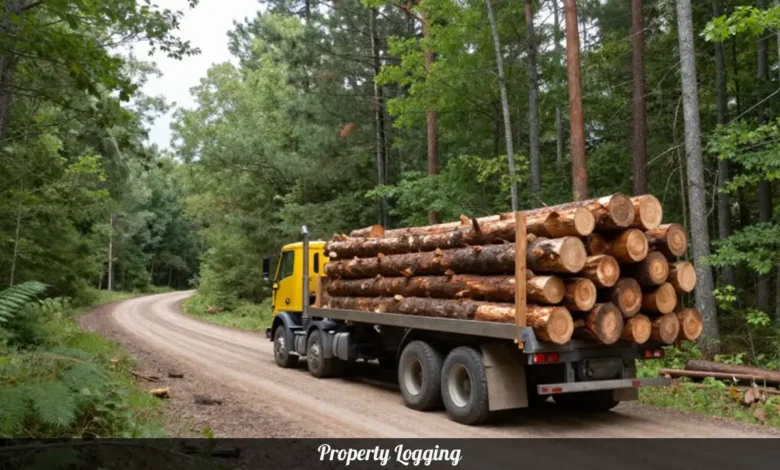
Property logging is the process of harvesting trees from privately owned land for commercial sale or personal use. Successful logging requires careful planning, hiring qualified contractors, obtaining proper permits, and understanding timber values. Landowners typically earn between $200 to $800 per thousand board feet, depending on species, quality, and market conditions. The process involves tree marking, contractor selection, written contracts, and compliance with state forestry regulations.
You own wooded land and wonder if those trees could provide income. Or maybe you need to clear space for a new building. Either way, property logging can help you reach your goals while putting money in your pocket.
This guide walks you through every step of logging your property. You’ll learn how to avoid costly mistakes, protect your land, and get fair payment for your timber.
Understanding Property Logging Basics
Property logging starts with one question: why? Your answer shapes everything that follows.
Some landowners want income from mature timber. Others need to thin overcrowded stands for forest health. You might want to create a wildlife habitat, clear land for development, or simply remove diseased trees.
Small woodland owners supply 10% to 13% of Oregon’s annual timber harvest. These operations typically involve 25 truckloads or fewer, often fewer than five. That’s roughly 112,000 board feet compared to the millions harvested from industrial forests.
The scale matters because fixed costs stay the same whether you harvest one truckload or one hundred. Move-in expenses, road work, and equipment mobilization can eat up profits on small jobs. Some landowners break even or end up paying out of pocket.
What Property Logging Costs
Logging contractors charge either a percentage of timber value (typically 50%) or a flat rate per thousand board feet. The percentage method is common, but it ties your costs to market prices that shift throughout the year.
Consider this: Douglas fir prices dropped from $800 per thousand board feet in January 2015 to $600 in June. Under a 50% split, you’d pay $400 in January versus $300 in June for the same work.
Equipment mobilization costs several hundred to several thousand dollars. For operations under one truckload, mobilization alone can exceed your timber value.
Hauling costs typically run $75 to $150 per load. Each loaded truck carries about 4,500 board feet. Road improvements might add $2,000 to $10,000 per mile if heavy logging trucks need stronger surfaces.
Finding the Right Logging Contractor
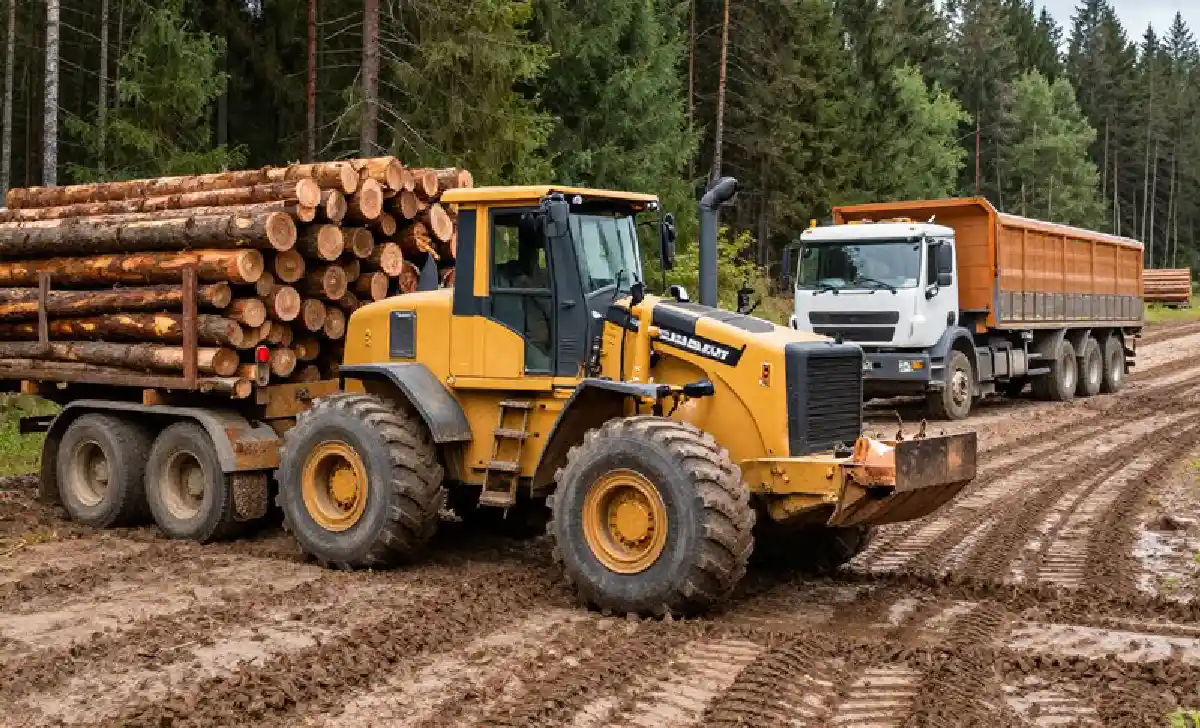
The quality of your contractor determines whether property logging succeeds or fails.
Start by talking to state foresters. They know local contractors suited to small operations. The Oregon Professional Logger Program and similar state programs maintain directories of qualified loggers.
Get at least three bids. Written bids should specify total cost, what’s included, payment terms, timeline, equipment, insurance coverage, slash disposal method, and road restoration requirements.
Verify insurance before signing anything. Request copies of liability and property damage policies. Ask for references from recent small woodland jobs.
Avoid contractors who refuse to provide references, won’t show insurance documentation, push for immediate decisions, offer prices far below other bids, or haven’t worked on small properties before.
Plan. The best contractors book months in advance, especially during dry seasons when most logging happens.
Required Permits for Property Logging
You can’t legally cut timber without proper notification to your state.
The Notification of Operations is mandatory. You’ll receive a notification with the number required to sell logs. No notification number means no timber sale, no exceptions.
Most states let you file online through the forestry department websites. Include information about the property owner, logging contractor, timber species, harvest dates, and site location.
Property boundaries must be legally surveyed before logging. Cutting trees on someone else’s land triggers severe penalties. Courts can fine you double the fair market value for accidental trespass. Knowingly removing another person’s trees brings triple stumpage fines.
Don’t trust old roads, fences, or previous harvest lines to mark boundaries. Only surveys by licensed surveyors hold up in court.
How to Mark Trees for Property Logging
Tree marking separates what stays from what goes.
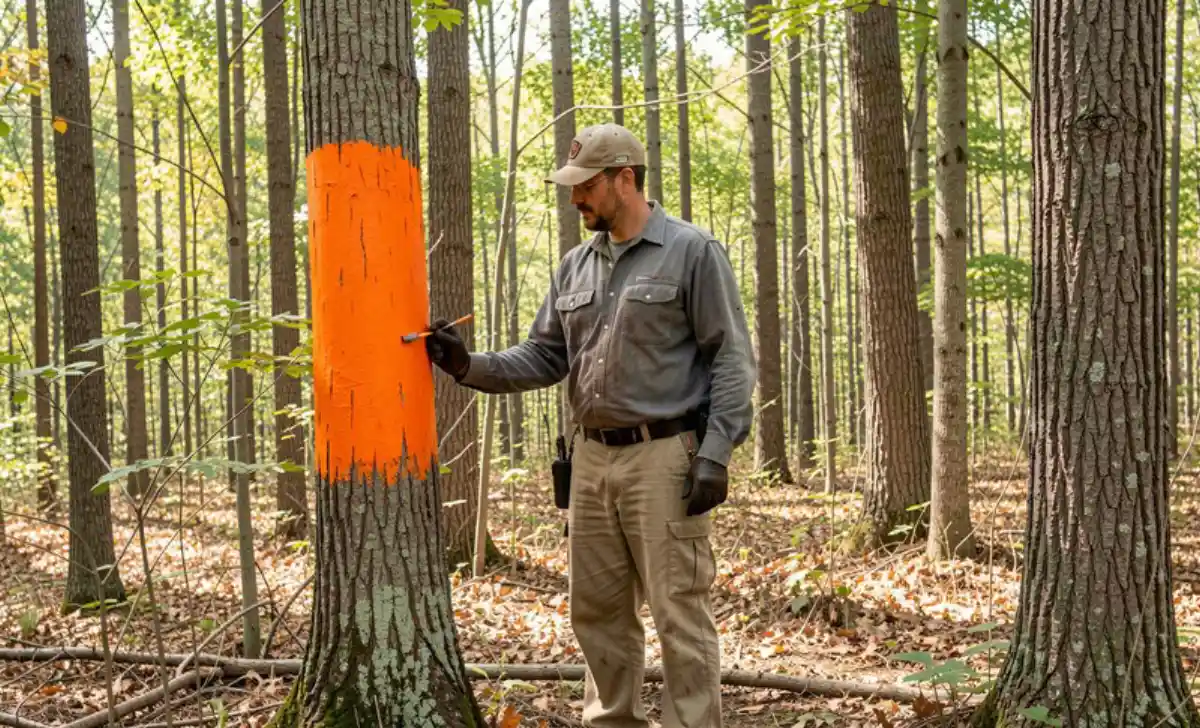
In thinning operations, mark every tree designated for harvest. Use paint, not flagging, which weathers and falls off. Apply paint at two heights: breast height (4.5 feet) and below stump level.
Choose bright colors that stand out. Orange, blue, and yellow work well.
If you’re unfamiliar with tree selection, hire help. Poor marking removes valuable future crop trees while leaving defective ones. State foresters often provide free or low-cost assistance.
Consider health, spacing, quality, and species mix when selecting harvest trees. High-grading, taking only the best trees, degrades forest genetics over time.
Understanding Timber Values
Your trees’ worth depends on species, size, quality, and market timing.
Recent stumpage prices (Q1 2025 Pennsylvania data) show:
- Northern Red Oak: $604 per thousand board feet
- White Oak: $778 per thousand board feet
- Black Cherry: $779 per thousand board feet
- Hard Maple: $650 per thousand board feet
- Soft Maple: $368 per thousand board feet
- Yellow Poplar: $213 per thousand board feet
Prices fluctuate seasonally and regionally. Winter often brings higher prices because fewer landowners log during wet months.
Log diameter matters significantly. Most mills require at least 5 inches in diameter at the small end for sawlogs. Log length affects value, too. Standard lengths are 8, 10, 12, and 16 feet.
Quality grades separate top-dollar logs from average ones. Straight grain, minimal knots, and uniform color increase value. Rot, excessive sweep, forked tops, and insect damage decrease it.
Choosing the Right Mill
Where you sell logs affects your bottom line as much as what you sell.
Contact at least three mills if possible. Request purchase orders specifying species they’ll buy, acceptable sizes, current prices, payment terms, delivery requirements, and quality specifications.
Distance to the mill dramatically impacts profit. Hauling costs average $2 to $3 per loaded mile. A mill 50 miles away costs $100 to $150 more per load than one 10 miles away.
Calculate net value by subtracting hauling costs from mill prices. The mill with the highest base price isn’t always the most profitable choice.
Property Logging Contracts
Never start logging without a written contract.
Every property logging contract should specify parties involved, property location, harvest unit boundaries, payment amount and method, payment schedule, work timeline, equipment to be used, tree marking requirements, slash disposal method, road use and restoration, weather suspension conditions, insurance coverage, and dispute resolution process.
Include language about residual stand damage for thinning operations. Set a maximum acceptable damage percentage (commonly 5%). Specify consequences for exceeding it.
Clarify ownership of timber. If you own the logs until they’re sold, you sign the mill paperwork and receive payment. If the contractor buys standing timber, they own it and handle transactions.
Require proof of insurance as a contract condition. State minimum coverage amounts. Get actual policy documents, not just certificates of insurance.
Road Access and Landing Sites
Logging trucks need wider roads, gentler curves, and stronger surfaces than family vehicles. An 80,000-pound loaded truck requires a 14-foot minimum width, a 20-foot width on curves, a maximum 10% sustained grade, and sa table, compacted surface.
Landing sites are where logs get processed and loaded. Small operations need room for one or two loads of decked logs, a skidder or dozer, and a self-loading log truck.
Flat ground works best. Locate landings close to roads to minimize skidding distance. Short, downhill, or flat skids cost less than long, uphill hauls.
Ask potential contractors to walk your property before bidding. Their input on road and landing locations saves time and money.
Environmental Protection During Property Logging
Responsible property logging protects water, soil, and wildlife.
Maintain 30 to 100-foot buffers around creeks, rivers, and ponds. This prevents soil erosion into water, temperature changes from lost shade, sediment damage to fish habitat, and bank destabilization.
Heavy equipment on wet soil causes compaction and rutting. Limit ground-based operations to dry conditions when possible.
Best Management Practices (BMPs) guide environmental protection during logging. State forestry departments publish BMP guidelines specific to your region.
Tax Considerations in Property Logging
Timber income triggers tax obligations you need to understand.
Forest Products Harvest Tax applies to all timber cut in Oregon. Rates vary by species and market value. Your notification number tracks harvested volumes for tax reporting.
The timber owner,r when trees are cut, ut pays harvest taxes. If you own standing timber through cutting, you pay. If you sold stumpage, the buyer pays.
Capital gains treatment can reduce federal income tax on timber sales. Timber held over one year qualifies for long-term capital gains rates, lower than ordinary income rates.
Consult tax professionals familiar with timber taxation. Rules are complex, legal, ex and mistakes cost money.
Common Mistakes to Avoid
Failing to verify property boundaries causes expensive legal problems. Always confirm ownership before cutting.
Hiring the first contractor who calls leads to poor results. Cheap bids often signal inexperience or corner-cutting.
Skipping written contracts creates disputes. Handshake deals leave too much open to interpretation.
Ignoring insurance exposes you to liability. If workers get hurt on your property, you could face lawsuits.
High-grading damages long-term forest value. Taking only the btree leaves inferior genetics for future stands.
Logging during wet conditions without proper roads destroys soil structure and creates erosion.
Final Thoughts
Property logging requires planning, patience, and attention to detail. The process takes months from initial planning to final payment.
Start by defining your goals. Budget realistically. Fixed costs can exceed timber value on very small operations.
Hire qualified professionals. State foresters, licensed surveyors, and reputable contractors protect your interests.
Get everything in writing. Contracts prevent misunderstandings and provide recourse when problems arise.
Protect your land. Follow environmental regulations and best management practices. Monitor operations through regular site visits.
Done right, property logging generates income while maintaining or improving your land’s value.