Perfect Bedroom Size: Your Complete Guide to Ideal Dimensions
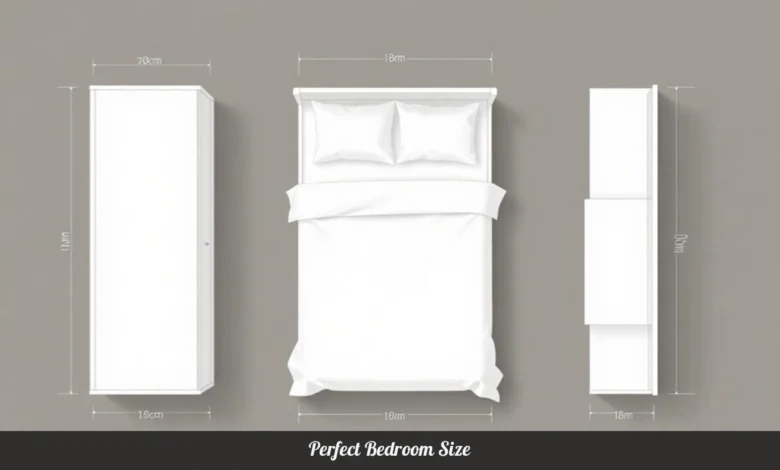
The perfect bedroom size depends on your bed choice and lifestyle needs. Standard bedrooms measure 10×12 feet (120 sq ft), while master bedrooms average 14×16 feet (224 sq ft). Most U.S. bedrooms are 132 square feet. Your ideal size should allow 30 inches around the bed and accommodate essential furniture comfortably.
Why Bedroom Size Matters More Than You Think
You spend nearly one-third of your life in your bedroom. That’s roughly 8 hours per day, or 2,920 hours annually. Yet most people don’t give bedroom dimensions much thought until they’re trying to squeeze a dresser past a door frame or realize their king bed makes their room feel like a furniture showroom.
The right bedroom size affects your sleep quality, stress levels, and daily comfort. A cramped space creates anxiety. An overly large room can feel cold and unwelcoming. Finding that sweet spot makes your bedroom what it should be: your personal retreat.
This guide breaks down perfect bedroom sizes for every situation, from compact city apartments to spacious suburban homes. You’ll learn what works, what doesn’t, and how to make smart decisions about your most personal space.
What Is the Perfect Bedroom Size?
For standard bedrooms: 10 feet x 12 feet (120 square feet) works for most people. This fits a queen bed, two nightstands, and a dresser while leaving room to move.
For master bedrooms: 14 feet x 16 feet (224 square feet) gives you breathing room. You can fit a king bed, larger furniture pieces, and still walk comfortably around everything.
The U.S. average: Most bedrooms measure 132 square feet. This number accounts for all bedroom types, from small guest rooms to spacious primary suites.
These aren’t just random numbers. They come from decades of home-building data and research into what actually works for daily living.
Perfect Bedroom Size by Bed Type
Your bed takes up the most floor space. Choose your bed first, then plan your room around it.
Twin bed (38″ x 75″):
- Minimum room size: 7 feet x 10 feet (70 sq ft)
- Comfortable size: 8 feet x 10 feet (80 sq ft)
- Best for: Kids’ rooms, small guest rooms, single adults
Full bed (54″ x 75″):
- Minimum room size: 9 feet x 11 feet (99 sq ft)
- Comfortable size: 10 feet x 12 feet (120 sq ft)
- Best for: Teenagers, single adults, tight spaces
Queen bed (60″ x 80″):
- Minimum room size: 10 feet x 11 feet (110 sq ft)
- Comfortable size: 10 feet x 12 feet (120 sq ft)
- Best for: Couples, standard bedrooms, guest rooms
King bed (76″ x 80″):
- Minimum room size: 12 feet x 12 feet (144 sq ft)
- Comfortable size: 14 feet x 16 feet (224 sq ft)
- Best for: Master bedrooms, couples who need space
California King bed (72″ x 84″):
- Minimum room size: 12 feet x 14 feet (168 sq ft)
- Comfortable size: 14 feet x 16 feet (224 sq ft)
- Best for: Tall people, spacious master suites
Leave at least 30 inches on three sides of your bed. This gives you space to make the bed, walk around, and access drawers. Less than 24 inches feels cramped.
Standard Bedroom Sizes for Different Room Types
Different bedrooms serve different purposes. Here’s what works for each.
Master Bedroom Size
Standard dimensions: 14 feet x 16 feet (224 sq ft)
Common range: 200 to 300 square feet
With bathroom and closet: 250 to 400 square feet
Master bedrooms in newer U.S. homes typically range from 200 to 300 square feet, providing space for a king bed, nightstands, a dresser, and often a sitting area. In 2025, the average master bedroom size is around 300 to 350 square feet, reflecting a trend toward more spacious primary suites.
Your master bedroom should feel like a retreat. Include space for a reading chair, a small desk, or a bench at the foot of the bed. These extras make the room more than just a place to sleep.
Secondary Bedroom Size
Standard dimensions: 10 feet x 12 feet (120 sq ft)
Common range: 100 to 150 square feet
Secondary bedrooms measure 10 feet x 12 feet or 120 square feet, providing space for a queen or full bed and a few other small pieces of bedroom furniture while still allowing room to move around. These rooms work for kids, teens, or guests.
Guest Bedroom Size
Standard dimensions: 10 feet x 12 feet (120 sq ft)
Common range: 100 to 150 square feet
Guest bedrooms match secondary bedroom sizes. The average guest bedroom measures 10-by-12 to 10-by-15 feet, or 120 to 150 square feet. Add a small desk or reading chair to make guests feel welcome.
Kids’ Bedroom Size
Standard dimensions: 10 feet x 10 feet (100 sq ft)
Common range: 80 to 150 square feet
Kids’ bedrooms measure 10 feet x 10 feet or 100 square feet, accommodating a room layout with a twin or single bed along with a few small kid-size pieces of furniture like a dresser and desk. Children need floor space for play, so avoid over-furnishing these rooms.
Legal Minimum Bedroom Requirements
Building codes set minimums to ensure safety and livability.
Minimum square footage: 70 square feet in most states
Minimum dimension: No wall can be shorter than 7 feet
Ceiling height: At least 7 feet for at least 50% of the floor area
Window requirements: Must have an egress window for emergency exit
Building codes set minimum bedroom sizes at 70 square feet (6.5 square meters) in most areas. A room smaller than this cannot legally be listed as a bedroom in real estate.
These minimums exist for good reason. Rooms smaller than 70 square feet feel claustrophobic and don’t accommodate basic furniture safely.
What Affects Your Perfect Bedroom Size
Several factors determine what works for your situation.
Home Type and Location
Urban apartments feature smaller bedrooms due to premium real estate costs. Urban homes, especially in densely populated cities, often have compact bedrooms due to premium real estate pricing, while homes in suburban or countryside settings might offer more generous bedroom dimensions.
Suburban and rural homes typically offer larger bedrooms. More land means more space to build.
Total Home Size
The average bedroom size is influenced by the overall home size, which varies significantly across different housing types and geographic locations. A 1,200 square foot home can’t accommodate multiple 300 square foot bedrooms.
Master bedrooms account for 11.3% of finished floor space on average, according to National Association of Home Builders data. Keep your bedroom proportional to your total home size.
Furniture Needs
List everything you want in your bedroom:
- Bed
- Two nightstands
- Dresser or chest of drawers
- Wardrobe or closet space
- Desk or vanity
- Seating area
- TV stand
Add up the space each piece needs, then add 30-40% for walking space. This gives you your minimum room size.
Lifestyle and Daily Use
Do you work from home? You need space for a desk. Do you exercise in your bedroom? Add room for equipment. Do you read before bed? Include a comfortable chair.
Think about how you actually use your bedroom. Design for your real life, not Instagram photos.
How to Maximize Small Bedroom Space
Small bedrooms can feel spacious with smart design choices.
Choose multi-purpose furniture:
- Beds with storage drawers underneath
- Ottomans that open for storage
- Nightstands with multiple shelves
- Murphy beds that fold into the wall
- Desks that double as vanities
Use vertical space:
- Floor-to-ceiling bookshelves
- Wall-mounted floating shelves
- Tall wardrobes instead of wide dressers
- Hooks on walls and doors
- Overhead storage above closet doors
Smart layout tricks:
- Push your bed against a wall to free up floor space
- Use corner space with L-shaped furniture
- Keep furniture legs visible to create an airy feel
- Position your bed as the focal point
- Maintain clear pathways at least 24 inches wide
Visual expansion techniques:
- Paint walls in light, neutral colors
- Hang large mirrors to reflect light
- Use sheer curtains to let in natural light
- Keep decorations minimal and intentional
- Choose furniture that matches your wall color
By understanding traffic flow and avoiding obstructions, homeowners can ensure a spacious feel even in smaller bedrooms.
Design Tips for Large Master Bedrooms
Big bedrooms present different challenges. Space can feel cold and unwelcoming.
Create separate zones:
- Sleeping area with a bed and nightstands
- Dressing area with a wardrobe and a mirror
- Sitting area with chairs and a small table
- Work area with desk and task lighting
Large master bedrooms are perfect for dividing into two separate spaces, usually a sleeping space and a sitting area. Place furniture backs-to-back to define different zones.
Add area rugs: Rugs define spaces within your large room. Use one under the bed, another in the sitting area. This breaks up vast floor space visually.
Include statement pieces:
- A grand headboard
- An oversized piece of art
- A beautiful chandelier
- A vintage armoire
- A reading chair with an ottoman
Large pieces fill space without cluttering. They anchor the room and create visual interest.
Balance empty and full: Don’t furnish every inch. Leave some open space to maintain that luxurious, airy feeling. Too much furniture makes even large rooms feel cramped.
Perfect Bedroom Size for New Construction
Building a new home? You have complete control over bedroom sizes.
For a 1,500 sq ft home:
- Master bedroom: 180-200 sq ft
- Secondary bedrooms: 100-120 sq ft each
For a 2,000 sq ft home:
- Master bedroom: 200-250 sq ft
- Secondary bedrooms: 120-140 sq ft each
For a 2,500+ sq ft home:
- Master bedroom: 250-350 sq ft
- Secondary bedrooms: 140-160 sq ft each
In 2023, the most common number of bedrooms in newly-built single-family homes continued to be three at a 45.7% share. Most families prioritize having enough bedrooms over having oversized ones.
Think about resale value. Homes with three to four bedrooms sell faster than homes with two large bedrooms or five small ones. Balance size with bedroom count.
Common Bedroom Size Mistakes
Avoid these planning errors.
Too small for the bed: A king bed in a 10×10 room feels like sleeping in a furniture store. The bed eats all the space. Leave room to walk.
Ignoring door swings: Doors need clearance. A door that hits furniture creates daily frustration. Map out door arcs before finalizing your layout.
Forgetting about dressers: Everyone focuses on bed size but forgets dressers need space too. Drawers need room to open fully.
Skipping the furniture plan: Design your bedroom on paper first. Draw to scale. Move furniture around digitally before you buy anything.
Following trends over function: That gorgeous platform bed might not fit your room. Choose furniture that works for your space, not what looks good online.
Bedroom Size vs. Home Value
Buyers value homes with balanced bedroom dimensions in proportion to the standard bedroom size, and bedrooms that feel cramped compared to other rooms detract from overall appeal.
What adds value:
- Master bedrooms are at least 180 square feet
- All bedrooms are at least 100 square feet
- Proportional sizing across all bedrooms
- Adequate closet space in each room
What hurts value:
- Master bedrooms under 150 square feet
- Any bedroom under 80 square feet
- One huge bedroom, several tiny ones
- Poor layouts that waste space
The number of bedrooms greatly varied in 2023, depending on a new single-family home’s purpose of construction. Purpose matters more than size alone.
Final Thoughts
The perfect bedroom size balances your needs, your budget, and your home’s total space. Standard bedrooms at 120 square feet work for most situations. Master bedrooms at 224 square feet provide comfortable luxury without excess.
Remember the 30-inch rule: leave at least 30 inches around three sides of your bed. This single guideline prevents most space planning mistakes.
Small bedrooms can feel spacious with smart furniture choices and good design. Large bedrooms need thoughtful zoning to avoid feeling empty.
Your bedroom should make you feel relaxed the moment you walk in. If it doesn’t, size might be part of the problem. But layout, lighting, and furniture choices matter just as much as square footage.
Start with your bed size, add your essential furniture, and ensure you have clear walking paths. That’s the foundation of any perfectly sized bedroom.
FAQs
What is the perfect size for a master bedroom?
The perfect size of a master bedroom should be dimensions that provide from 200 to 250 square feet, accommodating a king-sized bed and some additional seating furniture. This gives you comfortable space without feeling excessive.
How small can a bedroom be legally?
The minimum size for a legal bedroom in many states is at least 70 square feet (6.5 square meters), with no dimension less than 7 feet. Rooms smaller than this cannot be listed as bedrooms.
What size room do I need for a queen bed?
A queen bed needs a minimum room size of 10 feet x 11 feet (110 sq ft). For comfortable furniture placement and movement, aim for 10 feet x 12 feet (120 sq ft).
How much space should be around a bed?
The minimum recommended clearance around a bed is 24 inches on all sides. For comfortable movement and bed-making, 30 inches is ideal.
Is 132 square feet a small bedroom?
No, 132 square feet is the average bedroom size in the U.S. This accommodates a queen bed and essential furniture comfortably. Bedrooms under 100 square feet are considered small.
What makes a bedroom feel bigger?
Light colors, large mirrors, minimal furniture, and good natural light make bedrooms feel more spacious. Keep clutter minimal and choose furniture with visible legs to create an airy feeling.
Should master bedrooms be bigger than living rooms?
No. Master bedrooms typically take up 10-15% of a home’s total square footage, while living rooms take up more. Proportional sizing keeps your home balanced and functional.
How do I know if my bedroom is too small?
If you can’t comfortably walk around your bed (less than 24 inches clearance), if furniture blocks doors or drawers, or if the room feels claustrophobic, it’s too small for your current setup.