Knee Wall: Complete Guide to Design, Insulation & Energy Efficiency
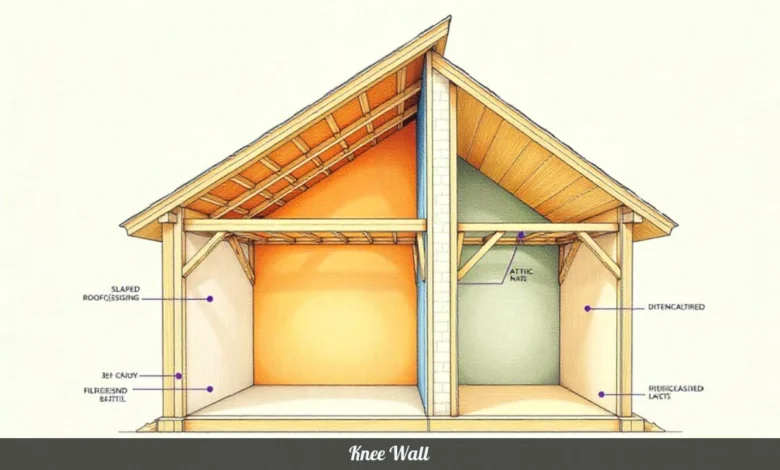
A knee wall is a short vertical wall separating conditioned from unconditioned space, typically under three feet tall. Found in attics with sloped ceilings, knee walls require proper insulation and air sealing to prevent energy loss and maintain home comfort.
What Is a Knee Wall?
You walk into your upstairs bedroom and notice a short wall running along the side where the ceiling slopes down. That’s a knee wall. The name comes from its height—roughly knee-high—, and it marks where your living space ends and the attic begins.
Knee walls exist wherever your roof meets conditioned space. Cape Cod homes, bonus rooms above garages, and any space with a cathedral ceiling adjacent to a flat ceiling will have them. The wall itself stands between two worlds: your heated and cooled room on one side, and uncontrolled attic space on the other.
Think of your home as a box. The walls, ceiling, and floor create a thermal boundary keeping comfortable air inside. A knee wall is part of that boundary, but it’s often the weakest link. Most homes have these walls hiding behind bedroom drywall or tucked in finished attics.
Common Locations Where You’ll Find Knee Walls
Second-story additions create knee walls when builders finish attic space. Half the attic becomes a bedroom while the other half remains storage. That dividing wall? Your knee wall.
Cape Cod-style homes practically invented the knee wall problem. These charming houses maximize upper-floor space by finishing the attic. Walk upstairs, and you’ll see sloped ceilings meeting short walls. Behind those walls sits wasted space—and massive energy loss if not handled correctly.
Bonus rooms above garages often feature knee walls where the roof pitch creates unusable corners. Builders wall off this area, creating storage space that bleeds heat like a sieve.
Cathedral ceilings adjacent to standard ceilings need knee walls at the transition point. The height difference between a 12-foot vaulted ceiling and an 8-foot flat ceiling creates vertical separation—another knee wall opportunity.
Even coffered ceilings can create mini knee walls, though these are typically shorter and easier to miss during energy audits.
Key Differences: Knee Wall vs Pony Wall
People confuse these two constantly. The distinction matters.
A knee wall is structural. It supports roof rafters and separates conditioned from unconditioned space. You’ll find it in attics, always bearing weight from above. The wall must handle structural loads, which means it’s part of your home’s framing system.
A pony wall divides interior spaces. It stops at waist height, creating visual separation without blocking views. Think of the half-wall between your kitchen and living room, or the short barrier around a breakfast bar. These walls don’t support anything above them and have zero impact on energy efficiency.
Purpose: Knee walls control thermal boundaries. Pony walls control traffic flow and sightlines.
Height: Knee walls typically measure under 3 feet. Pony walls run 3-4 feet tall.
Load-bearing capacity: Knee walls must support the roof weight. Pony walls support nothing.
Energy impact: Knee walls directly affect heating and cooling costs. Pony walls have no energy implications.
Location: Knee walls hide in attics. Pony walls live in open floor plans.
Why Knee Walls Cause Energy Problems
Your knee wall is bleeding money. Here’s why.
Missing insulation: Framers install the wall, insulators skip it. The vertical surface gets overlooked while ceiling insulation takes priority. You end up with an R-0 wall separating 70-degree conditioned space from 140-degree attic air in summer. The heat transfer is massive.
Sagging insulation: Even when insulation exists, it falls out. Fiberglass batts sag under their own weight when installed vertically. Within months, gaps appear. Within years, the insulation lies crumpled at the bottom of the wall cavity.
Air leakage below the wall: Your knee wall sits on top of floor joists, not a solid bottom plate. Attic air rushes through the joist cavities, flowing under your floor. You feel cold floors in winter, hot floors in summer. The air bypasses insulation entirely.
Wind washing: Attic ventilation drives wind through wall cavities. Moving air renders insulation useless. Think of wearing a sweater in a windstorm—the fabric does nothing when air flows through it. Your knee wall insulation faces the same problem.
Inadequate R-values: Most knee walls use 2×4 framing, maxing out at R-15 insulation. Your ceiling might have R-49. The dramatic difference creates a thermal weak point.
According to the Florida Solar Energy Center, knee walls can increase cooling loads by 15-20% when improperly sealed and insulated. The Building America program reports that fixing knee wall issues typically reduces whole-house air leakage by 10-15%.
How to Properly Insulate Knee Walls
Your knee wall needs three things: air sealing, adequate insulation, and a solid backing.
Step 1: Seal the bottom cavities
Those floor joist openings under your knee wall? They’re highways for air leakage. Cut rigid foam board or plywood to fit each cavity. Caulk the edges with polyurethane sealant. Every gap sealed stops air movement.
Some contractors stuff rolled fiberglass into the cavities and cover it with spray foam. This works if the foam extends to all edges. Half-done sealing accomplishes nothing.
Step 2: Install a rigid air barrier
The back of your knee wall needs support. Drywall works. So does OSB, plywood, or rigid foam insulation. The material must be air-tight. Seal every seam with caulk or tape. Miss one gap and you’ve accomplished nothing.
Apply caulk to the top plate, bottom plate, and side framing before installing the backing. This creates a complete seal.
Step 3: Insulate the wall cavity
Fill the cavity with insulation rated for your climate zone. Spray foam works best—it insulates and seals simultaneously. Closed-cell spray foam at 1.5 inches creates its own air barrier. Open-cell foam needs 5.5 inches to block air.
Fiberglass batts can work if properly supported by your air barrier. Cut batts to fit snugly without compression. Compressed insulation loses R-value.
Step 4: Add attic floor insulation
After sealing the knee wall, insulate the attic floor on the unconditioned side. Bring this insulation up to code requirements for your region. Most zones require R-38 to R-60.
Alternative Approach: Insulating the Roofline
Some homes benefit from moving the thermal boundary to the roof. Instead of insulating the knee wall, you insulate the underside of the roof deck from the knee wall to the exterior wall.
This approach creates an unvented conditioned attic. The space behind your knee wall becomes semi-conditioned, eliminating the temperature extremes that drive heat loss.
Benefits: No air leakage under floors. No wind washing. Simpler construction. The entire attic becomes usable storage space.
Drawbacks: Higher material costs. Requires spray foam or rigid foam plus proper ventilation channels. Not suitable for all climates or building codes.
The Building Science Corporation recommends this method for homes with complex roof lines or ductwork in attics. Moving ducts inside conditioned space can save 15-30% on heating and cooling costs.
Signs Your Knee Wall Needs Attention
Walk into the room adjacent to your knee wall. Feel the wall surface in winter. Is it cold to the touch? Your insulation has failed.
Check the floor near the knee wall. Does it feel noticeably colder than the center of the room? Air is leaking through floor cavities.
Look at your energy bills. Did costs spike when you finished the attic? Poor knee wall construction often explains the increase.
Schedule a blower door test. This diagnostic measures whole-house air leakage. The technician will use an infrared camera to spot problem areas. Knee walls typically show up as bright spots (in summer) or dark spots (in winter) on thermal imaging.
Enter your attic. Shine a light through the knee wall framing. Can you see light coming through? You have gaps. Check for sagging insulation. If batts hang away from the wall, they’re not working.
Climate Considerations for Knee Wall Insulation
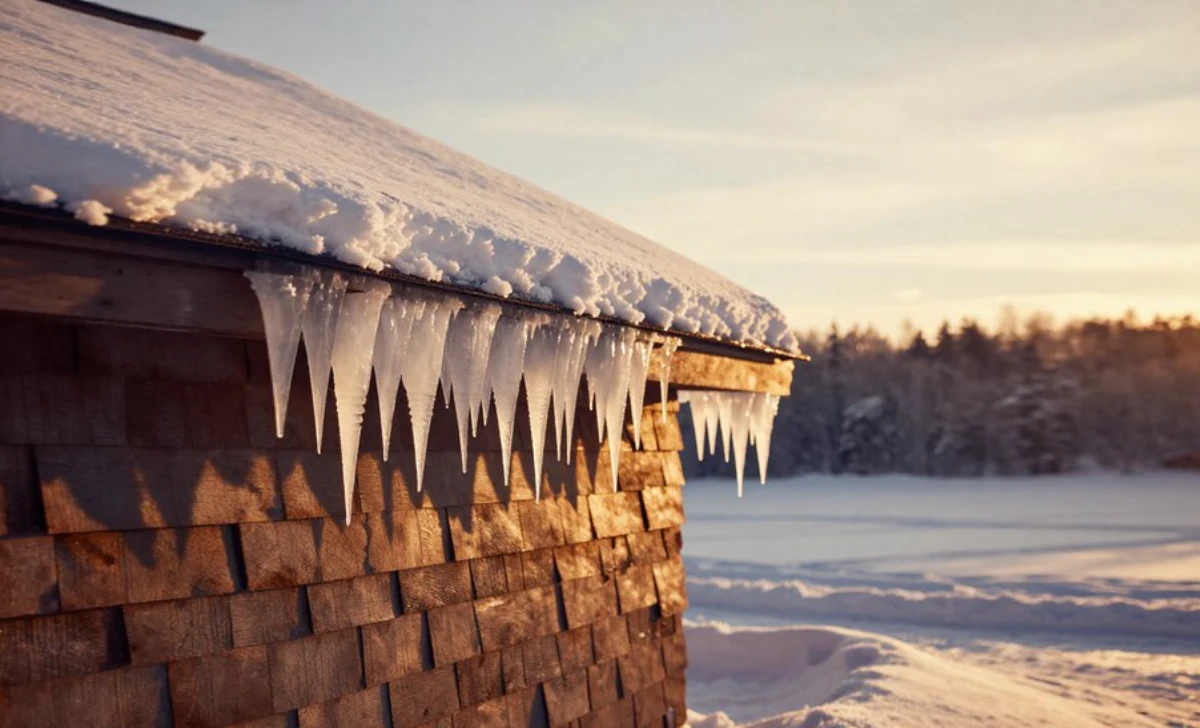
Cold climates face two knee wall challenges: heat loss and ice dams. Warm air escaping into the attic melts snow on your roof. The melt refreezes at the eaves, creating ice dams that damage shingles and gutters.
The Department of Energy reports that proper knee wall air sealing can reduce ice dam formation by up to 70%. The key is stopping warm air from reaching the underside of the roof deck.
Climate zones 5-7 should prioritize air sealing over insulation thickness. Air leakage causes more problems than an insufficient R-value in extreme cold.
Climate zones 1-3 face different issues. Hot attic air drives cooling loads. A 140-degree attic can heat an adjacent room by 10-15 degrees. Radiant barriers on the back of knee walls help in these climates, reflecting heat before it reaches the conditioned space.
Mixed climates (zones 4-5) need both strategies: air sealing for winter, reflective barriers for summer.
DIY vs Professional Installation
Air sealing knee walls looks simple. It’s not.
The physical space is cramped. You’re working on your knees in 100+ degree heat (summer) or below-freezing cold (winter). Attic joists aren’t spaced for crawling. Insulation fibers make breathing difficult, even with masks.
More important, mistakes in air sealing can create moisture problems. Seal the wrong surface, and you trap condensation inside wall cavities. This leads to mold, rot, and structural damage.
Professional energy auditors use blower doors to identify exact leakage points. They know which surfaces need air barriers and which need vapor barriers. The distinction matters.
Expect to pay $2,500-$5,000 for professional knee wall remediation, including air sealing, insulation, and backing materials. DIY materials cost $500-$1,200, but you’re risking improper installation.
Cost vs Energy Savings
A properly sealed knee wall pays for itself in 3-7 years through reduced energy costs.
The average poorly-insulated knee wall costs homeowners $200-$400 annually in extra heating and cooling expenses. A 2,000-square-foot home with two knee walls might see $600 in annual waste.
Professional remediation at $4,000 breaks even in 6-7 years. Your home gains comfort immediately. Cold floors disappear. Temperature swings between rooms even out.
The Department of Energy’s Building America program tracked 50 homes before and after knee wall improvements. Average energy savings: 12% of total heating and cooling costs. In a home spending $2,000 annually on HVAC, that’s $240 saved per year.
Your home’s resale value increases, too. Energy-efficient upgrades appeal to buyers. A home energy audit showing low air leakage rates commands premium prices.
Building Code Requirements
The 2021 International Energy Conservation Code (IECC) requires continuous air barriers at all thermal boundaries. Your knee wall counts. The code doesn’t specify construction methods, only performance: homes must achieve specific air leakage rates measured by blower door tests.
Climate Zone 1-2: 5 air changes per hour at 50 pascals (ACH50)
Climate Zone 3: 3 ACH50
Climate Zones 4-8: 3 ACH50
Most states have adopted the IECC or similar standards. Check your local building department. New construction must pass air leakage testing before final inspection.
Existing homes aren’t required to meet these standards, but upgrades during major renovations trigger code compliance in many jurisdictions.
The Energy Star Certified Homes program requires proper knee wall insulation and backing as part of the Thermal Enclosure System checklist. Builders seeking Energy Star certification must document knee wall construction with photos before covering it with drywall.
Final Thoughts
Knee walls represent one of the most overlooked energy problems in homes. The walls hide behind finished drywall, out of sight and out of mind, while they silently drain energy and money year after year.
The solution isn’t complex: create continuous air barriers, install adequate insulation, and provide rigid backing to hold everything in place. Whether you choose to insulate the knee wall itself or move the thermal boundary to the roofline, the goal remains the same—stop air leakage and maintain consistent R-values throughout your home’s thermal envelope.
Professional installation ensures the job gets done right the first time. The investment pays back through lower energy bills, improved comfort, and increased home value. Your knees might appreciate not having to crawl through cramped attic spaces, too.
FAQs
Can I insulate a knee wall from inside the room?
No. You need access to both sides of the wall cavity. The critical air sealing happens on the attic side. Insulation blown through holes in the drywall won’t address air leakage or provide backing for the insulation.
What R-value should I use for knee walls?
Match your ceiling insulation as closely as possible. If your ceiling has R-49, your knee wall should have at least R-30. Climate zones 5-8 benefit from R-38 to R-49 in knee walls.
Should I use faced or unfaced insulation?
Use unfaced insulation with a separate air barrier. Faced insulation’s kraft paper does not create an adequate air seal. You need rigid backing with sealed edges.
Do knee walls need vapor barriers?
Your climate determines this. Cold climates (zones 5-8) need vapor barriers on the warm side of insulation. Hot climates (zones 1-2) should avoid vapor barriers to allow outward drying. Mixed climates (zones 3-4) create debate among building scientists—consult local building codes.
Can spray foam solve all knee wall problems?
Spray foam addresses air sealing and insulation simultaneously, making it the best single-product solution. Closed-cell spray foam at 2-3 inches creates an air barrier and provides a high R-value. Open-cell foam needs greater thickness. Both require professional installation to achieve proper coverage.