Jimmy Carter House: Inside the Humble Plains, Georgia Home Where a President Chose to Live—and Be Buried
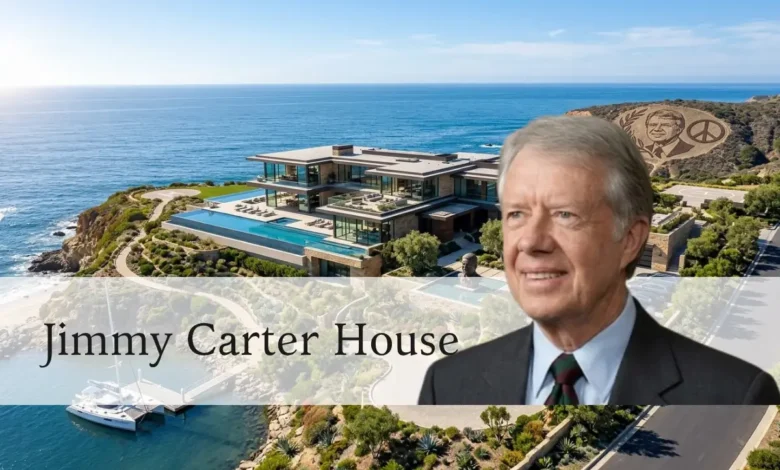
When Jimmy Carter left the White House in January 1981, he did something no other modern U.S. president had done in decades: he went home to stay. Not to a sprawling estate or a guarded compound in a wealthy enclave, but to a modest ranch house on Woodland Drive in Plains, Georgia—the only home he and Rosalynn ever owned. The house was assessed at $167,000, which the Washington Post later noted was less than the value of the armored Secret Service vehicles parked outside. For a man who had led the nation, the contrast was striking. But for Jimmy Carter, it wasn’t unusual at all. It was simply the natural conclusion to a life lived on his own terms, far from the expectations of power and privilege.
Jimmy Carter House at a Glance
| Detail | Information |
|---|---|
| Location | 209 Woodland Drive, Plains, Georgia |
| Year Built | 1960–1961 |
| Architectural Style | Single-story ranch house |
| Bedrooms | Two |
| Assessed Value (2018) | $167,000 |
| Current Status | National Historical Site (National Park Service) |
| Final Resting Place | Burial ground on property, memorial garden |
Where Is Jimmy Carter’s House Located?
Jimmy Carter’s house sits in the small town of Plains, in Sumter County, Georgia—a place that shaped everything about him. Plains is the kind of town where you can walk down Church Street and pass the places where Carter taught Sunday school at Maranatha Baptist Church for decades. It’s where he built his entire adult life, not just geographically but philosophically. He didn’t build a grand estate elsewhere and visit occasionally; he stayed.
The town itself has never been large—just a few thousand residents. But it held the values Carter carried his entire life: community, faith, simplicity, and an absence of pretense. Growing up nearby in Archery on his family’s peanut farm, without running water until age 11 and without electricity until age 14, gave young Jimmy an intimate understanding of what mattered and what didn’t. Years later, after serving as a nuclear engineer in the Navy, a state senator, governor, and the 39th President of the United States, he chose to return to this modest place. The choice spoke volumes about the man.
What Does the Jimmy Carter House Look Like?
Walk up to 209 Woodland Drive, and you immediately understand the Carters’ philosophy. There’s no gate, no fortress of stone and steel. The house is a simple, single-story ranch-style residence—unpretentious and unadorned. You can see why some visitors, upon first glimpse, wonder if they’ve come to the right place. Surely a president’s home would look grander. Surely there would be marble columns or manicured gardens befitting someone who had held the highest office in the land.
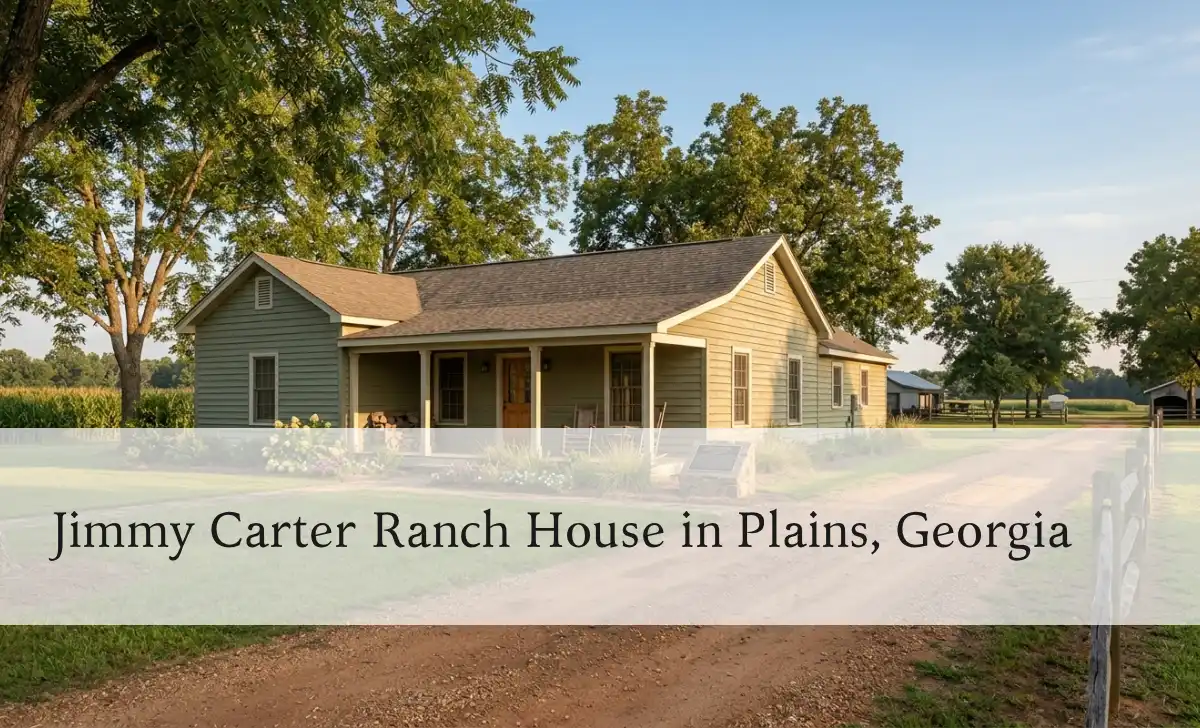
Instead, what you see is a home that could belong to any thoughtful American living modestly in rural Georgia. The two-bedroom residence has a straightforward charm—well-maintained, dignified in its simplicity. What makes it extraordinary is what’s inside: furniture that Jimmy Carter built with his own hands. Not in a workshop during retirement, but during his life—handcrafted wooden pieces that reflected his engineer’s precision and his maker’s care. This wasn’t a man who bought what he needed; he built it. He invested his time, not his money, in the things around him.
The interior reflects a lifetime of choices aligned with values. Every corner tells a story of someone who believed that a good life didn’t require excess. The Carters moved through this house—the same house—as state senator, governor, president, and elder statesman. They didn’t outgrow it because they had never defined themselves by it.
Why Did Jimmy Carter Choose to Live in Such a Modest Home?
The answer lies partly in where Carter came from and partly in what he believed. When he talked about the greatest moments of his life, he didn’t reach for the obvious milestones. “The greatest day in my life was not being inaugurated president,” he said, “and it wasn’t even marrying Rosalynn—it was when they turned the electricity on.” He was speaking as a boy whose family had lived without it, but the sentiment remained true throughout his life: simple comforts meant more than grand displays.
Gerald Rafshoon, who served as White House communications director, captured Carter’s mindset perfectly: “He doesn’t like big shots, and he doesn’t think he’s a big shot.” This wasn’t false modesty or a calculated political image. During his presidency, Carter and Rosalynn flew commercial airlines rather than always taking Air Force One. They walked down Church Street in Plains when they visited home. When grandson Jason Carter was asked about his grandparents’ lifestyle, he didn’t describe ascetic denial—he described people who were genuinely content with what they had.
“My grandparents, their microwave is from 1985,” Jason recalled. “It goes tick tick tick tick! It takes 12 minutes ticking down to pop popcorn, because why would you buy a new microwave?” The anecdote isn’t about sacrifice; it’s about pragmatism mixed with a touch of humor. The microwave worked. It did what microwaves do. Replacing it for something fancier would have been waste.
Perhaps most telling was the Carters’ reaction when a Dollar General store opened in Plains. “They were super excited—legitimately excited!—when the Dollar General store opened in Plains. They buy their clothes there,” Jason said. Not as a publicity stunt or to appear relatable. Simply because it was convenient and practical.
What Are the Most Notable Features of the Carter Property?
The land around the house is as meaningful as the structure itself. The Carters shaped it over decades, making it a reflection of their priorities and interests.
Key features of the property include:
- The pond: Jimmy helped dig this small body of water, a project that combined his engineering mind with his hands-on approach to life.
- The magnolia tree: This wasn’t just any tree. A sprout from the magnolia was transplanted from a tree that Andrew Jackson had planted at the White House nearly 200 years earlier—a living link to American history, now rooted in Plains.
- The memorial garden: Situated near a graceful willow tree at the pond’s edge, this quiet space holds the gravestones of Jimmy and Rosalynn Carter, making the property not just a home but a final resting place.
- Handcrafted furnishings: Beyond the house itself, the property contains wooden pieces built by Carter’s own hands—a craftsman’s legacy made tangible.
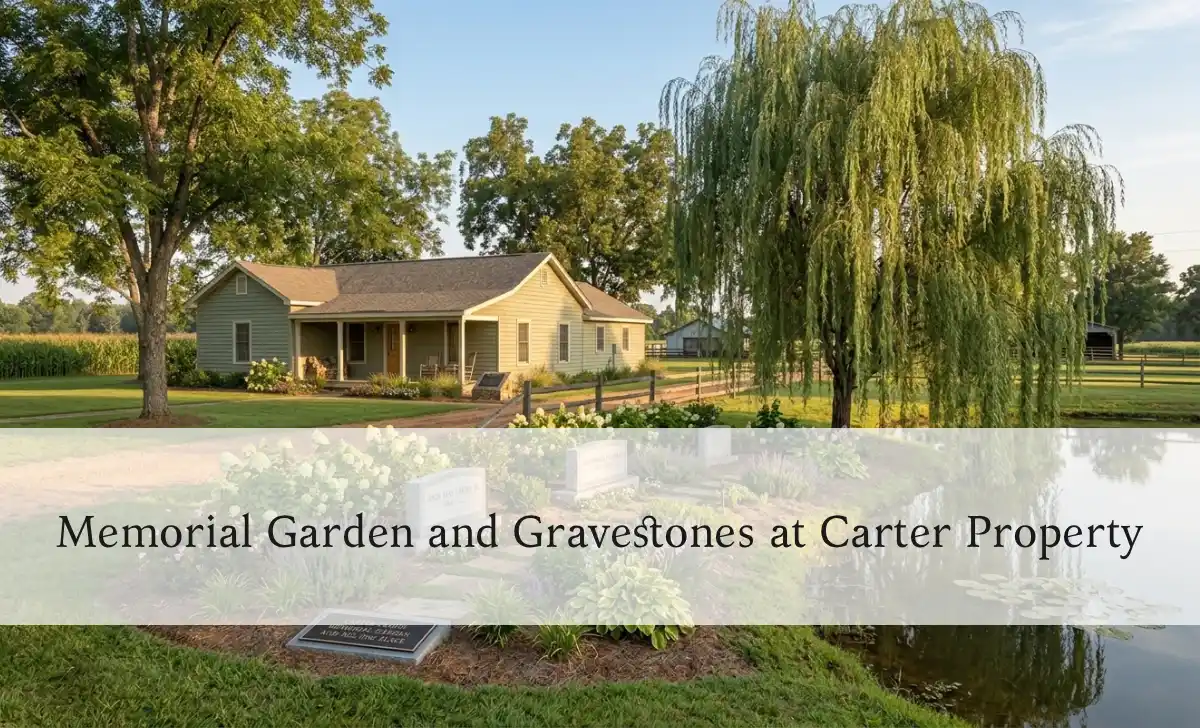
Every element of the property speaks to intentionality. The Carters didn’t accumulate; they cultivated. They chose what they wanted around them and lived within those choices.
Where Is Jimmy Carter Buried?
Rosalynn Carter passed away in November 2023, at age 96, after a life spent as an equal partner in everything the former president accomplished. “Rosalynn was my equal partner in everything I ever accomplished,” Jimmy said at the time. “She gave me wise guidance and encouragement when I needed it. As long as Rosalynn was in the world, I always knew somebody loved and supported me.” She was buried following a service at Maranatha Baptist Church, the same church where both had worshipped and where Jimmy had taught Sunday school for so many years.
When Jimmy Carter passed away on December 29, 2024, at age 100, he was laid to rest beside her on the property they had shared for over 60 years. The two gravestones stand in the memorial garden, beside the pond he had helped dig, in the town where they had chosen to spend their lives. No grand monument, no separation from the land where they lived—just two graves in a quiet garden, a final statement of the values they embodied.
Can You Visit the Jimmy Carter House Today?
The Carters deeded the property to the National Park Service, making it part of the Jimmy Carter National Historical Park. For decades, the house and surrounding grounds were closed to the general public, a private sanctuary for a family that had given so much of themselves to public service. However, the National Park Service has been transitioning the property into a museum and historical site, with plans for it to eventually open to visitors.
The National Historical Park also includes Plains High School, where both Jimmy (class of 1941) and Rosalynn (class of 1944) completed their education. The school, built in 1921, has been preserved as part of the site and offers another window into the community that shaped them.
For the most current information about visiting hours, tours, and what’s accessible to the public, the National Park Service website provides up-to-date details on how the transition is progressing and when full public access is expected.
What Makes This Home So Historically Significant?
The Jimmy Carter house isn’t significant because it was the home of a great leader—though Carter was that. It’s significant because it challenges every assumption we make about power, success, and what a meaningful life looks like.
When you stand in the presence of this modest ranch house, you’re not looking at a president’s mansion. You’re looking at a statement. For over 60 years, Jimmy and Rosalynn Carter lived in the same two-bedroom home, through career changes, national crises, retirement, and the slow accumulation of wisdom that comes from a life fully lived. They built their furniture, they flew commercial, they bought their clothes at Dollar General, and they remained rooted in a small Georgia town. They chose this. Repeatedly, over decades, they chose this.
The home also speaks to what came after the presidency—an equally extraordinary life of human rights work, habit-building, faith, and quiet service that many argue was as significant as his years in office. The peace he helped broker in the Middle East mattered. The homes he built with Habitat for Humanity mattered. His tireless advocacy for global health and human dignity mattered. But the fact that he did all of this while living in a house assessed at $167,000, in a town of a few thousand people, in a home he had built with his own hands—that mattered too, perhaps most of all.
The property is a museum to American character, to the possibility that you can hold great power and great office and still choose not to be defined by them. For a nation often dazzled by excess and display, the Jimmy Carter house offers something rarer: a home that tells the truth about a man, and in doing so, tells us something about the kind of legacy that endures.