Jerry Garcia Homes: Inside the Grateful Dead Icon’s Most Famous Residences
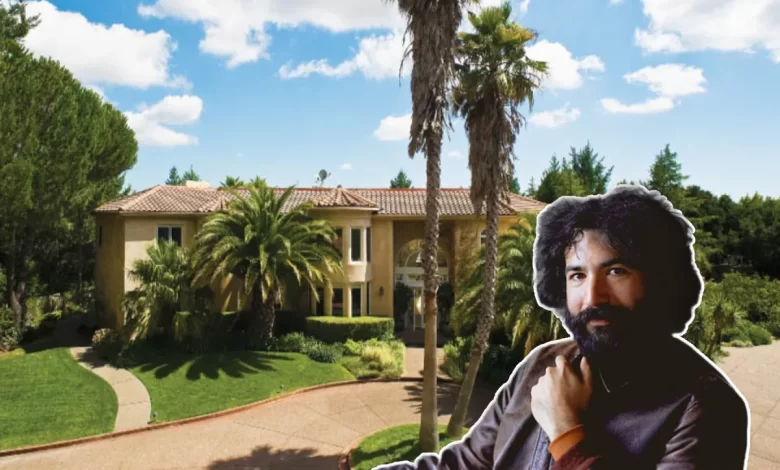
Jerry Garcia owned several notable properties across Northern California, with his most famous being the Stinson Beach retreat known as “Sans Souci,” where he lived with his family from 1971 to 1978 on 1.1 acres. The Grateful Dead frontman also lived at 710 Ashbury Street in San Francisco’s Haight-Ashbury district from 1966 to 1968 during the Summer of Love. His final residence was a 7,189-square-foot Mediterranean estate in Nicasio that he owned until he died in 1995.
How do you find peace when you’re the face of rock’s biggest counterculture movement? For Jerry Garcia, the answer lay in retreating to carefully chosen homes that offered escape from the pressures of fame. Each residence tells a different chapter of his life story.
The 710 Ashbury House: Where the Dead Defined an Era
Garcia and his bandmates occupied 710 Ashbury Street from 1965 to 1968, transforming a Victorian row house into ground zero for psychedelic rock.
Financed by sound engineer and LSD manufacturer Owsley Stanley, the house served as the band’s communal headquarters. Visitors included Janis Joplin and Neal Cassady, while the Hell’s Angels lived directly across the street at 715 Ashbury.
The house gained national attention on October 2, 1967. Police raided the residence, arresting Bob Weir, Ron “Pigpen” McKernan, and eight others for marijuana possession. Garcia avoided arrest by hiding at the Hell’s Angels house across the street. The band held a press conference at the house afterward, arguing that if everyone who smoked marijuana were arrested, San Francisco would be empty.
The raid made headlines in Rolling Stone’s first issue. By March 1968, the band left due to Haight-Ashbury’s commercialization and increased hard drug use.
Today, the purple Victorian remains a pilgrimage site for Deadheads worldwide, though it functions as a private residence.
Sans Souci: The Stinson Beach Family Retreat
Garcia paid $60,000 for 18 Avenida Farralone in Stinson Beach in 1971, using a $20,000 advance from Warner Brothers for his first solo album as the down payment. The property name translates from French as “without worry.”
The Garcia family raised three daughters there: Sunshine from Carolyn’s previous relationship with Ken Kesey, and the couple’s daughters Trixie and Annabelle. The family kept a black crow as a pet, and Carolyn grew cannabis while the children played on the beach.
Where Old and In the Way Was Born
Garcia met mandolinist David Grisman and singer-songwriter Peter Rowan at Stinson Beach, leading to the formation of bluegrass band Old and In the Way. The group rehearsed at Sans Souci, where Bob Dylan once joined them for a memorable session.
Garcia converted a guest cottage into a recording studio where he recorded his first solo album, using a distinctive red mixing board that appeared on the album cover. His wife later explained the studio never worked well because the ocean air interfered with electrical connections in the recording equipment.
One artifact remains from Garcia’s time: a custom door leading to his studio, handcrafted by a local Deadhead with wood carving and brass inlay.
What Happened to Sans Souci?
By 1978, the Garcia marriage had deteriorated. After Jerry moved out, Carolyn took the children to Oregon. The property changed hands multiple times and underwent extensive renovations.
The 2,750-square-foot home was listed for $4.35 million in 2017, featuring a heated black-bottom pool, outdoor stone fireplace, and views spanning from Bolinas to San Francisco. The property sold within weeks of hitting the market.
The Nicasio Estate: Garcia’s Final Sanctuary
Garcia’s last home was a Mediterranean-style mansion at 55 El Mirador Drive in Nicasio, built in 1989 on over 10 acres with five bedrooms and six bathrooms.
The property offered features suited to Garcia’s lifestyle:
- A 1,500-square-foot artist’s studio where Garcia worked
- A solar-heated pool with a zip-line running over it
- An organic garden and children’s playground
- 300-degree views from the Berkeley skyline to the Pacific Ocean, including Mount Tamalpais
Garcia died of a heart attack in 1995 at age 53. Court documents valued his estate at $9.9 million, including homes in Nicasio and San Rafael.
The Estate’s Journey After Garcia
Henry Koltys bought the house from Garcia’s estate in 1997 and renovated it. In an unusual move, Koltys sold many fixtures, including Garcia’s toilet for $2,500, a kitchen sink, a Jacuzzi, and stereo speakers through online auctions to benefit the Sophia Foundation, which aids families during divorces.
The property has been listed multiple times since Garcia’s death, with asking prices ranging from $3.595 million to just under $4 million.
Where Did Jerry Garcia Get His Name Story?
Legend claims Garcia discovered the Grateful Dead name while browsing a dictionary in the front room of 710 Ashbury. The term refers to a folk motif where a dead person’s spirit shows gratitude to someone who paid for their proper burial.
The story fits the band’s fascination with American folklore and mythology that shaped their music for three decades.
Why These Homes Matter to Music History
Garcia’s residences weren’t just living spaces. They served as creative laboratories where:
- The Grateful Dead became the house band for Ken Kesey’s San Francisco “Acid Tests”
- Old and In the Way developed their bluegrass sound
- Garcia recorded solo material that diverged from the Dead’s psychedelic rock
Each location offered Garcia what fame couldn’t: privacy, creative space, and family time away from the relentless touring schedule that defined the Grateful Dead experience.
The properties also reflect Garcia’s evolution from communal living in Haight-Ashbury to the family-focused Stinson Beach years and finally to the artist’s retreat in Nicasio, where he spent his final years.
Final Thoughts
Jerry Garcia Homes maps the trajectory of a rock legend searching for balance between artistic expression and personal sanctuary. From the chaos of 710 Ashbury during the Summer of Love to the peaceful acres of Nicasio, each residence offered Garcia respite from the pressures of leading one of rock’s most beloved bands.
These properties continue to fascinate because they represent more than real estate transactions. They’re physical manifestations of Garcia’s attempt to reconcile his public persona as Captain Trips with his private desire for peace, family, and creative space.
For Deadheads and music historians alike, these homes remain tangible connections to an artist whose influence extended far beyond his guitar work, shaping a generation’s approach to music, community, and living authentically.
FAQs
Can you visit Jerry Garcia Homes?
The 710 Ashbury house is a private residence and not available for public tours, though fans regularly photograph the exterior. The Stinson Beach and Nicasio properties are also private homes that have changed ownership since Garcia’s time there.
How much did Jerry Garcia pay for his Stinson Beach house?
Garcia paid $60,000 for the Stinson Beach property in 1971, which was the full asking price at the time. The same property sold for over $4 million in 2017.
What happened to Jerry Garcia’s Nicasio estate after he died?
Henry Koltys purchased the Nicasio home from Garcia’s estate in 1997, renovated it, and later sold many fixtures through charity auctions. The property has been listed for sale multiple times since then.
Why did the Grateful Dead leave 710 Ashbury?
The band left in March 1968 due to the commercialization of Haight-Ashbury and the increased use of hard drugs in the area. The 1967 drug bust also contributed to their decision to move on.
What is Sans Souci?
Sans Souci is French for “without worry” and was the name Jerry Garcia and his wife Carolyn gave to their Stinson Beach home. The name reflected their desire for a peaceful family retreat away from Garcia’s hectic touring schedule.