Your AC Is Wasting Money Right Now—6 Quick Fixes That Cut Costs by 30%

You crank down the thermostat. The AC runs constantly. Your electric bill climbs higher each month. Sound familiar?
Most homeowners assume their only option is replacing the entire unit when cooling costs spiral out of control. That assumption costs you thousands of dollars you don’t need to spend. Your air conditioner isn’t broken—it’s just running inefficiently because of fixable problems you can solve this weekend.
The average American household spends $2,200 annually on energy bills, with nearly half going toward heating and cooling. When your AC works harder than necessary, you’re throwing away 20-30% of that money. The good news? You can reclaim those dollars without buying a new system.
I’ve worked with hundreds of homeowners who slashed their cooling costs by focusing on six simple improvements. These fixes don’t require an HVAC certification or expensive equipment. You need basic tools, a few hours, and the willingness to get your hands dirty.
Let’s walk through each fix so you can start saving money before summer hits full force.
Replace Your Air Filter Monthly During Peak Season
Your air filter does more work than any other component in your cooling system. This thin barrier catches dust, pet dander, pollen, and debris before they clog your evaporator coils and restrict airflow.
A dirty filter forces your AC to work 15% harder to push air through your home. That extra effort translates directly to higher energy consumption and reduced cooling capacity. Your system runs longer cycles, struggles to reach your target temperature, and wears out faster.
Check your filter right now. Pull it out and hold it up to the light. Can you see through it clearly? If not, replace it today.
During summer months, replace standard filters every 30 days. If you have pets or live in a dusty area, check every two weeks. MERV-rated filters between 8-11 provide the best balance of filtration and airflow for residential systems. Higher ratings restrict airflow too much unless your system was specifically designed for them.
Pro tip: Buy filters in bulk packs of 6-12. You’ll save money and always have replacements ready. Set a phone reminder for the first of each month so you never forget.
Clean Your Outdoor Condenser Unit
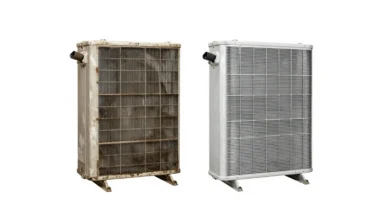
Your outdoor condenser unit releases the heat your AC pulls from inside your home. When dirt, leaves, grass clippings, and debris coat the aluminum fins, your system can’t dump heat efficiently. The refrigerant stays warmer, your compressor works overtime, and your cooling capacity drops by 10-25%.
Walk outside and inspect your condenser right now. Do you see debris stuck in the fins? Is there plant growth within two feet of the unit? These problems take 30 minutes to fix and immediately improve performance.
Start by turning off the power to the unit at your breaker panel. Remove any leaves, sticks, or debris from the top and around the base. Use a garden hose (never a pressure washer) to spray the fins from inside out, pushing dirt away from the unit. Spray gently—those aluminum fins bend easily.
Trim back any plants, shrubs, or grass within two feet of the unit. Your condenser needs clear airflow from all sides to function properly. Many homeowners plant decorative shrubs around their outdoor unit for aesthetics, then wonder why their AC struggles. Airflow beats appearance every time.
If the fins look bent or damaged, buy a fin comb for $8 at any hardware store. This simple tool straightens bent fins in minutes and restores proper airflow.
Clean your condenser twice per year minimum—once in spring before the cooling season starts, and again mid-summer when pollen and cottonwood seeds fill the air.
Seal Ductwork Leaks
Your ductwork carries cooled air from your AC to every room in your home. When ducts leak, you’re cooling your attic, crawl space, or walls instead of your living areas. The average home loses 20-30% of conditioned air through duct leaks before it ever reaches the rooms you occupy.
Finding leaks requires some detective work, but the payoff is massive. Go to your attic or basement, where ducts run through unconditioned space. Run your hand along duct seams and joints while the AC runs. Feel for air escaping. Look for obvious gaps, disconnected sections, or damaged areas.
Pay special attention to joints where ducts connect and where supply lines branch off the main trunk. These connection points leak most often because installers used cloth-backed duct tape (which fails within 5-10 years despite its name) or skipped sealing altogether.
Seal small leaks with mastic sealant—a sticky paste that creates permanent bonds. Spread it thick over seams and joints using a disposable brush. For larger gaps, apply mastic over metal-backed foil tape for extra strength. Never use cloth duct tape for HVAC work. It fails quickly in temperature extremes.
Sealing accessible ductwork costs $50-100 in materials and takes a weekend afternoon. Homeowners who seal their ducts report 15-20% reductions in cooling costs within the first month. That’s $200-400 in annual savings from one weekend project.
If your ducts run through spaces you can’t access, hire a professional for Aeroseal duct sealing. This process costs $1,500-2,500 but seals leaks from the inside using pressurized particles that stick to leak edges.
Optimize Your Thermostat Settings
Your thermostat controls when and how long your AC runs. Poor settings waste energy without improving comfort. Smart adjustments cut cooling costs by 10-15% with zero impact on your quality of life.
Set your thermostat to 78°F when you’re home and awake. Every degree below 78°F increases your cooling costs by 3-5%. That means running your AC at 72°F costs 18-30% more than running it at 78°F. You can tolerate 78°F more easily than you think, especially with ceiling fans running to improve air circulation.
Raise the temperature to 82-85°F when you’re away at work or sleeping. Your AC doesn’t need to cool an empty house to 78°F. The 4-7 degree setback saves 5-10% on cooling costs without sacrificing comfort when you return home. Modern ACs cool homes quickly—you’ll reach your target temperature within 15-20 minutes of arrival.
Programmable thermostats automate these adjustments so you never forget. Basic models cost $30-50 and pay for themselves within 2-3 months through energy savings. Smart thermostats like Nest or Ecobee cost $150-250 but learn your schedule, adjust automatically, and provide detailed energy reports.
One critical rule: never set your thermostat below 70°F trying to cool your home faster. Your AC runs at the same speed whether set to 70°F or 78°F. The lower setting just makes it run longer, wasting energy without speeding up cooling.
Improve Attic Insulation and Air Sealing
Your attic is the biggest source of heat gain in your home during summer. When the sun beats down on your roof, attic temperatures can hit 140-160°F. That extreme heat radiates down through your ceiling, forcing your AC to work constantly to offset the thermal load.
Proper attic insulation and air sealing reduce heat transfer by 25-35%, cutting cooling costs dramatically. This fix requires more effort than the others, but delivers the biggest long-term savings.
Check your current insulation level. Attic insulation should reach R-38 to R-49 in most climates (about 12-16 inches of fiberglass or cellulose). If you can see ceiling joists, you need more insulation. Adding insulation costs $1.50-3.50 per square foot installed, or half that if you DIY.
Before adding insulation, seal air leaks. Air leaks matter more than insulation levels because moving air carries far more heat than still air. Common leak sources include:
- Gaps around recessed lights
- Holes where plumbing and wiring penetrate the ceiling
- Unsealed attic hatches or pull-down stairs
- Gaps where walls meet the attic floor
Seal these leaks with expanding foam or caulk before adding insulation. This step takes 2-4 hours and costs $30-50 in materials, but improves the effectiveness of your insulation by 40-60%.
Consider adding a radiant barrier to your attic. This reflective material staples to the underside of your roof rafters and reflects 95% of radiant heat outside. Radiant barriers work best in hot climates and cost $0.25-0.50 per square foot for materials. DIY installation takes a weekend for an average attic.
Use Ceiling Fans to Improve Air Circulation
Your AC cools the air, but it doesn’t circulate it efficiently throughout your home. Ceiling fans create airflow that makes you feel 3-4°F cooler without changing the actual temperature. This perceived cooling lets you raise your thermostat setting while maintaining the same comfort level.
Every degree you raise your thermostat saves 3-5% on cooling costs. If ceiling fans let you comfortably raise your setting from 75°F to 78°F, you’ll cut cooling costs by 9-15% for a one-time fan investment of $50-150 per room.
Ceiling fans only work when positioned correctly. In summer, blades should spin counterclockwise (when viewed from below) to push air straight down. This downward airflow creates a wind-chill effect on your skin. Most fans have a small switch on the motor housing to reverse direction.
Run ceiling fans only in occupied rooms. Fans cool people, not rooms, by evaporating moisture from your skin. Running fans in empty rooms wastes electricity without providing any benefit.
Position fans in your most-used spaces—bedrooms, living room, and kitchen. A fan running in your bedroom lets you sleep comfortably at 76-78°F instead of 72-74°F, saving $15-25 monthly during peak cooling season.
Choose fans sized appropriately for your room. Rooms under 75 square feet need 29-36-inch fans. Rooms 75-144 square feet need 36-42-inch fans. Larger rooms need 44-52-inch fans or multiple smaller fans for proper air circulation.
The Real Cost of Doing Nothing
You now have six proven methods to improve AC efficiency without replacement. Each fix addresses a specific inefficiency that’s costing you money right now.
Start with the easiest fixes first—replace your air filter and clean your condenser. These take less than an hour combined and immediately improve performance. Then tackle thermostat optimization and ceiling fans. Save ductwork sealing and insulation improvements for weekends when you have more time.
Implement all six fixes, and you’ll reduce cooling costs by 25-35%. For a household spending $1,000 annually on summer cooling, that’s $250-350 back in your pocket every year. These improvements pay for themselves within one cooling season, then continue saving you money for years.
Your AC doesn’t need replacement. It needs proper maintenance and a few strategic improvements you can complete yourself. Stop wasting money on inefficiency and start keeping those dollars where they belong—in your bank account, not your utility company’s.