How Tall Can a Pool Enclosure Be? Complete Height Guide
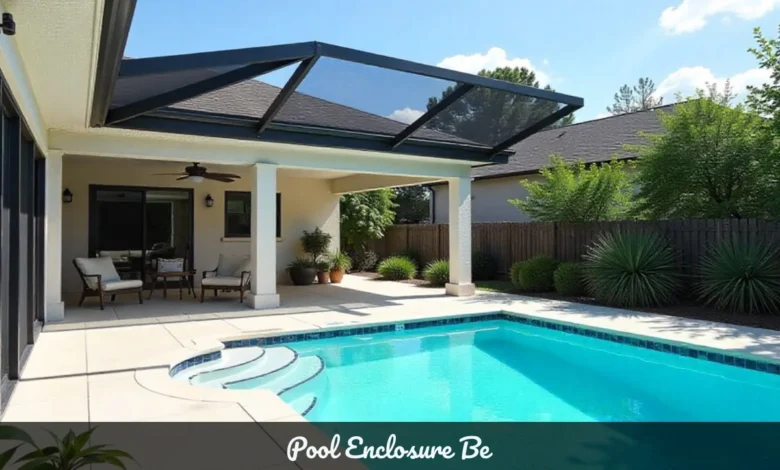
Pool enclosure height requirements vary by type and location. Safety barriers must be at least 48 inches (4 feet) tall, though some areas require 60 inches. Screen enclosures typically range from 8 to 16 feet, with decorative structures reaching up to 21 feet in some jurisdictions.
You’re planning a pool enclosure and wondering about height restrictions. This matters because building too low violates safety codes, while building too high can trigger zoning violations or HOA complaints. This guide breaks down the exact height requirements for different enclosure types so you can build correctly the first time.
Minimum Safety Barrier Heights
Pool safety barriers have strict height requirements to prevent young children from climbing over.
The baseline requirement comes from the International Swimming Pool and Spa Code. Your safety barrier must measure at least 48 inches above grade on the exterior side. This standard applies nationwide to residential pools.
Some jurisdictions go beyond this minimum. Los Angeles County requires 60 inches for residential pools. Pima County in Arizona also mandates 48 inches as measured from the exterior side. New York State uses the 48-inch standard, but some municipalities like Hempstead require 60 inches.
California public pools need enclosures at least 60 inches (5 feet) high. Texas residential pools must have barriers at least 48 inches tall. Arizona enforces a 60-inch requirement for pools deeper than 18 inches.
Always check your local building department before construction. Height requirements can change based on your specific location and property type.
Screen Enclosure Maximum Heights
Screen pool enclosures (pool cages) have different rules from safety barriers. These structures cover the entire pool area with screening material and aluminum framing.
Typical screen enclosures measure 8 to 16 feet in wall height. The roof peak adds several more feet. Most residential installations use 8-foot side walls with roof peaks reaching 10 to 12 feet total.
Some Florida municipalities cap screen enclosure height at 12 feet. Lake Mary, Florida, specifically states that screen enclosures cannot exceed 12 feet in height. This prevents oversized structures from affecting neighbors’ views and property values.
Premium designs reach higher. Some manufacturers offer systems up to 21 feet tall for dramatic cathedral-style enclosures, though local zoning usually limits these installations. Jacksonville contractors commonly build enclosures with 11-foot maximum heights, including the gable roof structure.
Your actual maximum depends on three factors:
- Local zoning ordinances for accessory structures
- Homeowners association covenants
- Wind load requirements specific to your area
Hurricane-prone regions often restrict height to reduce wind pressure on the structure. Taller enclosures need stronger framing, which increases cost significantly.
How Height Is Measured
Understanding measurement points prevents code violations during inspection.
Safety barriers measure from grade level on the side facing away from the pool. You measure vertically from the ground to the top of the barrier. If your property slopes, measure from the lowest adjacent grade point.
The maximum clearance between the ground and the barrier bottom is 2 inches on non-solid surfaces like grass or gravel. Solid surfaces like concrete allow up to 4 inches of clearance.
Screen enclosures measure differently. Total height includes both wall height and roof peak. Inspectors measure from the finished grade to the highest point of the roof structure. Side walls typically measure 7.5 to 8 feet, while the roof peak adds another 3 to 4 feet.
You cannot mount decorative elements above the stated maximum height. Some codes specifically prohibit structures that create “ladder effects,” which children could climb.
Special Requirements for Different Pool Types
Above-ground pools have unique rules.
If your above-ground pool walls are at least 48 inches high with non-climbable exterior sides, the pool structure itself can serve as the barrier. Any ladder or steps must be removable or secured with a latch at least 54 inches above ground.
When you mount a barrier on top of an above-ground pool, the maximum vertical clearance between the pool top and barrier bottom is 4 inches.
In-ground and on-ground pools always need full-height barriers. These cannot use the pool structure as part of the enclosure.
Portable pools deeper than 18 inches need barriers even though they’re temporary. Many codes recommend emptying and storing portable pools when not supervised rather than building permanent enclosures.
Gate and Door Height Requirements
Gates need specific hardware placement for child safety.
Pedestrian gates must open outward away from the pool. They need self-closing and self-latching mechanisms. When the latch release sits less than 54 inches from the gate bottom, it must be on the pool side at least 3 inches below the gate top.
No opening larger than half an inch can exist within 18 inches of the release mechanism. This prevents children from reaching through to unlatch the gate.
Doors with direct pool access require alarms that meet UL 2017 standards. The alarm must sound within 7 seconds of opening and continue for at least 30 seconds. Manual deactivation switches must mount at least 54 inches above the door threshold.
Alternative door protection includes self-closing doors with self-latching devices mounted 54 inches above the finished floor, or window stops preventing passage of a 4-inch sphere.
Building Code Variations by State
Your location determines which height rules apply.
Florida requires all residential pools to have complete enclosures at least 4 feet high. The state allows screen pool cages as the primary barrier when they meet structural standards. Most Florida counties permit screen enclosures between 10 and 16 feet tall.
California splits requirements between residential and public pools. Residential pools need 48-inch barriers in most counties. Los Angeles County and some other jurisdictions require 60 inches. Public pools must have 5-foot (60-inch) enclosures with specific mesh size requirements.
Texas mandates 48-inch barriers for multiunit rental complexes and properties with homeowner associations. Individual single-family homes face less stringent requirements unless local ordinances add restrictions.
New York State requires a 48-inch minimum height with no gap allowing passage of a 4-inch sphere. Local municipalities can exceed this standard. Check your specific town or county requirements.
Arizona pools deeper than 18 inches need 60-inch barriers. Shallower pools still need barriers, but can use a 48-inch height in some jurisdictions.
Common Height Mistakes to Avoid
Many homeowners face costly fixes from these errors.
Measuring from the wrong side causes the most violations. Always measure barrier height from the exterior side away from the pool, not from inside the pool area. A barrier measuring 48 inches from inside but only 44 inches from outside fails inspection.
Installing decorative elements that create climbing aids violates most codes. Horizontal rails, lattice work below 45 inches spacing, or ornamental features with footholds all fail safety standards regardless of total height.
Ignoring grade changes leads to clearance violations. Your property might slope several inches across the barrier length. The clearance under the barrier must meet code at every point, not just where you started measuring.
Building screen enclosures without checking HOA covenants creates disputes. Your HOA might cap heights below local zoning limits. Some associations require specific architectural styles or colors that affect your height options.
Skipping building permits risks forced removal. Most jurisdictions require permits for both safety barriers and screen enclosures. Unpermitted construction often must be torn down regardless of whether it technically meets height requirements.
Cost Impact of Different Heights
Height choices significantly affect your project budget.
Basic 48-inch safety fencing costs $15 to $30 per linear foot for chain link, $25 to $50 for wood, and $50 to $100 for ornamental aluminum. Going from 48 to 60 inches adds roughly 20% to 30% to material and labor costs.
Standard screen enclosures with 8-foot walls and 10-foot peaks run $15,000 to $40,000 for average pool areas. Increasing wall height to 10 feet adds $3,000 to $8,000 due to additional framing and screening material.
Premium tall enclosures reaching 12 to 16 feet in wall height cost $40,000 to $90,000 or more. The taller structure needs heavy-duty framing, more support posts, and engineering certification for wind loads.
Height increases also raise long-term costs. Taller enclosures need more frequent inspections in hurricane zones. Screen replacement costs increase proportionally with height since you’re covering more square footage.
Final Thoughts
Pool enclosure height depends on your structure type and local codes. Safety barriers need at least 48 inches in most areas, with some jurisdictions requiring 60 inches. Screen enclosures typically range from 8 to 16 feet, but face local zoning caps, often around 12 feet maximum.
Start by contacting your local building department for exact requirements. Then check the HOA covenants if applicable. Get written approval before construction begins. This prevents expensive fixes or forced removal later.
Remember that taller isn’t always better. Higher structures cost more, face stricter wind load requirements, and may trigger additional zoning reviews. Build to the height you need, not the maximum allowed.
FAQs
Can I build a pool barrier higher than required?
Yes, you can exceed minimum safety heights. However, very tall barriers may require additional permits or structural engineering. Check zoning codes for maximum heights on accessory structures. Some areas cap fences at 6 or 8 feet regardless of purpose.
Do I need a permit to increase my existing pool enclosure height?
Most jurisdictions require permits for structural changes to pool enclosures. Adding height qualifies as a major alteration. Contact your building department before modifying an existing structure. Unpermitted changes can result in fines and forced removal.
How do setback requirements affect enclosure height?
Setbacks often connect to height restrictions. Structures closer to property lines typically face stricter height limits. Your enclosure might be allowed at 12 feet when 10 feet from the property line, but capped at 8 feet when only 3 feet from the line. Review your local zoning code’s setback table.
What happens if my pool enclosure is too tall?
Code violations can result in fines, stop-work orders, or forced removal. Your building department may issue a notice of violation requiring you to reduce the height or remove the structure entirely. Some jurisdictions assess daily fines until you achieve compliance. This makes pre-construction verification critical.
Are inflatable or temporary pools exempt from height requirements?
Temporary pools deeper than 18 inches generally need barriers, though enforcement varies. Many codes recommend removing and storing portable pools rather than building permanent enclosures. Check your specific jurisdiction since rules differ significantly for temporary versus permanent pools.