House Renovation Heartomenal: What Actually Works in 2026
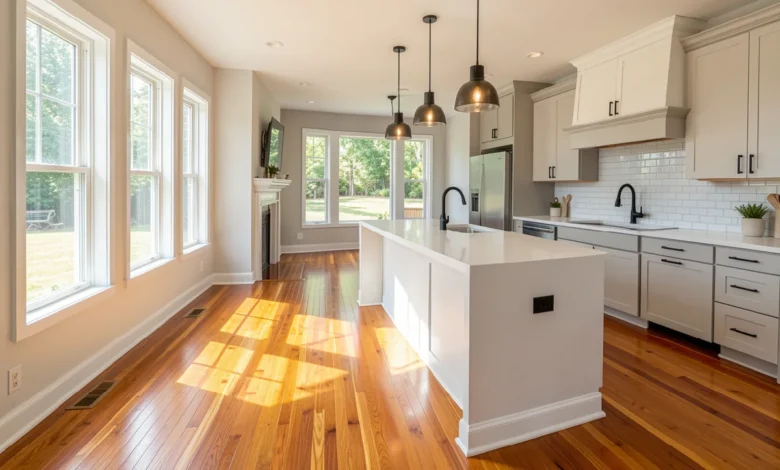
A house renovation Heartomenal approach means planning strategically, spending where it counts, and skipping the projects that look impressive but return little. According to the 2025 Zonda Cost vs. Value Report, eight of the ten highest-ROI renovation projects are exterior upgrades. Minor kitchen updates return 96%, wood floor refinishing returns 147%, and a mid-range bathroom remodel recovers around 74% of its cost at resale.
Before you buy a single tile, you need to answer one question: Are you renovating to sell or renovating to stay? The answer changes everything. Sellers should focus on curb appeal, neutral finishes, and cosmetic updates that signal care without over-investing. Homeowners planning to stay long-term can afford to prioritize the kitchen and bathrooms, where daily life improvement and resale value overlap most.
What House Renovation Heartomenal Actually Means
Most people start a renovation the wrong way. They scroll through inspiration photos, fall in love with a kitchen that costs $80,000 to replicate, and then spend three months trying to scale it down while holding onto the wrong parts.
House renovation is a heartwarming experience. You begin with how you actually live in your home, not how someone else lives in theirs on TV or Instagram. You identify the three specific things that bother you most. You set a budget that accounts for what you cannot see yet. And you choose projects that pay off both in your daily life and in your home’s long-term value.
In 2026, the total home improvement market is expected to reach $614.6 billion, with about 48% of homeowners planning renovations and a median household spending projected at $15,000. That means millions of people will start renovations this year. Most will overspend on the wrong things. A clear plan separates the projects that finish from the ones that stall.
Plan Your Budget Before You Touch Anything
Skipping this step is how you end up three months into a kitchen remodel with no money left and half the cabinets still missing doors.
The 30% rule gives you a reliable ceiling. Keeping total renovation costs under 30% of your home’s current value avoids the risk of over-improving for your neighborhood. On a $300,000 home, that means staying under $90,000 across all projects combined.
For annual maintenance and targeted improvements, most financial advisors recommend spending 1 to 4% of your home’s value each year. That puts a $300,000 home at $3,000 to $12,000 annually, a range that covers smart cosmetic updates and essential repairs without stretching into structural changes that rarely pay off at resale.
The number that trips up most homeowners is the contingency fund. You budget $20,000 for a bathroom remodel, spend it all in your plan, and then the contractor opens a wall and finds water damage. Project stops. Costs climb. Add 15 to 20% on top of every estimate before you start. Not as pessimism. As math.
The Exterior Projects That Return More Than They Cost
For the second consecutive year, garage door replacement takes the top spot in the Zonda 2025 Cost vs. Value Report, followed by steel entry door replacement and manufactured stone veneer, with each of these projects more than doubling the cost of investment.
That might surprise you if you’ve been focused on kitchens and bathrooms. But think about how buyers actually experience a home. They form their first impression before they walk through the front door. A dated garage door or a scuffed entry signal neglect, regardless of what the kitchen looks like inside.
Garage door replacement delivers exceptional ROI at 85 to 94%, with a $3,200 upscale replacement potentially returning $2,900 to $3,000 at resale. For the cost of a decent appliance, you change what every visitor sees first.
The exterior projects are worth prioritizing before any interior work:
- Garage door replacement (85-94% ROI)
- Steel entry door replacement (188% ROI per the 2024 Cost vs. Value data)
- Fresh exterior paint on trim and entryways
- Landscaping that frames rather than overwhelms the home
- New house numbers and entry lighting
As Brian Mollo, CEO of Trusted House Buyers, notes: “Curb appeal projects often outperform indoor projects in ROI because they directly impact a potential buyer’s first impression of a home.”
Kitchen Updates That Pay Off Without Gutting the Room
A full kitchen remodel is one of the most expensive renovations you can do. It’s also one of the most overrated if your goal is financial return.
Minor kitchen updates return 96% ROI, while a full structural remodel rarely comes close to recovering the same percentage of its cost. The difference between the two is significant: one keeps the existing layout and updates what people see, the other moves walls, plumbing, and electrical.
Unless your kitchen layout genuinely fails you, keep the bones and update the surfaces. Refinish or replace cabinet doors. Swap laminate for quartz or butcher block on the countertops. Add a backsplash that gives the room a focal point. Replace outdated fixtures with brushed nickel or matte black, depending on what reads current in your area.
Refinishing wood floors offers the single highest ROI of any renovation project, at 147% cost recovery. If your kitchen has wood floors that have dulled over years of foot traffic, refinishing them costs a fraction of replacement and produces results that look like a full remodel.
What you should avoid: changing the layout unless you have a specific, documented problem with how the kitchen functions. Moving a sink or stove means moving plumbing and electrical. Those costs add up faster than any countertop upgrade will offset.
Bathroom Renovations That Buyers Actually Want
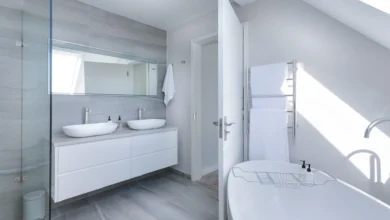
Buyers evaluate bathrooms the same way they evaluate kitchens: not by how expensive they look, but by how old they feel. A bathroom that reads dated, almond fixtures, pink tile, and laminate countertops signals deferred maintenance to a buyer. That translates into lower offers before negotiations even start.
A mid-range Denver bathroom remodel in early 2025 cost $28,000 and resulted in a home appraisal $30,800 higher six months later, a 110% return, by keeping the existing layout and using mid-range materials throughout, including a stock vanity with quartz countertop, ceramic tile, and LED lighting.
The lesson from that example is not “spend $28,000 on a bathroom.” The lesson is that keeping the layout, choosing neutral finishes, and updating the most visible elements, the vanity, tile, and lighting, returns more than custom choices that appeal to a smaller pool of buyers. White and gray vanity options appeal to roughly 90% of buyers, while navy appeals to about 30%.
Universal design bathrooms, incorporating walk-in showers with benches, grab bars, and wider doorways, are gaining traction as multigenerational living becomes more common, appealing to buyers beyond those who currently need accessibility features. If you’re doing a full remodel anyway, designing for accessibility costs little extra and broadens your eventual buyer pool significantly.
Lighting and Flooring: The Two Updates Most People Skip
Walk through your home right now and look at every light fixture. If any of them look like they came with the house in 1998, you have an immediate opportunity. Lighting is one of the few updates that changes how every other room reads, and it’s often the one homeowners defer longest.
Replace outdated fixtures with modern LEDs. Layer ambient, task, and accent sources in rooms where you spend the most time. A kitchen with good cabinet lighting and under-island pendants looks like a significantly different room than the same kitchen with a single overhead fixture.
Flooring follows the same logic as lighting: it affects every room that has it. Refinishing wood floors returns 147% of the project cost, making it the highest-ROI renovation available for homeowners with existing hardwood. If your floors are worn but structurally sound, refinishing costs $3 to $8 per square foot compared to $10 to $20 for full replacement. For a 1,000-square-foot main level, that’s a $3,000 project with a return that outperforms most major renovations.
When to DIY and When to Call a Professional
The most expensive renovation mistake is usually not hiring a contractor. It’s hiring the wrong one, or doing structural work without the skills to do it correctly.
Handle low-risk cosmetic work yourself. Painting, basic landscaping, installing new cabinet hardware, replacing light fixtures if you’re comfortable with basic electrical, these are reasonable DIY projects with good tutorials widely available. You’ll save labor costs on straightforward tasks.
Call a licensed professional for anything involving plumbing, structural changes, electrical upgrades, or permits. One DIY plumbing error costs far more to fix than the labor you saved. Permits matter too: unpermitted work creates problems at resale, sometimes blocking a sale entirely.
When choosing contractors, get at least three itemized quotes. Check licenses and insurance. Ask for references from jobs completed in the last year, not just a portfolio of finished photos. And build the contingency fund before the work starts, not after the surprises arrive.
FAQs
What renovation gives the highest return in 2026?
Wood floor refinishing returns 147% of its cost, the highest of any single project per the 2025 Cost vs. Value Report. Among exterior projects, garage door replacement (85-94% ROI) and steel entry door replacement (188% ROI) consistently outperform most interior remodels.
How much should I budget for a house renovation?
Plan to spend 1 to 4% of your home’s value annually on improvements and maintenance. Keep total renovation costs under 30% of your home’s current market value to avoid over-investing beyond what your neighborhood supports.
Should I renovate before selling or sell as-is?
Cosmetic updates, fresh paint, updated fixtures, landscaping, typically pay off before selling. Major renovations rarely recoup their full cost within a short selling timeline. Focus on projects that remove buyer objections, not ones that wow a specific buyer.
What renovation mistakes cost homeowners the most?
Changing kitchen or bathroom layouts without a functional reason to do so. Upscale luxury finishes in mid-range neighborhoods. Skipping the contingency fund. And over-customizing in ways that reduce buyer appeal, like bold permanent color choices on major surfaces.
Do I need permits for home renovations?
Yes, for most structural, electrical, and plumbing work. Cosmetic work, like painting or replacing fixtures, typically does not require permits. Check your local municipality before starting any project that alters the structure, systems, or footprint of your home.