ExitSignMat: Complete Guide to Floor Exit Safety Solutions
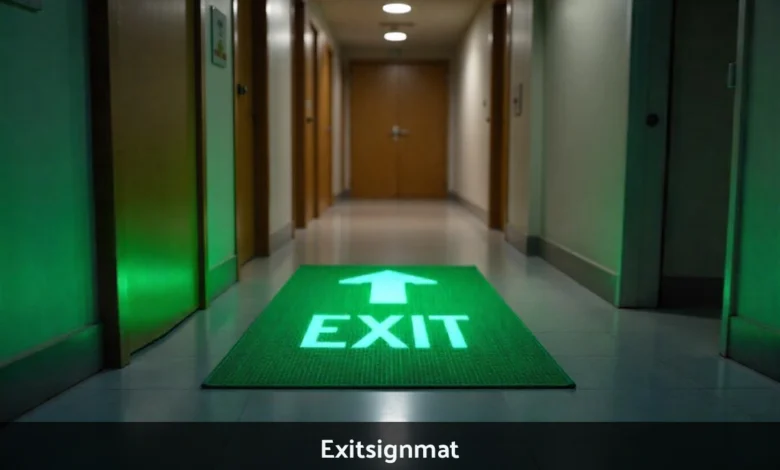
ExitSignMat is a floor-based exit guidance system that combines directional signage with anti-slip matting to guide people toward emergency exits during evacuations. These photoluminescent or LED-lit mats remain visible in low light, smoke, or power outages, providing ground-level exit markers that meet OSHA and NFPA safety standards while reducing slip hazards.
When seconds count during an emergency, clear exit paths save lives. While wall-mounted signs guide from above, ground-level visibility matters just as much. ExitSignMat solves this problem by placing exit guidance directly where people look during evacuations—at their feet.
This guide covers everything you need to know about exitsignmat technology, from compliance requirements to installation best practices. You’ll learn how these floor-based safety tools work, where they’re most effective, and how to choose the right solution for your facility.
What Makes ExitSignMat Different
ExitSignMat combines two safety functions in one product. It marks exit routes while providing slip-resistant footing. Traditional exit signs mount on walls or ceilings, which can be hard to see through smoke or in crowded conditions.
Floor mats stay visible even when visibility drops. People naturally look down when walking, especially during stress. ExitSignMat helps people find their way out of buildings, even when they are panicking or if visibility is low.
Most exitsignmat signs use photoluminescent materials that absorb ambient light and glow in the dark. These materials require about 5 foot-candles of ambient light to charge and provide at least 90 minutes of legible visibility during power loss. LED-powered versions offer brighter illumination with battery backup systems.
The mats feature anti-slip surfaces designed to prevent falls. This matters because slips, trips, and falls accounted for 27 percent of days away from work, according to National Safety Council data. Combining exit guidance with slip prevention creates a dual safety benefit.
How ExitSignMat Technology Works
Photoluminescent exitsignmat use strontium aluminate compounds bonded to durable backing materials. These compounds absorb visible light energy during normal operations. When the lights fail, the stored energy releases as a visible glow.
In this charging process, photons are excited and then brought back to a lower state, with the photoluminescent exit sign fully charged in 60 minutes. The glow remains visible for up to 16 hours in complete darkness, though peak brightness lasts 90 minutes minimum.
LED exitsignmat signs use low-voltage lights powered by rechargeable batteries or building electrical systems. Motion sensors can activate these mats automatically when people approach. Some advanced models connect to fire alarm systems for automatic activation during emergencies.
The construction typically includes three layers. The base provides slip resistance and stability. The middle layer contains the lighting technology. The top surface uses high-contrast printing with directional arrows and EXIT text in colors that meet visibility standards.
ExitSignMat Compliance Requirements
Safety regulations govern exit signage placement and performance. OSHA standard 1910.37 requires adequate lighting for exit routes. An employee alarm system must be operable, and employers must install and maintain an operable employee alarm system that has a distinctive signal to warn employees of fire or other emergencies.
NFPA 101 Life Safety Code sets specific requirements for exit sign visibility. Exit signs must be clearly visible and legible, with a distinctive color and design, and emergency lighting should provide illumination for a minimum of 1.5 hours.
While exitsignmat products supplement rather than replace traditional exit signs, they help facilities meet these standards. With approval by the Authority Having Jurisdiction in your locale, these signs can be used as a replacement for over-the-door electrically powered exit signs and as floor-level exit signs.
Building codes vary by location. Some jurisdictions require specific colors. Green exit markers are mandatory in Baltimore, Salt Lake City, and Portland. California, Illinois, and Massachusetts recommend green in certain applications. Always verify local requirements before installation.
Where ExitSignMat Provides Maximum Value
Healthcare facilities benefit significantly from floor-level exit guidance. Hospitals handle evacuations differently from other buildings due to patient mobility challenges. Floor mats help staff and mobile patients navigate hallways filled with equipment.
Manufacturing plants face unique visibility challenges. Machinery, storage racks, and production lines can obstruct wall-mounted signs. In malls, factories, airports, and large office buildings, people may not instantly notice wall signs and floor mats catch attention naturally as people walk.
Schools and universities present specific safety considerations. During emergencies, students may panic or crowd toward exits. Clear floor markings help maintain orderly evacuations. Photoluminescent exitsignmat require no electrical work, making installation in existing buildings straightforward.
Entertainment venues, including theaters, cinemas, and concert halls, operate with minimal lighting during performances. Blacklights can supercharge the glow material and don’t impair the dim atmosphere of a performance space. This allows safety compliance without disrupting the experience.
Warehouses and distribution centers feature long aisles and high shelving that block sightlines. Floor-level exit guidance remains visible regardless of inventory configuration changes. The mats withstand forklift traffic when properly specified.
Choosing the Right ExitSignMat
Material selection impacts performance and longevity. Rubber provides excellent durability for high-traffic areas. PVC offers chemical resistance for industrial environments. Commercial-grade vinyl works well in office settings.
Viewing distance ratings of 50 ft, 75 ft, and 100 ft depend on letter height, stroke, contrast, and luminance decay over the 90-minute window. Match viewing distance to your facility layout. Longer corridors need higher visibility ratings.
Glow-in-the-dark versus LED depends on several factors. Photoluminescent mats require adequate ambient lighting during operations. Spaces without reliable lighting should use LED versions. Keep area lighting on whenever the space is occupied so the panel remains charged before any outage event or test cycle.
Size considerations matter for effectiveness. Larger mats increase visibility and provide better guidance. Standard sizes include 7×10 inches, 14×7 inches, and 16×16 inches for floor applications. Custom sizes accommodate specific layouts.
Weather resistance becomes critical for outdoor or semi-exposed locations. UV protection prevents fading in areas with natural light. Water-resistant materials handle rain, snow, or cleaning procedures without degrading.
ExitSignMat Installation Best Practices
Strategic placement maximizes effectiveness. Place mats at strategic points near emergency exits, at hallway intersections, in front of staircases, and at factory floor pathways. Avoid locations where furniture or equipment might cover directional indicators.
Surface preparation ensures proper adhesion and performance. Clean the floor thoroughly before installation. Remove dust, oil, and moisture. Ensure the surface is completely dry. Rough or uneven floors may require leveling or additional backing.
Direction accuracy matters critically. The arrow must point toward the nearest exit or next decision point in the egress path. Walk the evacuation route before finalizing placement. Verify sightlines from multiple approach angles.
Charging light considerations apply to photoluminescent mats. Provide about 5 foot-candles on the face during occupancy for dependable after-glow performance. Areas with insufficient natural or artificial light need supplemental lighting or LED-powered alternatives.
Maintenance schedules keep mats effective. Inspect regularly for wear, fading, or damage. High-traffic zones require more frequent checks. Clean according to the manufacturer’s specifications. Replace mats showing significant degradation before they fail.
Cost Comparison and ROI
Initial investment varies by type and size. Photoluminescent mats typically cost less up front than LED versions. A standard 7×10-inch glow-in-the-dark mat ranges from $15 to $40. LED mats with batteries cost $50 to $150, depending on features.
ExitSignMat is a budget-friendly option requiring almost no maintenance compared to installing multiple illuminated exit signs. Traditional electrically powered exit signs cost $75 to $300 per unit plus installation labor and ongoing electricity costs.
Long-term savings accumulate from multiple sources. An elementary school may have sixty EXIT signs, and a high school may have as many as 250 EXIT signs, preventing at least 106,250 pounds of CO2 pollution and saving at least $253,500 over 25 years when replacing 250 signs in one school.
Maintenance costs remain minimal for photoluminescent products. Power-free exit signs or glow-in-the-dark exit signs can last up to 25 years and do not require any cost or maintenance. LED versions require periodic battery replacement but still cost less than hardwired alternatives.
Liability reduction provides additional value. Clear exit marking helps prevent injuries during evacuations. This reduces workers’ compensation claims and potential litigation costs. Insurance providers may offer premium reductions for enhanced safety measures.
Common Mistakes to Avoid
Inadequate charging light causes the most frequent failures with photoluminescent mats. Spaces with poor ambient lighting won’t charge the material sufficiently. Test actual light levels with a light meter before committing to glow-in-the-dark products.
If regular laundering and cleaning take place, this issue usually isn’t a concern, but it requires emphasis in industries in which floor mats may be exposed to chemicals, food spills, or animal or human fluids. Neglected maintenance degrades performance and creates hazards.
Improper placement undermines effectiveness. Mats placed under furniture or in corners provide no guidance value. Obstructions in sightlines prevent people from seeing directional indicators. Map evacuation routes carefully during planning.
Size mismatch for viewing distance creates problems. A 50-foot visibility rating won’t work in a 100-foot corridor. People won’t see the guidance until too close. Always specify viewing distance ratings higher than the maximum sightline requirements.
Conflicting directional information confuses evacuees. All exit markers along a path must provide consistent guidance. Arrows pointing in different directions at intersections cause hesitation during emergencies. Coordinate all signage in the egress system.
Safety Data and Performance Metrics
In 2016, there were 849 fatal work injuries and 229,240 nonfatal injuries from slips, trips, or falls according to the U.S. Bureau of Labor Statistics, and in manufacturing, 19 percent of lost workdays that year were the result of falls, slips, or trips. Floor safety measures directly address these statistics.
Slip-and-trip incidents account for $2.35 billion in business costs alone. This includes direct medical costs, lost productivity, and legal expenses. Prevention through proper floor marking and anti-slip surfaces provides measurable returns.
The industrial floor mats market reflects growing safety awareness. The industrial floor mats market stood at US$1.7 Bn in 2024 and is expected to reach US$2.9 Bn by 2035. This growth comes from stringent workplace safety regulations and rising demand for ergonomic and anti-fatigue solutions.
Visibility improvements during emergencies show clear benefits. Research demonstrates that photoluminescent signs enhance evacuation efficiency in critical situations. Ground-level guidance helps people maintain orientation when ceiling-mounted signs become obscured.
Environmental Benefits of ExitSignMat
Energy consumption drops dramatically with photoluminescent products. The electricity for just one ultra-efficient sign over 25 years creates 425 pounds of CO2 emissions. Passive glow technology eliminates this environmental impact.
Material recyclability matters for sustainability. Modern photoluminescent exitsignmat use strontium bonded to aluminum, which can be recycled at ethe nd of life. This contrasts with older radioactive tritium signs requiring hazardous waste disposal.
Green building certifications increasingly recognize passive safety systems. LEED programs award points for reducing electrical loads. Zero-energy exit guidance contributes to overall building sustainability goals without compromising safety performance.
Manufacturing improvements reduce environmental footprint. Apache Mills is expanding sustainable mat production using recycled materials. Industry leaders now integrate recycled content and sustainable manufacturing processes into product development.
Future Developments in ExitSignMat
Smart building integration represents the next evolution. Future exit sign products may connect to building management systems for real-time monitoring. Sensors could report mat condition, charging status, or activation events to facility managers.
Dynamic directional guidance could adapt to emergency conditions. Systems might change arrow directions based on fire location or blocked exits. Integration with fire alarms and emergency systems would enable intelligent evacuation routing.
Technology never stops growing, and the same is true for Exitsignmat with new versions becoming smarter and more interactive, and in the future, we might see mats with digital arrows that change direction depending on where danger is.
Enhanced visibility technologies continue to develop. Brighter photoluminescent compounds extend glow duration. More efficient LED systems reduce battery requirements. Color-changing capabilities could indicate different emergency types through distinct hues.
Antimicrobial surfaces address health concerns. Milliken & Company is integrating antimicrobial and anti-static technologies in industrial mats. This matters particularly for healthcare facilities and food processing plants.
Final Thoughts
ExitSignMat fills a critical gap in emergency egress systems. Wall-mounted signs work well in ideal conditions, but real emergencies rarely provide ideal conditions. Smoke, crowds, power failures, and panic all impair visibility of overhead signage.
Floor-level guidance addresses these challenges. People naturally look down when moving, especially during stress. Combining exit direction with slip-resistant surfaces creates compound safety benefits that protect lives.
The technology has matured beyond simple novelty. Photoluminescent materials now meet rigorous performance standards. LED alternatives provide options for challenging lighting conditions. Both types offer cost-effective solutions that outlast traditional powered signs.
Implementation success requires proper planning. Assess your facility’s specific needs, lighting conditions, and compliance requirements. Choose appropriate products for each location. Install strategically along complete evacuation paths. Maintain regularly to ensure continued performance.
Safety investments pay dividends beyond accident prevention. Clear exit marking demonstrates duty of care to employees and visitors. Compliance with evolving standards protects against liability. Enhanced evacuation capabilities provide peace of mind that occupants can exit safely when emergencies occur.
Frequently Asked Questions
Does ExitSignMat replace traditional exit signs?
No, exit signs rather than replace wall-mounted signs in most jurisdictions. Some locations allow floor-level signs as primary markers with Authority Having Jurisdiction approval. Check local codes before relying solely on floor mats.
How long do photoluminescent ExitSignMat products last?
Quality photoluminescent mats typically last 25 years with minimal degradation. The glow compound maintains effectiveness throughout this period. Physical wear from foot traffic may require replacement sooner in high-traffic locations.
Can ExitSignMat work in areas without ambient lighting?
No, photoluminescent versions require adequate charging light during normal operations. Spaces with insufficient natural or artificial light need LED-powered alternatives with battery backup systems instead.
What maintenance does ExitSignMat require?
Photoluminescent mats need regular cleaning to remove dirt that blocks the charging light. Inspect periodically for damage, fading, or wear. LED versions require battery replacement according to manufacturer schedules, typically every 3 to 5 years.
Is ExitSignMat compliant with ADA requirements?
ExitSignMat primarily provides visual guidance. ADA compliance requires tactile signage at specific locations. Floor mats can supplement but don’t replace required tactile exit signs near doors and decision points.