CMA Meaning in Real Estate: What It Is and How It Works

A CMA, or comparative market analysis, is a report that estimates a property’s current market value. Real estate agents build it by comparing recent sales of similar homes nearby. Buyers use it to avoid overpaying. Sellers use it to set a competitive price. A well-prepared CMA is one of the most useful tools in any real estate transaction.
What CMA Means in Real Estate
CMA stands for comparative market analysis. It is a pricing report that a licensed real estate agent prepares for a specific property. The goal is simple: figure out what a home is worth right now, based on what similar homes have sold for recently.
The keyword here is “comparative.” The analysis draws on real sales data, not guesswork. An agent pulls recent transactions from the Multiple Listing Service (MLS) and uses those numbers to estimate what a buyer would reasonably pay for a given property today.
A CMA is not a formal appraisal. It carries no legal weight by itself, but it gives buyers and sellers a clear, data-backed starting point for pricing decisions.
Why a CMA Matters Before You Price or Bid

Pricing a home incorrectly costs you money. List too high, and the property sits on the market. List too low, and you leave equity behind. For buyers, overbidding on a home can mean paying tens of thousands more than fair market value.
According to the National Association of Realtors, homes priced correctly from the start sell faster and closer to the original asking price than homes that go through multiple price reductions. A CMA helps you avoid that situation from day one.
Whether you are a seller setting a list price or a buyer deciding how much to offer, a CMA gives you a factual basis for that number.
How Agents Build a Comparative Market Analysis
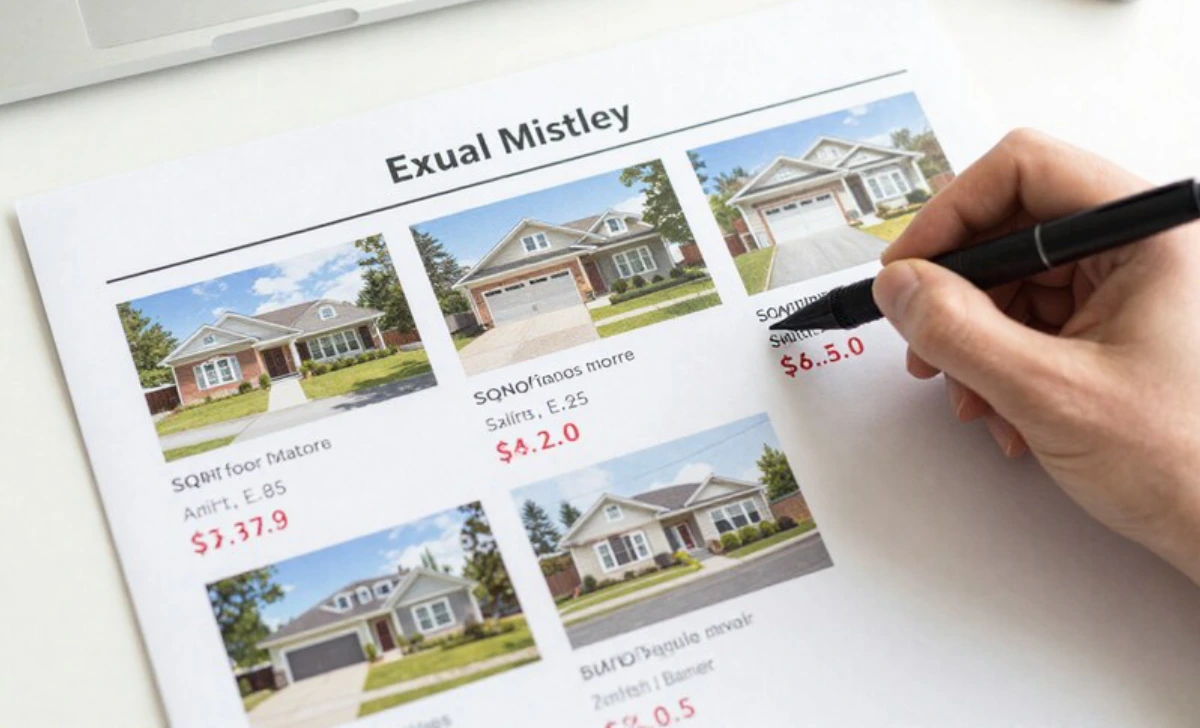
The process follows a clear structure. An agent starts by collecting data on comparable properties, often called “comps.” These are homes that share key features with the subject property.
The agent looks for comps that match on:
- Location (same neighborhood or zip code)
- Square footage (within 10 to 20 percent)
- Bedroom and bathroom count
- Lot size and property type
- Age and condition of the home
- Recent sale date (typically within the last 3 to 6 months)
After gathering the comps, the agent adjusts for differences. If a comp has a finished basement and the subject property does not, the agent subtracts value. If the subject property has a newer roof, the agent adds value. These adjustments account for what a buyer would logically pay more or less for.
The final output is a price range or a specific estimated value that reflects current market conditions.
What a CMA Report Includes
A complete CMA report is more than a list of recent sales. It gives you a full picture of where the market stands right now.
Most CMA reports include three categories of listings. Active listings show what sellers are currently asking. Pending listings show homes under contract, which signals strong buyer demand. Sold listings show what buyers have actually paid, which is the most reliable data point.
A well-prepared report also includes market trend data. This tells you whether prices in the area are rising, flattening, or declining. Days on market is another key figure. A low average means demand is high and homes move quickly, which may push your offer or list price higher.
Some agents include a neighborhood summary, local school ratings, and recent price-per-square-foot trends to give a broader context.
CMA vs. Real Estate Appraisal: Key Differences
People often confuse a CMA with a formal appraisal. They serve a similar purpose but differ in key ways.
A real estate appraisal is conducted by a licensed appraiser, not an agent. Lenders require it before approving a mortgage. The appraiser follows strict federal guidelines and produces a legally binding valuation document. An appraisal typically costs $300 to $600 and takes several days to complete.
A CMA is prepared by a real estate agent, costs nothing to the buyer or seller, and can be ready within 24 to 48 hours. It is used for pricing strategy, not mortgage approval. The accuracy depends heavily on the agent’s experience and how carefully they select and adjust the comps.
Both tools use comparable sales. The main difference is purpose, rigor, and who prepares it.
How to Use a CMA as a Seller
If you are selling, your agent should present a CMA before you sign a listing agreement. Review the comps carefully. Ask your agent why each property was included or excluded.
Pay attention to the sold prices, not just the list prices. Buyers do not pay the asking price by default; they pay what the market supports. If three comparable homes sold within 2 percent of their list price, that tells you demand is steady. If they sold at 5 to 8 percent below the list price, price conservatively.
Use the CMA to set a list price that attracts offers quickly. A competitive price from day one generates more interest and, in many cases, leads to multiple offers.
How to Use a CMA as a Buyer
As a buyer, you can request a CMA from your agent before writing an offer. This protects you from overpaying and helps you craft a competitive bid in a hot market.
If the CMA shows the home is priced above recent comparable sales, you have room to negotiate. If it shows the price is already at or below market value, you know a strong offer makes sense.
Some buyers skip this step, especially in competitive markets where speed feels more important than precision. That is a mistake. A CMA takes less than a day to prepare and gives you the information you need to bid with confidence.
When a CMA Has Limitations
A CMA is only as reliable as the data behind it. In areas with few recent sales, finding close comps is hard. This is especially true in international and resort-style markets. In a place like Tulum, where inventory is limited and buyer profiles vary widely, an agent may struggle to find enough recent comparable sales to build a reliable estimate. The same applies to island markets such as Bermuda, where strict ownership rules and scarce transactions make standard comp-based pricing far more complex.
Market timing also matters. If the market shifted sharply in the past 60 days due to interest rate changes or economic news, comps from six months ago may not reflect current conditions. A good agent acknowledges this and adjusts the analysis accordingly.
On the institutional side, firms like PGIM Real Estate apply more advanced valuation methods for large commercial and investment-grade assets, where a basic CMA falls short. For residential buyers and sellers, though, a well-prepared CMA remains the most practical and accessible pricing tool available.
A CMA also does not account for buyer emotion. A home with exceptional curb appeal or a sought-after location may sell above what the data predicts. Conversely, a property with deferred maintenance may sell below the comparable range.
All three links are placed in the “When a CMA Has Limitations” section, which is the most logical fit. Tulum and Bermuda illustrate markets where comp data is scarce, and PGIM provides a natural contrast when noting where standard CMAs stop being sufficient. Each link earns its place through context, not insertion.
FAQs About CMA in Real Estate
Is a CMA free?
Yes. Agents provide CMAs at no cost, usually as part of a listing consultation or buyer service.
How long does a CMA take to prepare?
Most agents can deliver a CMA within 24 to 48 hours. Some provide a preliminary version within a few hours for time-sensitive situations.
Can I do my own CMA?
You can review public records and sites like Zillow or Redfin for recent sales, but agent-prepared CMAs are more accurate because agents have direct MLS access and apply market knowledge when adjusting comps.
How often should a CMA be updated?
In fast-moving markets, a CMA older than 30 to 60 days may already be outdated. Ask your agent for a refresh if the market has shifted since the last report.
Does a CMA guarantee a sale price?
No. A CMA is an estimate, not a guarantee. The final sale price depends on buyer interest, negotiation, and market conditions at the time of the transaction.