Bath Mats in Bathroom: How to Choose, Place, and Care for Them
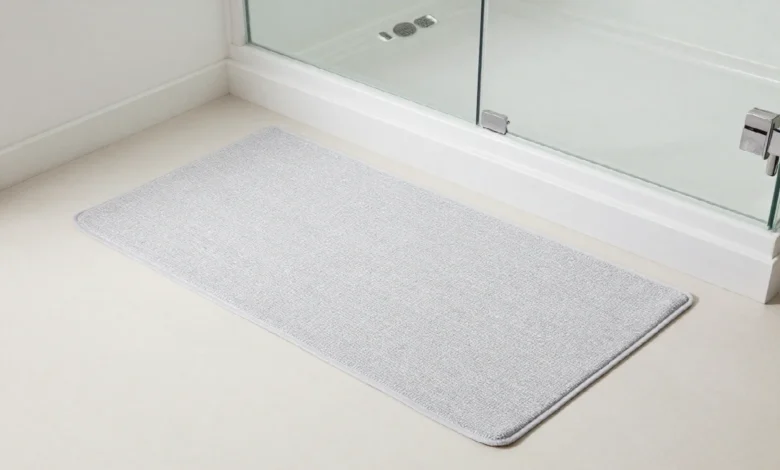
A bath mat in your bathroom does more than keep your feet dry. The right one prevents slipping on wet floors, protects your tile grout from constant moisture, and pulls the look of your bathroom together without a full renovation. Your choice of material, size, and placement determines how well it holds up over months of daily use.
Choosing a bath mat comes down to three factors: material, non-slip backing, and how easy it is to wash. Cotton mats absorb moisture faster. Microfiber mats dry quicker. Memory foam feels soft underfoot but degrades faster than woven options. Place your mat directly outside the shower or tub, on a dry surface, with enough room to step out without missing it.
Why Your Bath Mat Choice Matters More Than You Think
A wet bathroom floor is one of the leading causes of household slips. According to the CDC, over 235,000 Americans visit emergency rooms each year from bathroom-related injuries, with wet floors ranking as a top contributing factor. A mat with a strong non-slip backing and fast-drying material does measurable work in reducing that risk.
Beyond safety, bath mats take a beating. Daily exposure to moisture, foot traffic, and machine washing breaks them down fast. A mat that looked fine in the store might curl at the edges within three months or lose its grip on tile after a few washes. Knowing what to look for before you buy saves you from replacing it every season.
Best Bath Mat Materials for Different Bathrooms
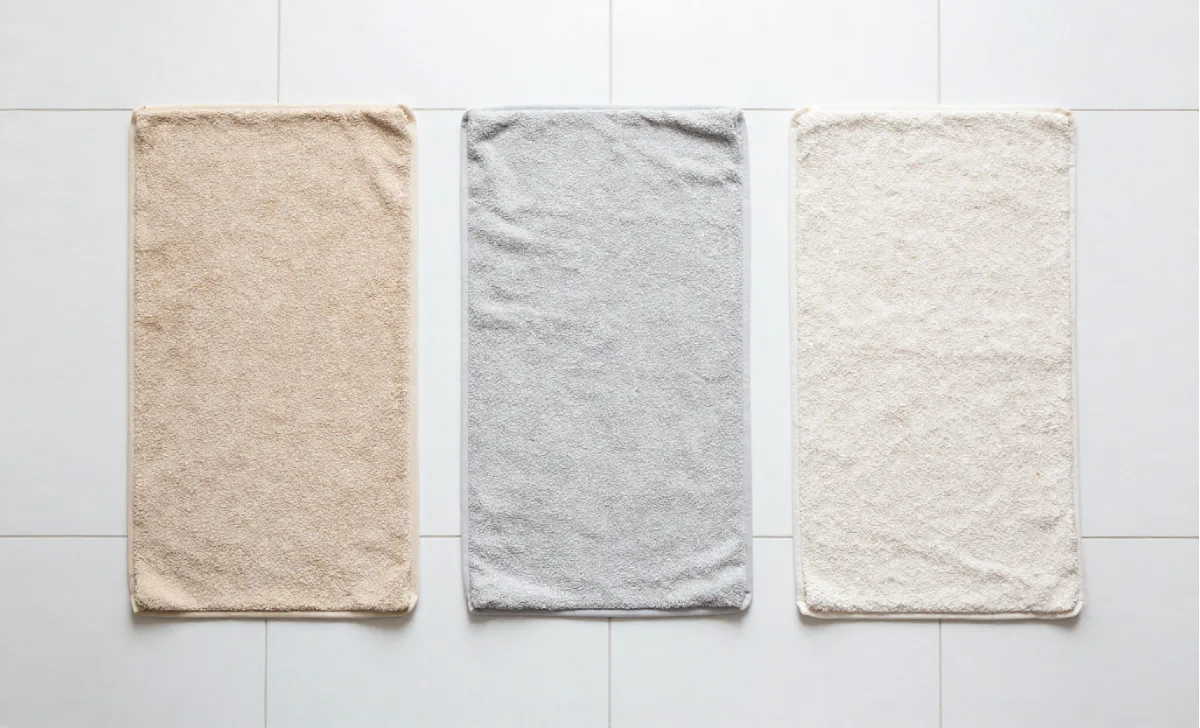
Not every bathroom is the same. A small half-bath with no shower needs a different mat than the wet zone outside a daily-use shower.
Cotton mats are the most common choice. They absorb moisture well, come in dozens of sizes, and handle repeated machine washing without losing shape. Organic cotton options hold up slightly longer than standard cotton and resist mildew better in humid environments.
Microfiber mats absorb water faster than cotton and dry in half the time. If you shower daily and your bathroom doesn’t get much airflow, microfiber reduces the chance of mold building up under the mat.
Memory foam bath mats feel comfortable underfoot, but compress and degrade over time. Most manufacturers rate them for 12 to 18 months of regular use. After that, the foam breaks down, and the mat sits flat and damp instead of springing back.
Diatomite mats, made from compressed fossilized algae, dry almost instantly. They don’t absorb water the way fabric mats do. Instead, water evaporates off the surface within minutes. They’re rigid, easy to clean, and don’t harbor bacteria. The downside is that they can crack if dropped and feel hard underfoot without a cushioned layer beneath.
How to Size a Bath Mat for Your Space
Sizing is where most people get it wrong. A mat that’s too small forces you to step around it. One that’s too large bunches against cabinets or the toilet base and becomes a tripping hazard.
The standard bath mat runs 17 by 24 inches, which fits most single-user shower or tub setups. If you have a double sink vanity or a wider shower entrance, a 20 by 34-inch mat covers more floor without overlapping fixtures.
For a bathtub, measure the length of the tub and buy a mat that covers the area where you step out, not the full length of the tub. You want both feet to land fully on the mat the moment you step out, not one foot on tile.
If your bathroom has a separate shower and tub, use two mats sized to each exit point rather than one large mat trying to cover both areas.
Non-Slip Backing: What Actually Works
Non-slip backing is listed on nearly every bath mat, but not all backings perform equally. Spray-on latex coatings lose grip after repeated washing, especially in hot water. Tufted rubber backing holds longer but can leave scuff marks on certain tile finishes.
Look for mats with suction-cup backing or woven rubber grids. These grip tile floors without adhesive and don’t slide when you step onto them wet. Ruggable and similar brands use a separate non-slip rug pad sold alongside the mat, which you can replace independently of the mat itself when it wears out.
Test any mat you buy by pressing on the corner after placing it on your floor. If it shifts easily, the backing won’t hold under wet foot pressure.
Where to Place Bath Mats in the Bathroom
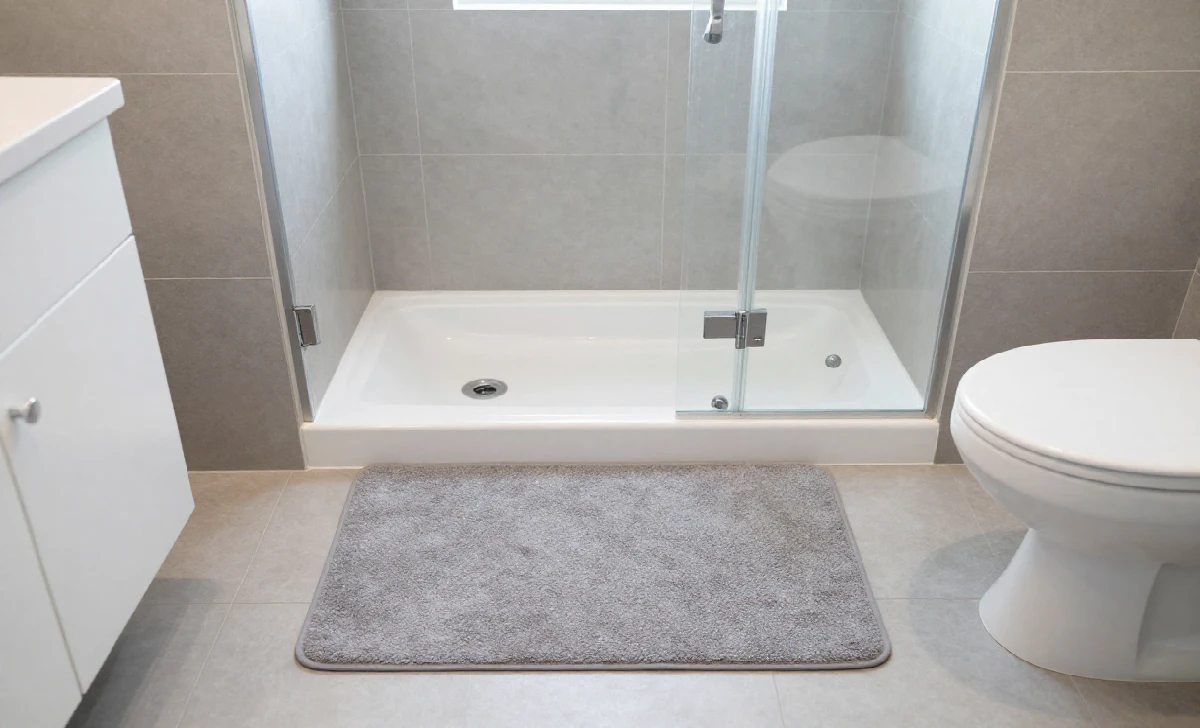
Placement affects both safety and how long the mat lasts. Most people place a mat directly in front of the shower or tub exit. That’s correct. The mat should sit close enough that your first step out of the shower lands fully on it.
Keep at least two inches of clearance between the mat edge and any cabinets or the toilet base. Mats pushed against furniture trap moisture underneath, which promotes mold growth on both the mat and the floor.
Avoid placing mats on top of other rugs or on carpet. The backing grip relies on contact with a hard, flat surface. Layering creates an unstable base and defeats the non-slip function entirely.
If you use a mat outside the bathroom on a tiled hallway, treat it as a separate piece. Hallway mats get different foot traffic patterns and need different backing than shower exit mats.
How Often to Wash Your Bath Mat
Most bath mats need washing every one to two weeks. If you have multiple people using one bathroom daily, wash weekly. A damp mat that sits on your floor between uses picks up skin cells, soap residue, and floor bacteria. Left too long, that combination produces the musty smell most people attribute to the mat material itself, when it’s actually buildup.
Machine wash cotton and microfiber mats in warm water. Hot water degrades the rubber backing faster. Skip fabric softener entirely, as it coats the fibers and reduces absorbency. Air dry when possible. Putting a bath mat in the dryer on high heat repeatedly shortens its life by breaking down both the fibers and the backing.
For diatomite mats, rinse under water and leave in a well-ventilated area. If they develop a film from soap or mineral deposits, light sanding with fine-grit sandpaper restores the surface.
Signs Your Bath Mat Needs to Be Replaced
A bath mat that looks worn isn’t always the problem. The real signal is a function. Replace your bath mat when:
- The non-slip backing peels, cracks, or no longer grips the floor
- The mat stays damp for more than a few hours after use
- Washing no longer removes odor
- The edges curl up and create a tripping edge
Most fabric bath mats last one to two years with proper care. Memory foam mats often need replacing sooner. Diatomite mats last longer structurally but need the surface refreshed periodically.
FAQs
What is the best material for a bath mat?
Cotton and microfiber are the most practical for daily use. Cotton absorbs well and handles washing easily. Microfiber dries faster and works better in low-airflow bathrooms. Diatomite suits people who want a mat that stays dry between uses.
How do you keep a bath mat from getting moldy?
Hang the mat over the tub edge or a towel bar after each use to let airflow reach both sides. Wash it weekly if the bathroom doesn’t get much ventilation. Avoid placing it on surfaces that trap moisture underneath.
Can you put a bath mat in the dryer?
Most cotton and microfiber mats can go in the dryer on low or medium heat. Avoid high heat, which breaks down the rubber backing faster. Check the care label before drying any mat with memory foam, as most foam mats should air dry only.
How many bath mats does one bathroom need?
One mat at the shower or tub exit is standard. If your bathroom has a separate tub and shower, use one mat in each. A second mat at the vanity is optional but useful in a busy household.
What size bath mat fits a standard bathroom?
A 17 by 24-inch mat fits most standard single shower or tub exits. Wider bathroom setups benefit from a 20-by-34-inch mat. Always measure the floor space between your tub or shower exit and any nearby fixtures before buying.