Andrew Carnegie House: From Steel Empire to Smithsonian Museum Guide
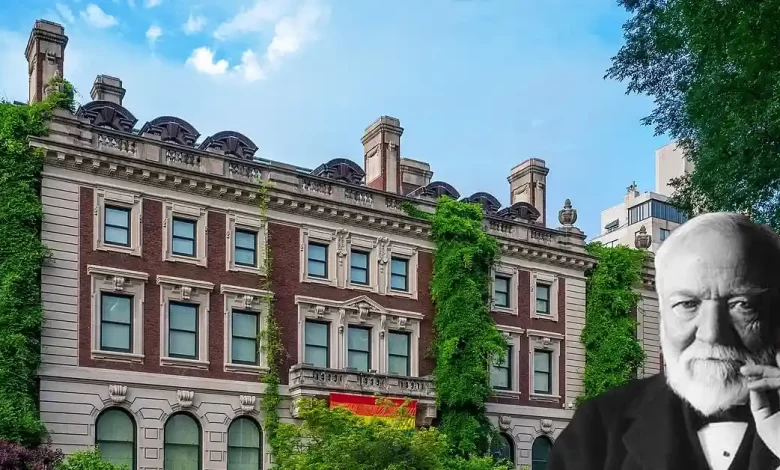
Ever wonder where America’s richest man lived during the Gilded Age? The Andrew Carnegie House stands tall on Manhattan’s Upper East Side, telling stories that shaped our nation’s history.
This mansion isn’t just another rich guy’s house. It’s where one of America’s most famous industrialists planned his empire and gave away his fortune. Today, you can walk through the same rooms where Carnegie made decisions that changed the world.
The Man Behind the Andrew Carnegie House
Andrew Carnegie wasn’t born rich. He started as a poor Scottish immigrant who worked his way up from telegraph operator to steel magnate. By the 1890s, he controlled America’s steel industry and needed a home that matched his success.
Carnegie believed wealthy people should give back to society. He funded over 1,500 public libraries across America and supported education worldwide. His home became the headquarters for these philanthropic efforts, where he planned how to spend his fortune helping others.
The steel baron chose Manhattan’s Upper East Side for his mansion in 1898. Back then, this area was far from the fashionable downtown neighborhoods. Carnegie wanted space for a large private garden, something rare in crowded New York City.
His vision paid off. The neighborhood around his mansion became known as Carnegie Hill, one of Manhattan’s most prestigious areas. The Andrew Carnegie House helped transform this part of the city into a cultural district.
Revolutionary Architecture and Design Features
The Andrew Carnegie House broke new ground in American residential construction. Built between 1899 and 1902, it was the first private home in America with a structural steel frame.
Architects Babb, Cook & Willard designed the mansion in Georgian Revival style. The 64-room house featured cutting-edge technology for its time, including central heating and one of New York’s first residential elevators. A miniature train track in the cellar delivered coal throughout the building.
The mansion’s most striking feature remains its private garden. This enclosed green space covers nearly two acres, making it one of Manhattan’s largest private gardens. Carnegie specifically chose this location to create an oasis in the busy city.
Inside, the house reflected Carnegie’s Scottish heritage and love of books. The library became his favorite room, where he spent hours reading and planning his charitable work. Rich wood paneling and ornate details showed off the finest craftsmanship money could buy.
From Family Home to National Treasure
Andrew Carnegie lived in his mansion until his death in 1919. His wife Louise continued calling it home until 1946, keeping the house exactly as her husband left it. The couple’s daughter Margaret also grew up in these grand rooms.
After Louise Carnegie’s death, Columbia University’s School of Social Work leased the building from 1949 to 1971. This transition marked the beginning of the mansion’s transformation from private residence to public institution.
In 1972, the Carnegie Corporation made a historic decision. They donated the entire property to the Smithsonian Institution, ensuring the Andrew Carnegie House would serve the public forever.
The mansion became home to the Cooper Hewitt National Museum of Design in 1976. This transformation required careful renovation to preserve historic details while creating modern exhibition spaces.
The $91 Million Renovation Project
The Andrew Carnegie House underwent major renovations in the late 1990s and early 2010s. The $91 million project, led by firms including Diller Scofidio + Renfro, restored architectural details while adding modern amenities for museum visitors.
Renovators discovered original features hidden for decades. They restored ornate plasterwork, refinished hardwood floors, and brought back the mansion’s original grandeur. The project also improved accessibility and visitor facilities throughout the building.
The museum reopened on December 12, 2014, exactly 112 years after the Carnegie family first moved in. Garden and terrace improvements continued through 2015, creating better outdoor spaces for visitors to enjoy.
The renovation earned LEED Silver green-building certification from the U.S. Green Building Council. This recognition shows how historic preservation can meet modern environmental standards.
Visiting the Andrew Carnegie House Today
Today, the mansion houses the Cooper Hewitt, Smithsonian Design Museum, which showcases design exhibitions and hosts cultural events. Visitors can explore Carnegie’s former home while learning about design history and innovation.
The museum offers guided tours that reveal stories about Carnegie’s life and the mansion’s architecture. You’ll see original rooms where the steel magnate entertained guests and planned his business deals.
The mansion’s location at East 91st Street and Fifth Avenue makes it easy to reach by subway or bus. Museum hours and ticket prices change seasonally, so check the official website before your visit.
The Andrew Carnegie House remains a New York City designated landmark and National Historic Landmark. Its cultural prominence extends beyond architecture, having appeared in several films and TV series over the years.
Carnegie’s Scottish Roots and Global Legacy
Carnegie never forgot his humble beginnings in Dunfermline, Scotland. The Andrew Carnegie Birthplace Museum preserves his childhood cottage and tells the story of his journey from poverty to wealth.
His widow Louise built an Art Deco museum hall in Dunfermline in 1928, creating a permanent tribute to her husband’s legacy. Interactive exhibits there show how Carnegie’s philanthropy affected communities worldwide.
The connection between Carnegie’s Scottish birthplace and his Manhattan mansion illustrates his remarkable life story. From a small cottage to a grand mansion, his journey represents the American Dream at its finest.
Both sites continue educating visitors about Carnegie’s belief that wealthy individuals should use their fortunes to benefit society. His “Gospel of Wealth” philosophy still influences philanthropists today.
Why the Andrew Carnegie House Matters Today
The Andrew Carnegie House represents more than just Gilded Age luxury. It stands as a monument to American entrepreneurship, immigration success, and the power of giving back to society.
Carnegie’s story resonates with modern audiences facing questions about wealth inequality and social responsibility. His mansion serves as a classroom where visitors can learn about these timeless issues.
The building’s transformation from private residence to public museum shows how historic preservation can serve community needs. The Andrew Carnegie House proves that great architecture deserves protection and public access.
Experts in historic preservation praise the mansion’s innovative design and its role in shaping New York’s cultural landscape. The Cooper Hewitt museum continues this legacy by promoting design education and innovation.
Today’s visitors leave the Andrew Carnegie House with a deeper understanding of American history and the immigrant experience. Carnegie’s mansion reminds us that success comes with responsibility to help others achieve their dreams too.