Your AC Has Been Lying to You About Why It’s Not Cooling
You wake up sweating at 2 AM. Your thermostat says 72 degrees, but your bedroom feels like a sauna. The air conditioner runs constantly, yet nothing changes. You check the filter, adjust the settings, and still get weak, warm air from the vents.
The problem isn’t what you think. Your AC isn’t broken, and your compressor isn’t dying. Two metal components hidden inside your system have been silently sabotaging your comfort for weeks. The evaporator and condenser coils control everything about how well your AC cools, but they fail slowly enough that you don’t notice until you’re miserable. Understanding what these coils do and why they stop working gives you the power to fix most cooling problems before spending hundreds on emergency repairs.
What Evaporator and Condenser Coils Actually Do
Your air conditioner doesn’t create cold air. It moves heat from inside your home to the outside. The evaporator and condenser coils make this heat transfer possible through a continuous refrigeration cycle.
The evaporator coil sits inside your home, usually in the air handler or furnace. Cold refrigerant flows through this coil while your blower fan pushes warm indoor air across the metal fins. The refrigerant absorbs heat from your air, cooling it before sending it back through your vents. This process also removes humidity, which is why you see water dripping from your AC unit.
The condenser coil lives in the outdoor unit. After the refrigerant picks up heat from your home, it travels to this coil as a hot gas. The outdoor fan blows air across the condenser coil fins, releasing the absorbed heat into the outside air. The refrigerant cools down, turns back into a liquid, and returns to the evaporator coil to repeat the cycle.
When either coil gets dirty, damaged, or blocked, this heat transfer slows down. Your AC keeps running, but it can’t move enough heat to cool your home properly. The system works harder, uses more energy, and eventually starts failing in ways that look like major breakdowns.
Five Ways Dirty Coils Destroy Your Cooling
Dust, dirt, and debris coat your coils so gradually that performance drops before you realize anything is wrong. A thin layer of grime acts like insulation, blocking heat transfer and forcing your system to run longer for less cooling.
The evaporator coil collects dust from indoor air, even with clean filters. Pet hair, cooking grease, and household particles stick to the damp coil surface. Within months, this buildup reduces airflow and cooling capacity by 30% or more. Your AC runs constantly but can’t reach the temperature you set.
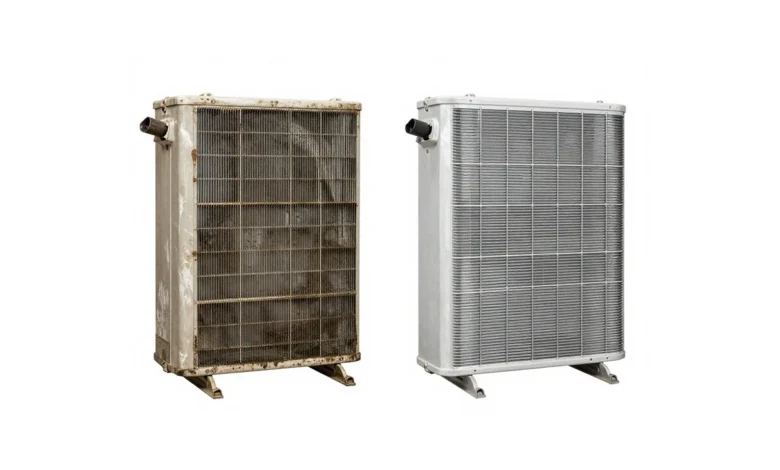
The condenser coil faces worse conditions. Grass clippings, cottonwood seeds, dirt, and pollen cake onto the outdoor fins. Heavy debris can block airflow completely. When the condenser coil can’t release heat, refrigerant pressure builds up, stressing the compressor and reducing system efficiency by up to 50%.
Bent coil fins create the same problem as dirt buildup. The thin aluminum fins on both coils bend easily from pressure washing, hail, or careless maintenance. Crushed fins restrict airflow, even on clean coils. A fin comb can straighten minor damage, but severe bending requires professional repair.
Frozen evaporator coils signal a serious airflow problem. When not enough warm air passes over the evaporator coil, the refrigerant gets too cold and freezes the moisture in your air. Ice blocks the coil completely, stopping all cooling. Common causes include dirty filters, closed vents, low refrigerant, or a failing blower fan.
Corroded coils leak refrigerant and lose cooling power permanently. Salt air in coastal areas, chemical exposure, or age can eat through the copper tubing. Small leaks reduce refrigerant levels slowly, causing weak cooling and higher energy bills. Large leaks require coil replacement, which can cost $1,200 to $2,500 depending on your system.
Where to Find Your Coils and What to Look For
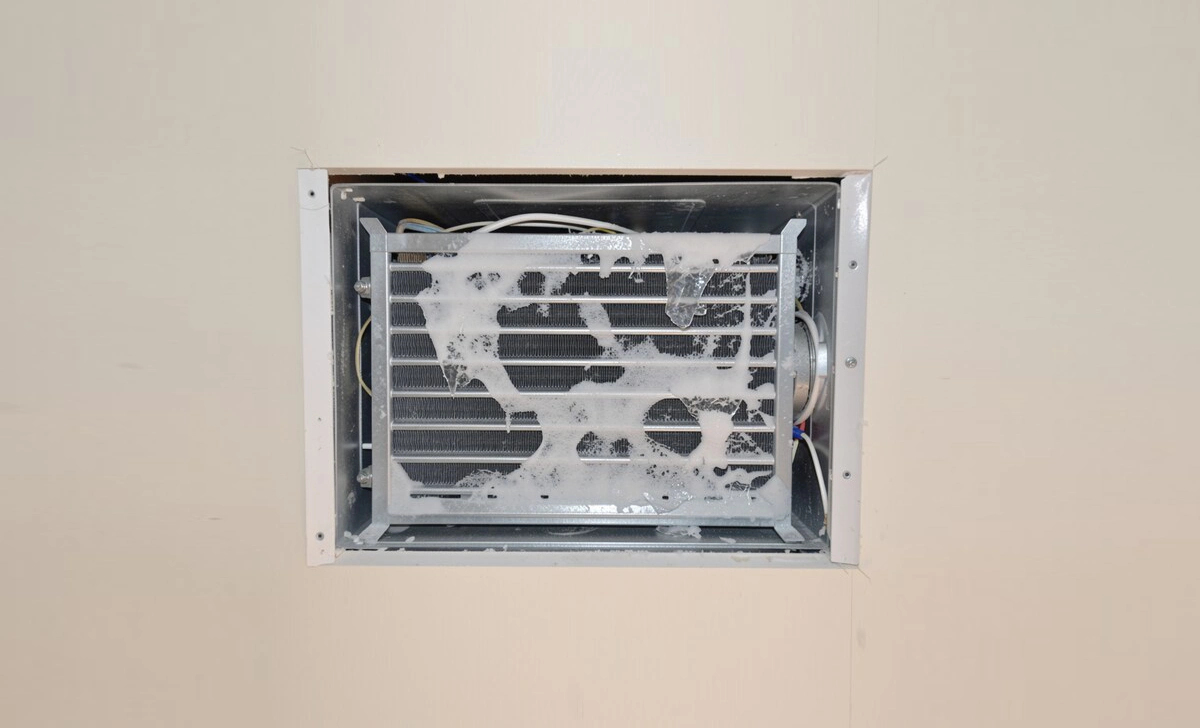
The evaporator coil hides inside your indoor unit, making it harder to inspect. Turn off your AC at the thermostat and the breaker panel. Remove the access panel on your air handler or furnace. You’ll see a metal box with aluminum fins, usually shaped like an A-frame or slab. Check for dust buildup, ice formation, or water pooling underneath.
Clean evaporator coils look silver or copper colored with straight, evenly spaced fins. Dirty coils appear gray or black, with visible dust between the fins. Ice covering the coil means you have an airflow restriction or refrigerant problem that needs immediate attention.
The condenser coil sits in your outdoor unit, and you can inspect it without tools. Look at the metal fins on all sides of the unit. Run your hand near the fins without touching them. You should feel a strong airflow when the fan runs. Blocked or dirty coils have weak airflow and visible debris packed between the fins.
Clear at least two feet of space around your outdoor unit. Cut back shrubs, remove grass clippings, and pick up leaves. The condenser needs unrestricted airflow to release heat properly. A unit surrounded by plants or boxed in by fencing can’t cool efficiently, no matter how clean the coils are.
How to Clean Your Coils Without Causing Damage
Start with the condenser coil because it’s easier to access and gets dirtier faster. Turn off power to the outdoor unit at the disconnect box near the unit and at your main breaker panel. Never work on a live AC unit.
Remove large debris by hand. Pull out leaves, grass, and sticks stuck in the fins. Use a soft brush to gently sweep dirt off the coil surface, working from top to bottom. Brush in the same direction as the fins to avoid bending them.
Spray the coil with a garden hose from the inside out. Remove the top panel of your condenser unit to access the inside of the coil. Spray at a gentle pressure, pushing dirt out through the fins. High pressure from a power washer will bend the fins and reduce airflow. Rinse until the water runs clear.
For heavy buildup, use a no-rinse coil cleaner designed for condenser coils. Spray the foam evenly across the fins and let it sit for the recommended time. The cleaner breaks down dirt and drips away, carrying grime with it. These products work well for annual deep cleaning.
Evaporator coil cleaning requires more care because the coil sits in a tight space. You can vacuum visible dust from the coil surface using a soft brush attachment. For deeper cleaning, use a no-rinse foaming coil cleaner made specifically for evaporator coils. Spray it on, let it work, and the foam will drain into your condensate pan.
Never use harsh chemicals, bleach, or pressure washers on evaporator coils. The thin fins and copper tubing are easy. If you see heavy dirt buildup, mold growth, or suspect refrigerant leaks, call an HVAC technician. Professional cleaning costs $100 to $400 but includes inspecting for problems you might miss.
When Cleaning Won’t Fix the Problem
Some coil issues need professional repair or replacement. Learning to spot these situations saves you time and prevents further damage to your system.
Refrigerant leaks show up as ice on the evaporator coil, hissing sounds, or oily residue on the coil surface. Your AC will run constantly but produce weak cooling. Refrigerant doesn’t get used up, so low levels always mean a leak. Adding refrigerant without fixing the leak wastes money and doesn’t solve the problem. Leak repair costs $200 to $1,500, depending on location and severity.
Severely bent or crushed coil fins can’t be fully repaired with a fin comb. If more than 30% of the fin area is damaged, the coil loses too much efficiency. Replacement becomes the better option, especially on systems over 10 years old.
Corroded coils with visible holes or green buildup need replacement. Corrosion weakens the metal and causes refrigerant leaks. Patching corroded areas is temporary at best. New evaporator coils cost $600 to $2,000 installed. Condenser coils run $1,000 to $3,000, including labor and refrigerant.
Frozen coils that keep icing up after cleaning point to deeper problems. Check your air filter first. A clogged filter is the most common cause of frozen coils. Replace filters every 30 to 90 days, depending on your home. If the filter is clean, you might have blocked ducts, a failing blower motor, or low refrigerant from a leak.
Creating a Coil Maintenance Schedule That Actually Works
Clean your condenser coil twice a year. Do it in spring before the cooling season starts and again in fall after the heavy pollen season. This schedule prevents buildup from reaching problem levels.
Check your evaporator coil annually. Schedule this during your spring AC tune-up or do it yourself when you change your furnace filter in spring. Annual inspection catches problems early when they’re cheaper to fix.
Replace air filters on schedule based on your home. Homes with pets, allergies, or high dust need monthly filter changes. Average homes do fine with filters changed every 60 to 90 days. Clean filters protect your evaporator coil and improve airflow throughout your system.
Clear debris from around your outdoor unit weekly during spring and fall. A quick walk around the unit to remove leaves and grass takes two minutes but prevents major buildup. After storms, check for damage to the coil fins or debris blown into the unit.
Schedule professional maintenance every two to three years, even if your system seems fine. HVAC technicians have tools and cleaners that reach areas you can’t access. They also check refrigerant levels, electrical connections, and catch small problems before they become expensive repairs. Maintenance visits cost $80 to $200 but extend your system’s life by years.
Your evaporator and condenser coils control everything about your AC’s cooling power. Dirty coils are the hidden reason most air conditioners fail to cool properly, yet they’re one of the easiest problems to prevent. Regular cleaning, smart maintenance habits, and knowing when to call for help keep your system running efficiently and your home comfortable all summer long.