TV Mounted Above Fireplace: What You Need to Know Before You Drill
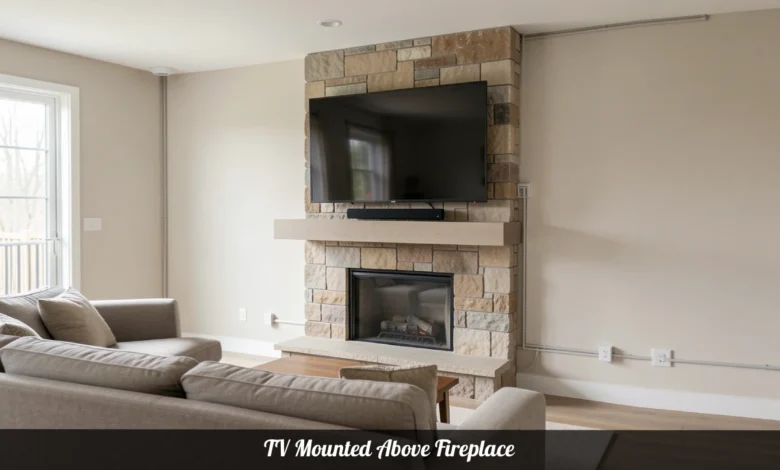
Mounting a TV above a fireplace saves space and creates a clean focal point, but it comes with real risks. Heat from gas or wood-burning fireplaces can damage electronics, and a screen mounted too high can cause neck strain. The fix: keep the TV center below 70 inches from the floor, use a pull-down or tilting mount, and install a heat shield if your fireplace produces open flame or convective heat.
Why Homeowners Choose the Fireplace Wall
In most living rooms, the fireplace sits on the main wall. The sofa faces it. Traffic flows around it. That layout leaves the mantel area as the natural focal point, and for rooms with limited wall space, it is often the only logical place for a large TV.
The appeal is practical as much as visual. A TV above the mantel consolidates two room anchors into one, clears floor space, and removes the need for a separate entertainment unit. In smaller rooms, that trade-off is hard to argue with.
But “natural focal point” is not the same as “ideal viewing position.” Before you pick up a drill, you need to understand what actually goes wrong with this setup and how to prevent it.
The Heat Risk Is Real, But It Depends on Your Fireplace
Most modern TVs are rated to operate at a maximum ambient temperature of around 104°F (40°C). That sounds like a wide margin until you measure the air directly above an active wood-burning or gas fireplace. Convective heat rises in a column, and temperatures at mantel height can spike well past that threshold within minutes of lighting the fire.
The three fireplace types carry different levels of risk:
- Wood-burning fireplaces produce the most heat and the most direct upward airflow. Mounting a TV here without a projecting mantel or heat deflector is a serious risk to the TV’s internal components, particularly the processor and backlight.
- Gas fireplaces vary. Sealed gas inserts with glass fronts push much less heat upward than open-flame models. Check with the manufacturer for heat output ratings at mantel height.
- Electric fireplaces generate minimal heat above the unit. For most electric models, heat is not a meaningful concern for a TV mounted at a normal height.
A wide, projecting mantel shelf acts as a natural heat deflector. If yours extends at least six inches beyond the firebox opening, it redirects rising heat outward rather than straight up into the screen. If your mantel is shallow or decorative, a purpose-built heat shield is worth the cost. MantelMount’s pull-down models include heat-sensing handles that turn red when the temperature exceeds a safe threshold, giving you a visible warning before the TV is at risk.
Viewing Angle and Neck Strain: A Solvable Problem
This is where most above-fireplace setups fail. The Prairie Spine Institute notes that looking up at a screen for extended periods can cause muscular imbalances and chronic neck stiffness. Most people notice it within 30 to 45 minutes of watching.
The viewing angle problem is also a picture quality problem. Standard LCD and LED panels, which still make up the majority of TVs sold, show noticeable color shift and contrast loss when viewed from below their centerline. You can pay $2,000 for a 65-inch 4K screen and watch it look washed out because it is mounted 12 inches too high.
Neither problem is inevitable. The height at which you mount the TV determines both.
The Right Height for a TV Above a Fireplace
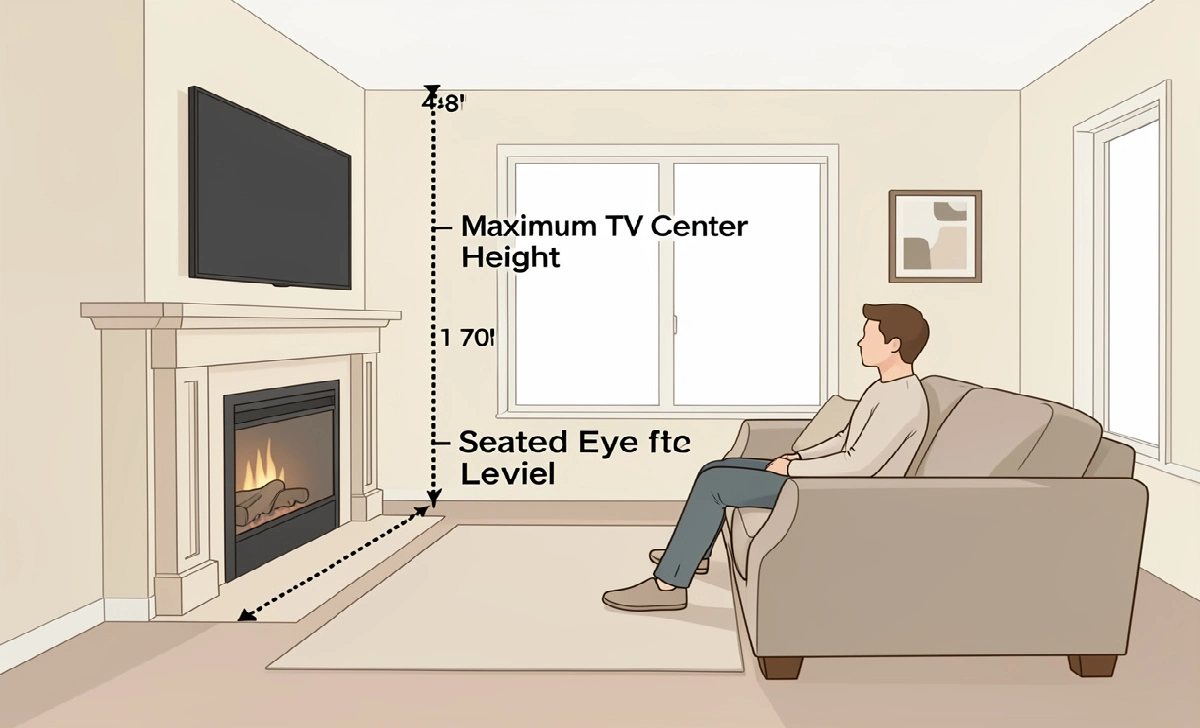
Keep the center of the TV below 70 inches from the floor. That is the practical ceiling for comfortable seated viewing. If your mantel sits at 48 inches and you are mounting a 55-inch TV, the center of that screen will land around 68 to 70 inches, right at the limit.
If your mantel is higher, you have two options: remodel the fireplace surround to lower the mantel, or use a pull-down mount that stores the TV high and drops it to eye level for viewing.
One homeowner lowered their mantel from 68 inches to 47 inches through a fireplace surround remodel, bringing the TV center to approximately 69 inches, and reported no neck strain during normal viewing.
The seated eye level for most adults falls between 42 and 48 inches from the floor. That is where the center of your screen should land when you are actively watching. Aiming for 42 to 48 inches from the floor to the center of the screen is a reliable general target.
Which TV Mount Works Best Above a Fireplace
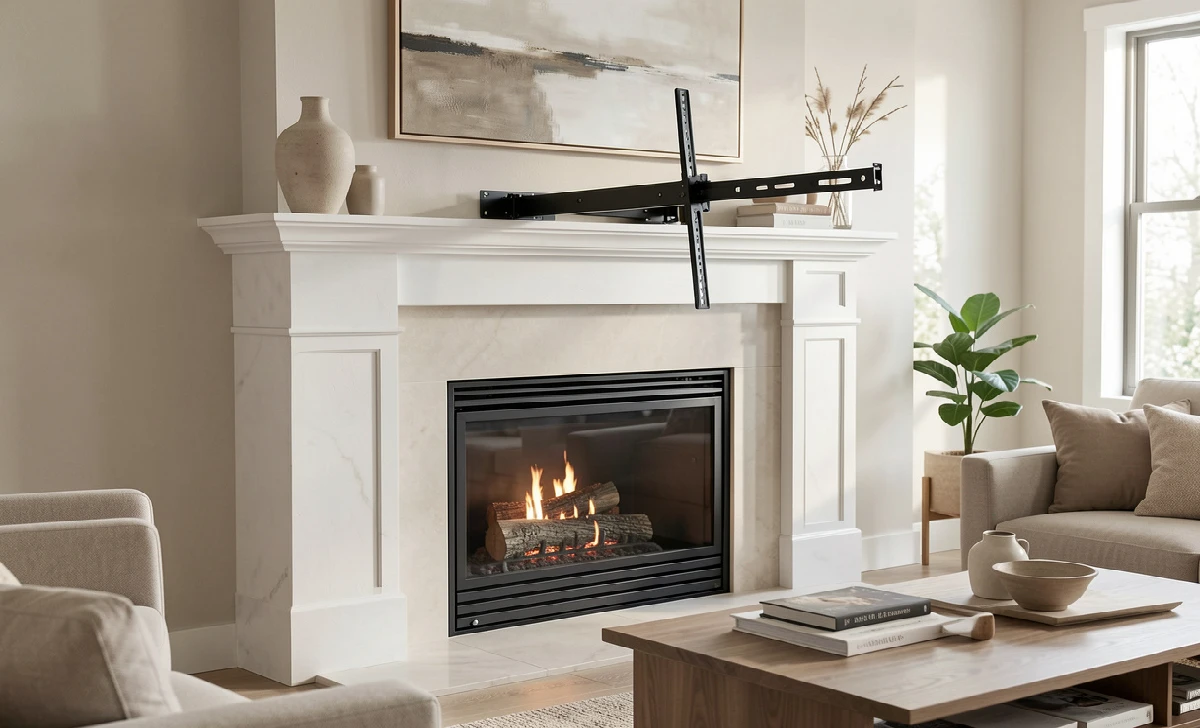
The mount type determines whether this setup is comfortable long-term. There are three practical options:
Tilting mounts angle the screen downward, which corrects some of the viewing angle problem. They work well when the TV is only moderately high, perhaps 10 to 15 inches above an ideal eye-level position. The downside is that tilt helps with glare and angle, but it does not change neck posture. You are still looking up at a screen; it is just pointing back down at you.
Pull-down mounts let you store the TV at mantel height and drop it to eye level when viewing. In rooms where the mantel forces height, this is often the only solution that people stay happy with long-term. MantelMount’s gas-piston models use counterbalance technology to guide the screen down with minimal effort and return it to the stowed position afterward.
Fixed mounts hold the TV in one position with no adjustment. These work only when the TV can be mounted low enough that the center is at or near seated eye level without tilting or pulling down. For most fireplaces with standard mantels, fixed mounts result in the exact neck strain and picture quality issues described above.
How to Mount Your TV Above a Fireplace
Step 1: Identify your wall material. Fireplace walls are frequently brick, stone, or tile, not drywall. Masonry requires masonry-rated anchors and a hammer drill. A standard drywall anchor will not hold in brick.
Step 2: Mark your mounting height. Sit in your usual watching position, mark your eye level, and work backward from there. Account for the TV’s dimensions when calculating where the bracket lands.
Step 3: Attach the wall bracket. Drill pilot holes, bolt the bracket in at your marked height, and check the level before tightening fully. On drywall, hit framing studs. On masonry, use expansion anchors rated for the combined weight of your TV and mount.
Step 4: Connect the TV to the bracket. VESA patterns are standardized, but confirm your TV’s VESA size before ordering a mount. With a partner, hang the TV and test for stability before releasing.
Cable Management on a Fireplace Wall
Hiding cables behind masonry is rarely simple. Drilling through brick or stone for an in-wall run requires a long masonry bit and a clear understanding of what is inside that wall, including any chimney structure. When in-wall routing is not feasible, surface cable channels in a color that matches the wall material are a clean second option.
For power specifically, do not run a standard power cable through a wall cavity. Use an in-wall rated power kit, or have an electrician install a recessed outlet behind the TV. Surface cable covers work for low-voltage cables like HDMI; power requires a proper solution.
Running power and HDMI through masonry is rarely simple, which is why many clean fireplace setups use surface-mounted solutions. Confirm your wall material before planning a fully concealed cable run.
When This Setup Is the Wrong Choice
Three scenarios where mounting above the fireplace is not worth the trade-offs:
- Your mantel sits above 56 inches, and you cannot lower it or use a pull-down mount. The TV center will exceed 70 inches, and the viewing angle will be uncomfortable regardless of what mount you use.
- You have a wood-burning fireplace with no projecting mantel and do not want to install a heat shield. The risk to your TV is real and ongoing.
- Your primary seating is close to the wall, roughly eight feet or less. At that distance, looking up at a high screen is significantly more pronounced than from 12 or 15 feet away.
If none of those apply, a TV above the fireplace can work well. The setup fails when people skip the height calculation or rely on a fixed mount and then discover six months later that they never turn the TV on because it hurts to watch.
FAQs
What is the maximum safe temperature for a TV above a fireplace?
Most manufacturers rate TVs for ambient operating temperatures up to 104°F (40°C). Measure the air temperature at your intended mounting height when the fireplace is running before you commit.
Can I mount a TV above a wood-burning fireplace?
You can, but it requires a projecting mantel or heat deflector to redirect rising heat, and you should not run the fireplace and TV at the same time for extended periods. Many people choose not to.
What type of mount handles the height problem best?
A pull-down mount is the most effective long-term solution when the mantel forces the TV higher than 60 to 65 inches. Tilt mounts help at moderate heights, but do not solve neck posture.
How do I hide cables on a brick fireplace wall?
Use a surface-mounted cable channel that matches the wall color, or hire an electrician to run an in-wall power kit. Drilling through masonry for a full concealed run is possible, but requires proper tools and planning.
Does mounting height affect picture quality?
Yes. Most LCD and LED TVs show measurable color shift and contrast loss when viewed from below their centerline. The higher the TV relative to your eye line, the more noticeable this becomes.