Home Depot Rival Files for Bankruptcy Chapter 11: What’s Really Happening
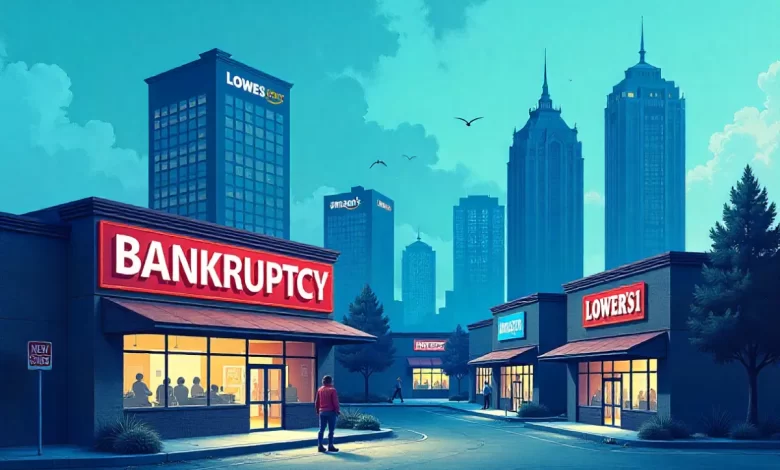
The home improvement industry just got another wake-up call as several companies are now seeking a sale of their assets. McCammons Irish Market LLC became the latest casualty when this Home Depot Rival Files for Bankruptcy Chapter 11 protection in July. They’re not alone—several smaller players have thrown in the towel this year, with some LLCs filing for chapter 11 as a last resort.
The numbers don’t lie, especially in the context of businesses filing for Chapter 11 bankruptcy with liabilities exceeding 100 million dollars. Home Depot, Lowe’s, and Amazon control nearly 60% of the entire market, leaving scraps for everyone else. Rising costs, supply chain headaches, and brutal competition created a perfect storm for smaller retailers.
What’s driving these failures in the U.S. retail sector? The increasing number of companies that file for Chapter 11 bankruptcy protection. More importantly, what does this mean for investors and consumers watching the retail landscape shift in light of breaking news alerts about the Chapter 11 bankruptcy filings? Let’s break down what’s really happening when giants squeeze out the competition.
The Market Reality: Three Giants Rule Everything
Home Depot grabbed 27.2% of market share in Q1 2025, according to Numerator’s Home Improvement Tracker data. Lowe’s captured 17% while Amazon flexed its way to 15.6% of the pie, demonstrating the ongoing consolidation in the home improvement retail and wholesale market. That’s 59.8% controlled by just three companies.
Everyone else fights for the remaining 40.2%. That’s hundreds of regional chains, local garden centers, and specialty retailers competing for increasingly thin margins in the home improvement retail and wholesale market.
The math is brutal. When three players dominate that much market share, smaller competitors can’t match their buying power, advertising budgets, or operational efficiency, often leading them to file for Chapter 11 bankruptcy.
Amazon’s rise particularly stings smaller retailers. They entered the home improvement space aggressively, using their logistics network and Prime membership to steal customers from local stores. Traditional retailers couldn’t compete with next-day delivery on everything from power tools to garden supplies.
Recent Bankruptcy Casualties Pile Up
LL Flooring filed for Chapter 11 protection in August 2024, seeking asset sales to appease unsecured creditors after housing market headwinds crushed their business model. The flooring chain was sold to F9 Investments for a fraction of its former value as part of its Chapter 11 bankruptcy to sell assets.
Gardener’s Supply Company’s parent, America’s Gardening Resource Inc., filed for bankruptcy in June with $10-50 million in liabilities, highlighting the challenges faced by retailers in the U.S. They listed assets between $1-10 million, showing how quickly retail margins can disappear.
Mosaic Companies LLC, known for luxury wall and mosaic tiles, filed for Chapter 11 in July 2025. They’re selling select assets while liquidating other business units entirely, which may include the sale of their assets to satisfy creditors.
McCammons Irish Market represents the garden center segment’s struggles. This suburban Indianapolis operator filed chapter 11 bankruptcy with similar $1-10 million in assets and liabilities, owing major suppliers like McHutchinson nursery $146,000.
Each filing tells the same story: small retailers squeezed by giants, rising costs, and changing consumer habits that favor convenience over local relationships.
Why Small Retailers Can’t Survive the Squeeze
Rising labor costs hit smaller operators hardest because they can’t spread expenses across thousands of locations, leaving them vulnerable to financial distress. When this Home Depot rival files for Chapter 11 bankruptcy protection, labor expenses often represent the final straw.
Inflation drove product costs higher while interest rates made refinancing debt nearly impossible. Tariffs on imported goods added another layer of expense that big-box stores absorbed better than independents, especially when a supplier files for Chapter 11.
Supply chain disruptions favored retailers with established vendor relationships and purchasing power, allowing them to acquire assets and wind down operations more effectively. Home Depot and Lowe’s negotiated better terms while smaller players faced stockouts or higher wholesale prices, leading many to consider filing Chapter 11 bankruptcy.
Consumer behavior shifted toward online ordering and curbside pickup during the pandemic. Investing in e-commerce infrastructure required capital that many smaller retailers simply didn’t have after surviving lockdowns, leading some to file for bankruptcy protection.
Real estate costs became unsustainable for many garden centers and specialty retailers. Prime locations demanded higher rents while foot traffic declined as customers migrated to big-box stores and online platforms, especially in the context of home improvement products.
The Chapter 11 Process: What Happens Next
Chapter 11 bankruptcy allows companies to reorganize debt while continuing operations, unlike Chapter 7 liquidation, which shuts everything down immediately. Most retailers filing choose this path, hoping to emerge stronger.
Courts oversee the bankruptcy court for the district, ensuring creditors get fair treatment while giving companies breathing room to restructure. Suppliers often continue shipping products, knowing bankruptcy courts protect their interests.
Asset sales become common as companies shed unprofitable locations or business segments, often as part of their Chapter 11 filing process. Julian Depot Miami LLC used Chapter 11 to resolve disputes with both lenders and Home Depot over rebuilding requirements, demonstrating the complexities of a bankruptcy case.
Creditors form committees to negotiate repayment terms, often representing the interests of unsecured creditors in bankruptcy cases. McCammons Irish Market owes NewCo $262,000, but filing for Chapter 11 bankruptcy might reduce that obligation significantly through court-approved settlements.
Employee protection varies by case, especially when a company files for Chapter 11 bankruptcy. Some retailers maintain full staffing during reorganization, while others close locations and lay off workers before emerging from bankruptcy.
Consumer Impact: Fewer Choices, Higher Prices
Local garden centers and specialty retailers offered personalized service that big-box stores can’t match. When they disappear, consumers lose access to expert advice and specialized products, causing a significant decline in the home improvement retail and wholesale sector.
Competition drives pricing, so fewer players typically means higher prices over time, which can lead to financial distress for smaller operators. Home Depot and Lowe’s face less pressure to compete aggressively when local alternatives vanish from the market, often due to rivals filing for Chapter 11 bankruptcy to stop their financial decline.
Product selection might narrow as retailers focus on high-volume items rather than niche products that smaller stores carried, especially in the wake of a bankruptcy case. Specialty tools, rare plants, and custom services become harder to find.
Customer service standards could decline without competitive pressure. Big-box employees handle more customers with less specialized training than dedicated garden center staff provides, which affects their ability to meet the needs of unsecured consumers.
Rural and suburban communities feel the impact most, particularly as they face financial distress from the loss of local retailers. Urban areas retain more shopping options while smaller towns might lose their only local home improvement retailer entirely.
Investor Implications: Consolidation Accelerates

Home Depot and Lowe’s benefit directly from competitor bankruptcies as market share consolidates further. Their stock prices often reflect reduced competitive threats when another Home Depot rival files for Chapter 11 bankruptcy protection in the District of Delaware.
Real estate investment trusts (REITs) face mixed impacts depending on their tenant mix, particularly when some tenants file for bankruptcy protection. Properties leased to failed retailers need new tenants while locations near surviving big-box stores gain value, particularly as these stores may become stalking-horse bidders in asset sales.
Supply chain companies serving the home improvement industry might see revenue concentration risks as fewer, larger customers dominate their sales. Losing one major account becomes more damaging when the customer base shrinks, leading some to file for Chapter 11 bankruptcy.
Private equity firms increasingly target distressed retailers for asset purchases, including the private equity firm F9. F9 Investments’ buying of LL Flooring’s assets represents this trend toward opportunistic acquisitions during bankruptcy proceedings.
Credit markets tighten for remaining smaller retailers as lenders view the sector with increased skepticism, particularly those with assets in hardware. Access to capital becomes crucial for survival when traditional financing sources disappear.
Industry Outlook: More Casualties Coming
Rising interest rates will continue pressuring retailers carrying significant debt loads. Many smaller chains borrowed heavily during low-rate periods and now face refinancing challenges at higher costs.
E-commerce adoption accelerated during the pandemic but hasn’t slowed down. Retailers without robust online platforms struggle to retain customers who expect seamless digital experiences and fast delivery.
Labor shortages affect smaller retailers disproportionately because they can’t offer the wages and benefits packages that major chains provide. Skilled workers gravitate toward more stable employers.
Commercial real estate remains expensive in prime locations while suburban markets face oversupply, impacting the availability of iconic home improvement products. Finding the right balance between visibility and affordability becomes increasingly difficult for independent operators.
Climate change impacts outdoor-focused retailers differently. Garden centers face unpredictable growing seasons, while building supply retailers deal with extreme weather disrupting construction schedules and supply chains.
What This Means for Future Competition
The home improvement industry is rapidly consolidating into a three-player oligopoly. Amazon, Home Depot, and Lowe’s will likely control even more market share as smaller competitors exit through bankruptcy or acquisition.
Innovation might slow without competitive pressure pushing retailers to differentiate themselves, especially as smaller players face bankruptcy to stop a foreclosure. When three companies dominate, they focus more on operational efficiency than on groundbreaking customer experiences or product offerings.
Regulatory scrutiny could increase if consolidation continues at the current pace. Antitrust concerns emerge when industries become too concentrated, potentially leading to government intervention or merger restrictions.
New business models might emerge from the ashes of traditional retailers. Direct-to-consumer brands, subscription services, and technology-enabled platforms could disrupt the current power structure over time, especially in the home improvement products market.
Regional players with strong local relationships might survive by focusing on services that big-box stores can’t provide effectively. Custom installation, specialized consulting, and community engagement become competitive advantages for retailers in financial distress.
The Bottom Line
The home improvement retail shakeout reflects broader economic forces reshaping American commerce. When yet another Home Depot Rival Files for Bankruptcy Chapter 11 protection, it signals that only the strongest and most adaptable will survive.
Investors should expect continued consolidation as weaker players exit the market through bankruptcy or acquisition. The survivors will face less competition but also carry greater responsibility for serving diverse customer needs.
Consumers must adapt to fewer local options while potentially paying higher prices for reduced competition, which is exacerbated when a debtor seeks a sale of its assets. The convenience of big-box shopping comes at the cost of specialized service and community connections.
The industry’s future belongs to retailers who successfully blend digital convenience with physical presence, competitive pricing with quality service, and operational efficiency with customer satisfaction. Everyone else becomes another bankruptcy statistic.