5 Best Ways to Increase Home Value
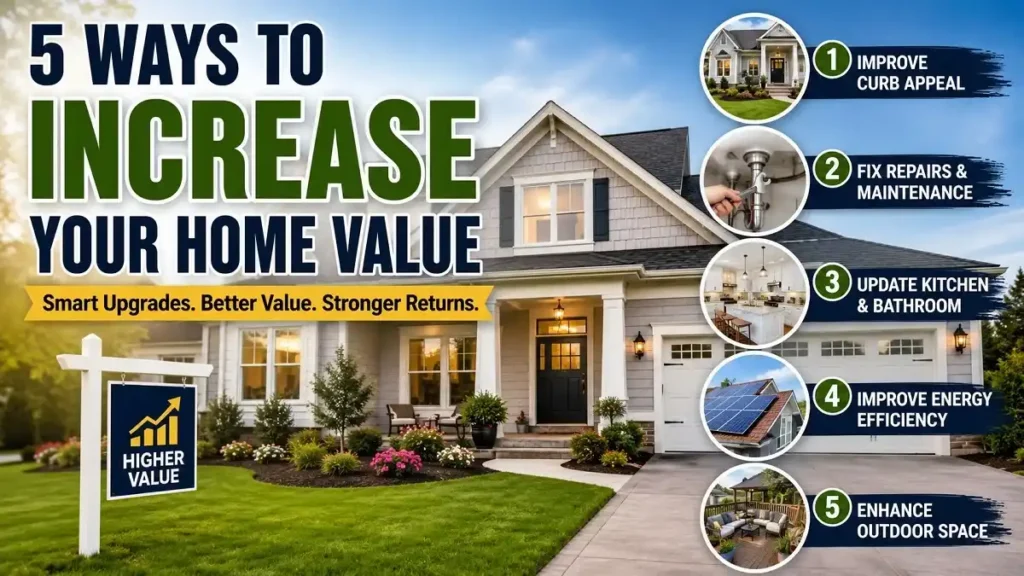
There are several practical ways to increase home value without paying for a major renovation. Fixing maintenance problems, improving curb appeal, and making targeted updates can often make more sense than spending heavily on a full remodel.
The best projects depend on your home’s condition, budget, neighborhood, and plans to sell. Since not every improvement returns its full cost, this guide focuses on five practical upgrades that can protect your property, improve buyer appeal, and support its resale value.
1. Improve Your Curb Appeal
Buyers start forming an opinion before they enter the house. A clean exterior, tidy landscaping, and well-kept entrance can make the whole property feel better maintained.
Start with affordable jobs that make a visible difference. Trim overgrown plants, remove weeds, clean paths and driveways, repair damaged fencing, and touch up peeling exterior paint. Fresh mulch and simple planting can also improve the front yard without creating a garden that takes too much work to maintain.
Pay close attention to the entrance. If the front door is faded but otherwise sound, a fresh coat of paint and updated hardware may be enough. A damaged or badly dated door may be worth replacing instead.
The garage door matters too, especially when it covers a large part of the home’s street-facing exterior. Current remodeling research often places garage door replacement among projects with strong cost-recovery potential. Actual results still depend on the property, project cost, and local housing market.
💡 Check Your Home From the Street
Stand across the street and look at your property as a buyer would. A worn entrance, messy landscaping, damaged fence, or dirty driveway may stand out more than small cosmetic details inside.
2. Fix Repairs and Deferred Maintenance
Before paying for cosmetic upgrades, deal with repairs that affect the condition of the home. New countertops will have less impact if a buyer also notices water damage, broken fixtures, damaged flooring, or other signs that maintenance has been delayed.
Walk through each room and look for problems that are easy to overlook when you see them every day. Dripping faucets, loose handles, cracked tiles, peeling paint, faulty lights, damaged trim, and doors or windows that do not work properly are good places to start.
Pay particular attention to problems that could become more expensive over time. Roof leaks, plumbing issues, moisture damage, electrical faults, and problems with heating or cooling equipment may also raise concerns during a home inspection.
Repairs do not necessarily increase a home’s selling price dollar for dollar. Their main value is often in protecting the property and preventing defects from becoming reasons for buyers to negotiate harder or lose confidence in the home.
If a project is beyond your DIY skills, use qualified help where appropriate. Choosing reliable people for your home improvement projects can help you avoid poor-quality work that may need to be repaired again later.
3. Update the Kitchen and Bathroom Wisely
Kitchens and bathrooms often deserve attention because buyers use them every day and know they can be expensive to renovate. However, a dated room does not automatically need to be stripped out and rebuilt.
In a functional kitchen, smaller improvements may deliver a noticeable refresh. Painting sound cabinets, replacing worn hardware, improving lighting, installing a new faucet, or updating damaged countertops can change how the room feels without the cost of a complete remodel.
Take the same measured approach in the bathroom. Fresh paint, clean or repaired grout, modern lighting, updated fixtures, or a new vanity may be enough when the plumbing, layout, and major surfaces remain in good condition.
| Area | Smaller Updates to Consider | When a Larger Remodel May Make Sense |
|---|---|---|
| Kitchen | Cabinet refresh, hardware, lighting, faucet, paint | Poor layout, failing surfaces, or badly worn features |
| Bathroom | Vanity, fixtures, grout, lighting, paint | Water damage, failing fixtures, or a layout that works poorly |
Keep the home’s price range and neighborhood in mind before choosing expensive finishes. A high-end kitchen or luxury bathroom may look impressive, but buyers may not pay enough extra to cover the full cost. A well-planned minor remodel can sometimes make more financial sense than an upscale renovation.
Your timeline also matters. If you expect to stay for years, you may choose features mainly because they improve daily life. If you plan to sell soon, prioritize neutral, functional improvements that are likely to appeal to a wider range of buyers.
4. Make Your Home More Energy Efficient
Energy-efficient improvements can reduce wasted energy and make a home more comfortable. Lower running costs may also appeal to buyers, although the resale benefit of individual upgrades varies by location and property.
Begin with obvious sources of energy loss. Depending on the home, useful improvements may include adding insulation, sealing air leaks, maintaining heating and cooling equipment, switching to efficient lighting, or replacing an inefficient appliance when it is already near the end of its useful life.
Windows need a cost-conscious approach. If they are damaged, drafty, or failing, repair or replacement may make sense. But replacing every window solely to increase resale value can involve a large upfront cost, so compare the likely benefits with less expensive repairs first.
Solar panels require an even closer look. Their financial value depends on installation costs, local electricity rates, available sunlight, incentives, and how long you expect to own the home. The U.S. Department of Energy explains several benefits of residential solar for homeowners considering the technology.
⚠️ Think Beyond the Solar Panels
Solar does not affect every home’s resale value in the same way. Local buyer demand matters, and an owned system can be viewed differently from panels connected to a lease or other financial agreement.
For many properties, fixing basic efficiency problems is a sensible starting point. Improving insulation, sealing drafts, or servicing inefficient equipment may improve comfort without committing to a major renovation.
5. Improve Your Outdoor Living Space
A well-kept outdoor area gives buyers another usable part of the property to consider. You do not need a luxury outdoor kitchen or an elaborate landscape plan to make the backyard more appealing.
Begin by making the existing space clean, safe, and easy to use. Repair damaged fencing, remove clutter, trim overgrown plants, improve worn lawn areas, and clean patios or paths. If you already have a deck, replacing damaged boards and refreshing the finish can improve its appearance and condition.
If space allows, a simple seating or dining area can help buyers picture themselves using the yard. Practical shade and outdoor lighting may also improve comfort without locking the next owner into a highly personalized design.
Before spending heavily, consider how much outdoor living matters in your local market. Climate, lot size, neighborhood expectations, and maintenance needs can all affect how buyers view features such as decks, patios, pools, or outdoor kitchens.
A highly customized backyard may be valuable to you without adding the same amount to the sale price. For resale-focused improvements, a clean and flexible outdoor space often gives future owners more freedom to make it their own.
How to Prioritize Home Improvements for the Best Value
If your budget is limited, start with the home’s condition. Deal with active leaks, damage, safety concerns, and failing systems before spending money on decorative changes. Once those issues are under control, look at the improvements buyers will notice most.
Curb appeal is a logical next step because it shapes the first impression of the property. Kitchens and bathrooms may then deserve attention if they are clearly worn or dated. Energy-efficiency and outdoor upgrades can follow when they suit the home, climate, and available budget.
🏡 A Simple Way to Prioritize Your Budget
1. Protect the property: Fix damage, maintenance problems, and failing systems.
2. Improve first impressions: Tidy the exterior and entrance.
3. Refresh important rooms: Update kitchens and bathrooms where needed.
4. Consider efficiency: Address energy waste with practical upgrades.
5. Add optional features: Spend on extras only when they suit your home and local market.
For expensive projects, compare the estimated cost with the likely benefit before committing. If you are preparing to sell, a local real estate professional can also help you understand which features buyers currently value in your area.
There is no single renovation that guarantees the best return for every property. The strongest plan is usually the one that solves real problems, fits the home’s price range, and avoids spending heavily on features that buyers may not value.
Increase Home Value Without Over-Improving
The best ways to increase home value are often practical rather than dramatic. A well-maintained exterior, completed repairs, sensible kitchen and bathroom updates, better energy efficiency, and usable outdoor space can strengthen a home’s appeal without requiring a complete renovation.
Before starting any project, consider why you are doing it and how long you expect to stay. Improvements that solve a real problem or make the property more functional are easier to justify than expensive upgrades chosen only because they are fashionable.